



































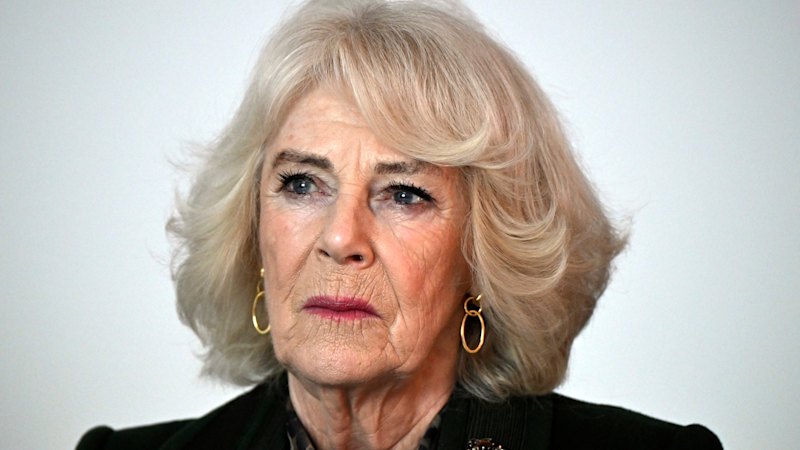
Queen Camilla has publicly shared her experience of indecent assault for the first time, revealing how she fought off a man who attacked her while she was a teenager on a train in the 1960s. The Queen emphasized that using her royal platform to raise awareness about violence against women is crucial. Her comments were made during a group interview with the surviving family members of Louise Hunt, who was tragically murdered by her ex-partner in July 2024.
In an interview with the BBC, Queen Camilla recounted the incident, stating, “I was reading my book, and you know, this boy, man, attacked me, and I did fight back.” She described how her mother noticed her distress upon her arrival home, asking why her hair was disheveled and a button was missing from her coat. The assault, which left her “furious,” was a memory she kept private until hearing other women share their own experiences.
Reflecting on the silence surrounding such incidents, Camilla noted, “Domestic violence has been a taboo subject for so long that most people don’t realize how bad the situation is.” She expressed her desire to leverage her royal position to encourage discussions and unite people against domestic violence. “If I’ve got a tiny soapbox to stand on, I’d like to stand on it,” she added.
The Queen’s remarks came during a poignant moment as she met with the Hunt family. She praised the work of former racing commentator John Hunt and his daughter Amy, who are actively involved in combating domestic violence. “Wherever your family is now, they’d be so proud of you both,” Camilla told them, acknowledging the profound impact of their efforts.
This recent revelation is not the first time Queen Camilla has shared this story. It was previously detailed in the book Power and the Palace, published by Valentine Low, a former royal correspondent for the Times of London. The book recounts an incident where Camilla, traveling to London’s Paddington Station, defended herself by striking her attacker in the groin with her shoe and subsequently reported the incident to authorities, resulting in the man’s arrest.
Baroness Harriet Harman, the UK special envoy for women and girls, commended the Queen’s decision to speak out. She highlighted the importance of addressing the societal stigma surrounding domestic violence, stating, “It used to be the case when a woman was killed by a husband or partner the consensus was that she must have brought it on herself.” Harman emphasized the need to combat the emerging narratives of toxic masculinity that blame women for men’s violence.
Harman also shared her own experiences with harassment, describing incidents that occurred during her work and studies. She noted the long-standing issue of victim-blaming that has hindered action against such violence. “For so long there has been a sense nothing can be done, no action will be taken,” she said, reflecting on the pervasive challenges faced by women.
Queen Camilla’s candid sharing of her past is a significant step in bringing attention to the ongoing epidemic of violence against women, aiming to inspire others to speak out and seek change.
