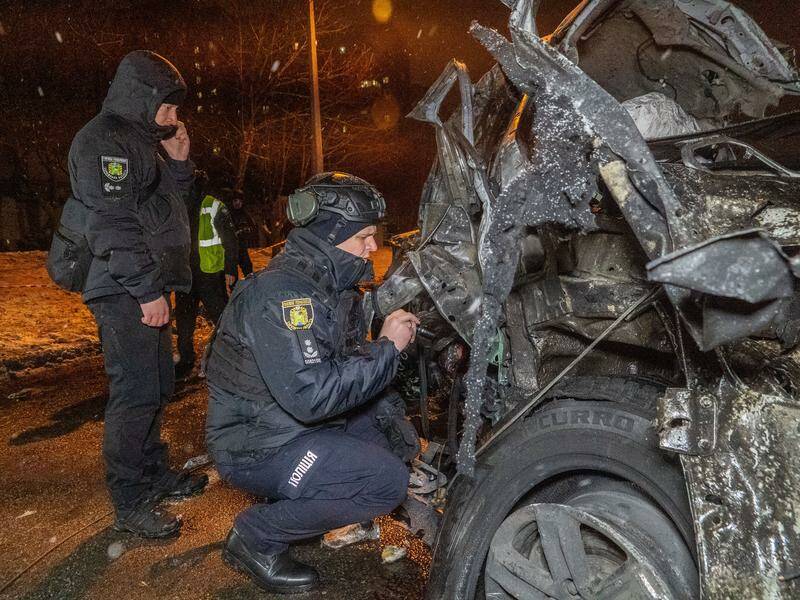
Russia has launched missile and drone attacks on Kyiv and several other regions of Ukraine ahead of a crucial meeting between Ukrainian President Volodymyr Zelenskiy and US President Donald Trump. This meeting aims to negotiate a potential resolution to the ongoing conflict that has gripped Ukraine since February 2022, following Russia’s invasion.
The overnight assaults triggered air raid alarms in the capital, with Ukraine’s military confirming the deployment of air defense systems. Explosions echoed across Kyiv, as Russian drones targeted the city along with areas in the northeast and south. An air raid alert remained active for several hours, although there were no immediate reports of casualties or significant damage.
Just days prior, Russia intensified its strikes on Ukraine’s energy infrastructure, particularly focusing on the southern region of Odesa, which is vital for the country’s shipping capabilities. The ongoing conflict, which has become Europe’s deadliest since World War II, continues to pose significant challenges for diplomatic negotiations.
Key Issues Ahead of the Meeting
Zelenskiy revealed that discussions in Florida would revolve around territorial control following a potential ceasefire. A 20-point draft plan aimed at establishing peace is reportedly 90 percent complete. This plan includes a security guarantee agreement between Ukraine and the United States, which Zelenskiy emphasized is critical given the ineffectiveness of previous assurances in the post-Soviet era.
On social media, Zelenskiy expressed optimism, stating, “A lot can be decided before the New Year.” Trump, for his part, remarked that the United States remains the driving force behind the peace process, emphasizing his role in approving any agreement. “He doesn’t have anything until I approve it,” Trump commented in an interview, underscoring his influence in the negotiations.
Zelenskiy indicated that the US has proposed a 15-year security agreement, subject to renewal. However, Ukraine seeks longer-term, legally binding guarantees to deter further aggression from Russia. A critical point of contention remains the control of the Zaporizhzhia Nuclear Power Station, which was seized by Russian forces early in the conflict.
Diplomatic Stalemate and Future Prospects
Both parties face a significant diplomatic impasse regarding territorial disputes. Russia demands that Ukraine withdraw from areas in the eastern Donetsk region, while Ukraine seeks to maintain the current front lines. Under a US compromise proposal, a free economic zone could be established if Ukraine concedes parts of Donetsk. However, specific details of this arrangement remain unresolved.
Zelenskiy has suggested that if he cannot secure a robust position on territorial issues, he may consider putting the 20-point plan to a referendum, contingent upon a 60-day ceasefire to allow for proper preparations. He has called for increased pressure on Russia to facilitate a more favorable outcome.
In comments reported by the Interfax-Russia news agency, Russian Deputy Foreign Minister Sergei Ryabkov acknowledged differences between Kyiv’s version of the peace plan and what had previously been discussed with the US. Yet, he expressed cautious optimism that progress might be achievable.
On Friday, Kremlin spokesperson Yuri Ushakov confirmed that discussions had taken place between members of the Trump administration and Moscow regarding potential peace proposals. The Kremlin has not disclosed its official stance on these proposals, leaving the situation fluid as both sides prepare for the upcoming talks.
As tensions persist, the outcome of the meeting between Zelenskiy and Trump could prove pivotal in shaping the future of Ukraine and its relationship with Russia. The international community watches closely, hoping for a resolution to this protracted and devastating conflict.