



































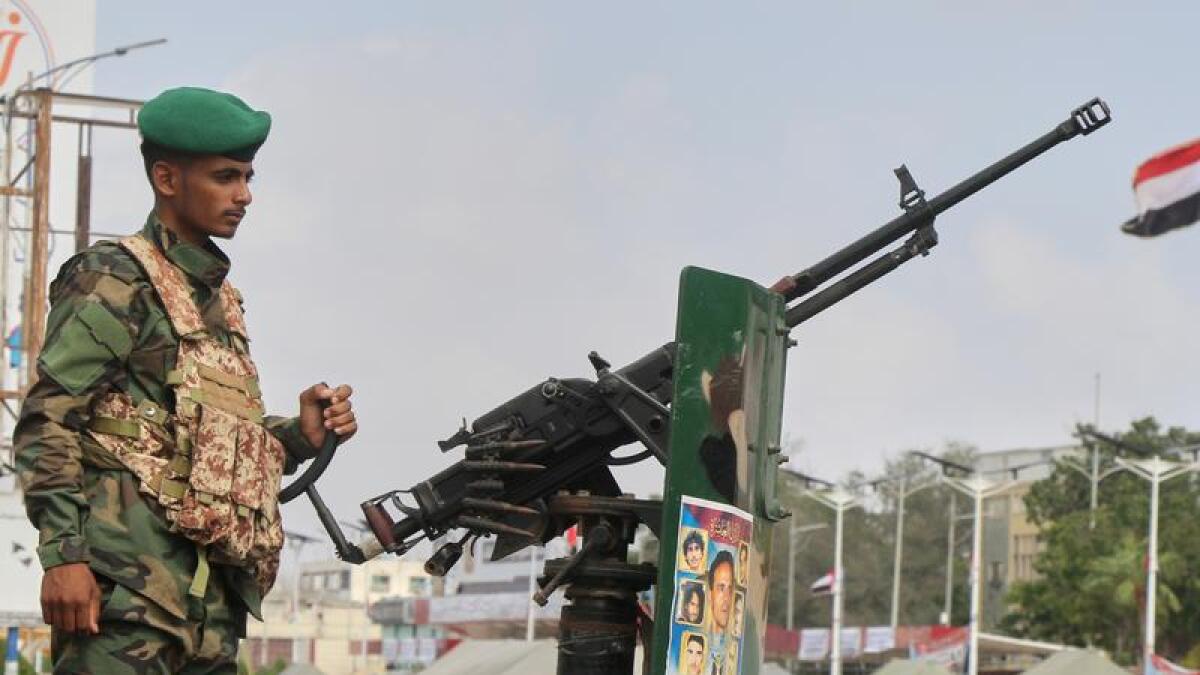
The Saudi-backed Yemeni government has successfully regained control of key areas in the eastern port city of Hadramout, reversing gains made by the Southern Transitional Council (STC) last month. This shift raises serious questions about the STC’s plans for a referendum on independence within the next two years. The rapid government advances began on Friday and have significantly altered the dynamics in the region.
According to local residents, STC forces had previously blocked roads leading to Aden from the northern provinces, a strategic move amidst rising tensions. In response to the recent military actions, the STC issued a statement appealing for regional and international intervention, condemning what it termed a “Saudi-backed military escalation.” The statement also accused northern Islamist factions, likely referring to the Islah party aligned with the internationally recognized government, of targeting civilians and critical infrastructure.
International Reactions and Regional Implications
The United Arab Emirates (UAE), a key supporter of the STC, expressed deep concern over the escalating conflict in Yemen. The UAE called for restraint among the involved parties, highlighting the potential for further destabilization in a region already fraught with division. Yemen, which has been divided for nearly a decade between competing factions, occupies a crucial position between Saudi Arabia, the world’s leading oil exporter, and the Bab al-Mandeb Strait, a vital maritime route connecting Europe and Asia.
On the other side, the Presidential Council leader, Rashad al-Alimi, announced that he had requested Saudi Arabia to host a forum aimed at uniting southern factions and addressing the ongoing crisis. This diplomatic move underscores the complexities of Yemeni politics and the intricate relationships between various regional powers.
Aden airport, which serves as the main transport hub for regions of Yemen not under Houthi control, has been closed since March 2024 due to disputes over new flight restrictions imposed by the internationally recognized government. Both the STC and Saudi Arabia have blamed each other for the disruptions in air traffic, further complicating the humanitarian situation in the region. The STC’s recent statement emphasized that southern Yemen is facing a comprehensive blockade involving land, sea, and air.
Recent Developments and Historical Context
The crisis escalated last month when the STC seized large portions of territory, including Hadramout, establishing control over what was once the former state of South Yemen prior to its unification with the north in 1990. Following these territorial gains, the internationally recognized government’s leadership, which was based in Aden and included several STC ministers, fled to Saudi Arabia, perceiving the STC’s actions as a direct threat to their security.
This situation has triggered a significant rift between long-time allies Saudi Arabia and the UAE, as differing strategies on key issues have come to the forefront. The Gulf monarchy of Qatar, which has had its own regional policy disagreements with the UAE, welcomed the Yemeni government’s efforts to address the southern issue, indicating a potential shift in alliances.
Earlier this week, Saudi Arabia conducted airstrikes on a military base in Hadramout, demanding the withdrawal of remaining UAE forces from Yemen, citing this as a critical security concern. The UAE complied with this request, further indicating the fragile state of cooperation among Gulf states in the region.
In a significant declaration, the STC has announced its intention for a two-year transition period leading to a referendum on independence for a new South Arabian state. This marks the clearest signal yet of the STC’s aspirations for secession, setting the stage for a potentially tumultuous political landscape in Yemen.
As the situation continues to unfold, the international community watches closely, with the potential for significant implications not only for Yemen but for the broader geopolitical landscape of the Middle East.
