



































Intensifying hostilities along the Cambodian-Thai border have escalated, with Thai F-16 jets launching air strikes on Monday targeting a casino and an alleged drone base in Cambodia. These actions are believed to have resulted in the deaths of four individuals, marking the latest in a series of violent confrontations between the two countries. The strikes were reportedly a response to an attack by Cambodian troops, which injured eight Thai soldiers and killed one, according to military sources from Thailand.
Tensions have flared as both nations accuse each other of violating a fragile ceasefire, which had been partially brokered by former US President Donald Trump just weeks earlier. This ceasefire, touted as a significant diplomatic achievement, has faced continuous breaches. The agreement was intended to reduce hostilities along the 820-kilometre border but has failed to establish a long-term resolution to the underlying issues.
Military Claims and Responses
Major General Winthai Suvaree, spokesperson for the Royal Thai Army, described the casino as a “command centre for drones,” claiming it served as a storage facility for heavy weaponry and munitions. This site has also been linked to various scam operations proliferating in the Mekong region. Following the air strikes, General Chaiyapruek Duangprapat, chief of staff of the Thai army, announced a strategic shift aimed at crippling Cambodia’s military capabilities.
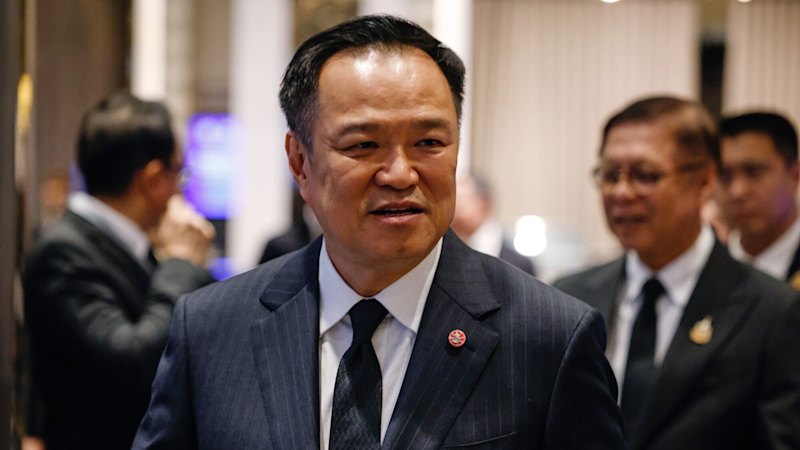
In a televised address, Thai Prime Minister Anutin Charnvirakul asserted, “Thailand has never wished for violence. I’d like to reiterate that Thailand has never initiated a fight or an invasion, but will never tolerate a violation of its sovereignty.” Meanwhile, the Cambodian government has placed blame on Thailand, with Maly Socheata from the Cambodian Defence Ministry claiming that Thailand initiated the conflict, urging it to cease all hostilities that threaten regional peace and stability.
In response to the escalating violence, over 50,000 residents in Thailand have been evacuated to shelters, and at least three hospitals in the eastern Ubon Ratchathani province have closed their doors. Similar evacuations are occurring in Cambodian villages deemed unsafe.
Historical Context and Future Prospects
The ongoing clashes are among the most severe in recent history, echoing a previous incident in which 48 people died, and approximately 300,000 were displaced during a five-day standoff. This earlier conflict was exacerbated by differing interpretations of a colonial-era map from 1907, which continues to be a point of contention.
Despite hopes that tensions could ease following the signing of the Kuala Lumpur Peace Accord in late October 2023, the situation remains precarious. Trump had initially leveraged trade discussions to encourage an agreement, positioning himself as a mediator, but the accord failed to address the core issues fueling the conflict. A subsequent ceasefire was proposed in December, aimed at freezing current frontlines and bringing an end to the violence that has displaced over one million people. Nonetheless, violations have persisted, with each side accusing the other of infractions.
Mu Sochua, head of the opposition Khmer Movement for Democracy, commented from Paris on the long-standing nature of the conflict, stating, “The conflict with Cambodia and Thailand is a conflict that goes back centuries. You can’t just pull two boxers away from each other and say stop fighting – they’re still in the ring.”
Political dynamics complicate the situation further. With nationalistic sentiments surging in both countries, the prospect for compromise remains slim. Thailand is preparing for new elections, and the border dispute has previously led to the ousting of Prime Minister Paetongtarn Shinawatra. The Cambodian leadership, characterized by a strongman approach, is unlikely to concede ground easily.
In light of the rising tensions, Anwar Ibrahim, Malaysian Prime Minister and current chair of the Association of Southeast Asian Nations (ASEAN), has called for both nations to exercise maximum restraint. He emphasized the importance of maintaining open communication channels and utilizing existing mechanisms to resolve the conflict peacefully.
The situation remains fluid, with the potential for further escalation if diplomatic efforts fail to take root.
