



































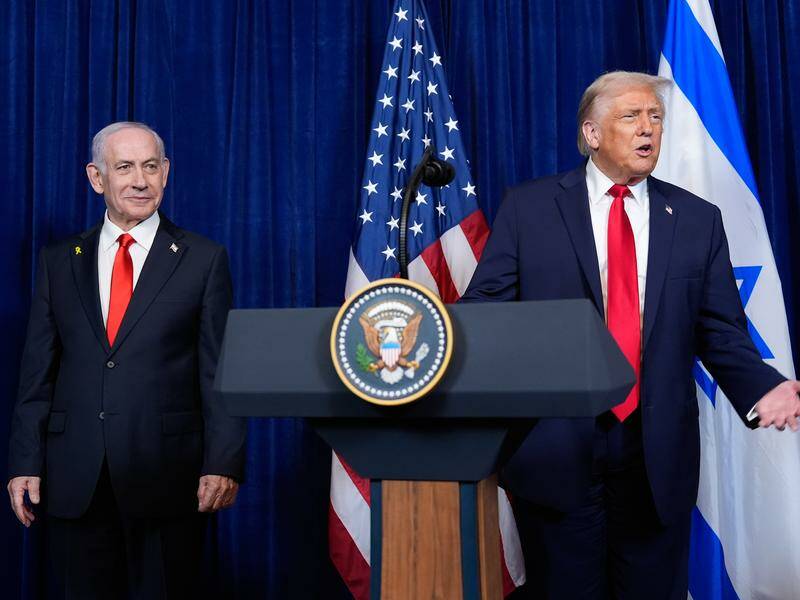
US President Donald Trump concluded discussions with Israeli Prime Minister Benjamin Netanyahu regarding negotiations with Iran without reaching any definitive agreements. Despite this, Trump confirmed that dialogues with Tehran will persist as both leaders seek to address ongoing tensions over Iran’s nuclear program.
In their latest meeting, held on March 12, 2025, Trump and Netanyahu engaged in over two-and-a-half hours of closed-door discussions. This marked their seventh conversation since Trump resumed office earlier in the year. The talks were expected to cover a range of issues, including potential military action should diplomatic efforts falter. However, the atmosphere surrounding the meeting was notably subdued, with no press allowed to attend, which diverged from previous visits.
Netanyahu aimed to persuade Trump to broaden the US diplomatic agenda with Iran beyond just nuclear concerns, advocating for limits on Iran’s missile capabilities. He emphasized that the security interests of Israel, a critical US ally, must remain a priority. After the meeting, Trump described the discussions as “very good,” yet he acknowledged that no significant decisions were made, and he did not publicly commit to Netanyahu’s requests.
Trump reiterated his strong stance on Iran, suggesting that military action could be an option if negotiations do not yield a satisfactory outcome. He stated, “If it can [be agreed], I let the Prime Minister know that will be a preference. If it cannot, we will just have to see what the outcome will be.” The President also highlighted a potential military buildup in the region, including the possibility of deploying a second aircraft carrier strike group.
Netanyahu’s office released a statement indicating that both leaders agreed to maintain close coordination regarding Iran, underscoring the ongoing security needs of Israel. Despite the challenges, Tehran has expressed willingness to discuss limitations on its nuclear program in exchange for the lifting of sanctions, but it has firmly rejected any linkage of missile discussions to these negotiations. Ali Shamkhani, an advisor to Iran’s supreme leader, reiterated that the nation’s missile capabilities are “non-negotiable.”
The discussions also touched upon the situation in Gaza, where Trump is seeking to advance a ceasefire agreement he previously facilitated. Progress on his comprehensive 20-point plan to stabilize the region has been impeded by significant disagreements, particularly regarding the disarmament of Hamas as Israeli forces withdraw.
As the diplomatic landscape evolves, the stakes remain high. The potential for an expanded conflict in the Middle East looms large, particularly as both the US and Iran continue to assert their positions. With Trump and Netanyahu’s latest meeting yielding no clear resolutions, the international community will be closely monitoring the next steps in these critical negotiations.
