



































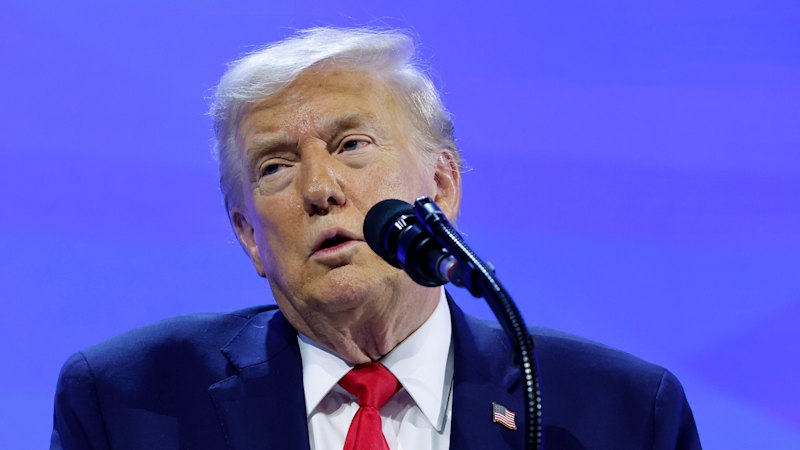
US President Donald Trump has explicitly stated that the United States will not resort to military force to acquire Greenland. Instead, he is advocating for “immediate negotiations” with European nations concerning the territory’s future. Trump made these remarks during the World Economic Forum held in Davos, Switzerland, where he faced significant backlash for his recent comments on Greenland.
Trump’s Call for Negotiations
During his address at the annual gathering of global leaders and business executives, Trump framed his push for Greenland as a matter of national security. He acknowledged that his earlier statements about the territory had sparked controversy, particularly after he suggested imposing tariffs on eight European allies unless they agreed to sell Greenland to the United States.
“I’m seeking immediate negotiations to once again discuss the acquisition of Greenland by the United States, just as we have acquired many other territories throughout our history,” Trump stated. He emphasized that there is “nothing wrong” with pursuing such negotiations, a stance he has taken in the past without explicitly ruling out the use of force.
In a notable shift, Trump reassured attendees that he does not intend to use military action, saying, “I don’t have to use force. I don’t want to use force. I won’t use force.” This clarification comes after a weekend of heightened tensions following his provocative demands.
International Reactions
Trump’s comments at Davos were met with criticism from several world leaders. French President Emmanuel Macron condemned what he characterized as Trump’s “bullying” behavior, while the Canadian Prime Minister remarked that the traditional international rules-based order has changed. These responses highlight the growing frustration among international allies regarding Trump’s approach to diplomacy and trade.
Trump’s presence at the World Economic Forum was keenly anticipated, especially given his history of challenging established international norms. His remarks about Greenland were coupled with broader criticisms of Europe, where he claimed that the continent is “destroying themselves” amid a surge of migrants and a rapid shift towards renewable energy sources. He positioned these critiques as a form of “tough love,” suggesting that the United States desires strong allies.
The controversy surrounding Greenland began when Trump expressed interest in acquiring the territory, which is an autonomous territory of Denmark. His approach has raised concerns about the implications for international relations and trade, particularly given the sensitive nature of such negotiations.
As the discussions unfold, the focus will likely remain on how the United States and Europe navigate this complex issue. Trump’s insistence on negotiations marks a pivotal moment in the ongoing dialogue about Greenland, one that will require careful handling from all parties involved.
In summary, President Trump seeks to engage in direct talks over Greenland while firmly stating that military force is off the table. His comments reflect a desire to reshape international relationships, although they have already led to significant backlash from key European leaders.
