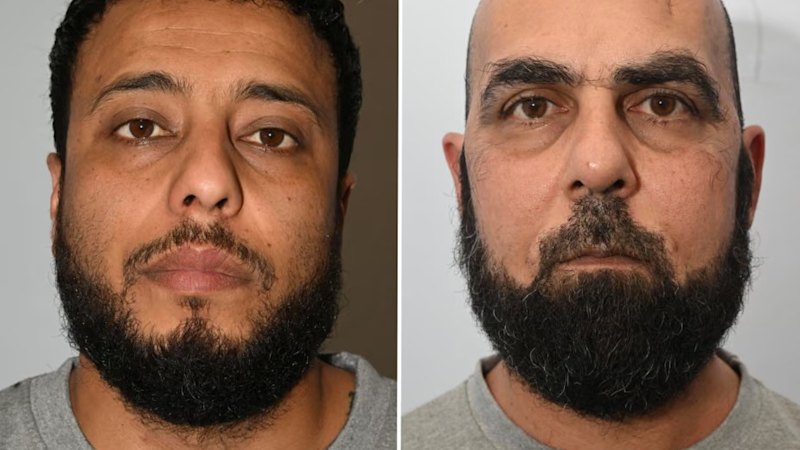
Two men were found guilty on October 31, 2024, for conspiring to execute a mass shooting targeting the Jewish community in the United Kingdom. The court heard that the attack was inspired by Islamic State and aimed to inflict significant casualties. Investigators described the plot as potentially leading to “one of, if not the, deadliest terrorist attacks in UK history,” according to Assistant Chief Constable Robert Potts, who oversees counter-terrorism efforts in northwest England.
Details of the Plot
Walid Saadaoui, 38, and Amar Hussein, 52, were tried in Preston Crown Court following their arrest in May 2024. Prosecutors revealed that Saadaoui had orchestrated plans to smuggle automatic firearms and ammunition into the UK through the port of Dover. Had these plans been realized, the results could have been catastrophic, with the intent to kill as many Jewish individuals as possible.
Saadaoui had arranged for two assault rifles, an automatic pistol, and nearly 200 rounds of ammunition. In a significant twist, he believed he was communicating with a fellow militant known as “Farouk,” who was, in fact, an undercover operative. This intervention prevented any operational execution of the plot.
Prosecutor Harpreet Sandhu stated that the weapons Saadaoui sought were comparable to those utilized in the infamous 2015 Bataclan attack in Paris, which resulted in the deaths of 130 people. Saadaoui expressed admiration for the attackers and viewed their actions as a model for his own aspirations.
Motives and Ideology
Both men professed allegiance to Islamic State ideologies and were willing to sacrifice their lives for their beliefs. Saadaoui indicated in messages that a less lethal attack would not suffice, emphasizing his goal was to maximize casualties within the Jewish community. “It was his role and his duty to kill as many Jewish people as he could,” Potts remarked.
During the trial, Hussein made headlines when he shouted from the dock, “how many babies?” in reference to the ongoing conflict in Gaza, reflecting the emotional complexities surrounding the case. Both men maintained their innocence, with Saadaoui claiming he only participated in the plot due to fears for his safety. Hussein did not testify during the proceedings.
Additionally, Saadaoui’s brother, Bilel Saadaoui, 36, was convicted for failing to disclose information regarding the terrorist activities but was deemed reluctant to participate in the attack.
Broader Context and Security Implications
The thwarted attack underscores the persistent threat posed by Islamic State and similar extremist groups, which have adapted their strategies in the years since losing territorial control in Iraq and Syria. Despite not holding the same level of influence as in past years, European security officials warn of a resurgence in radicalization efforts, particularly through online channels.
British Foreign Secretary Yvette Cooper noted a troubling uptick in terrorism threats, stating that signs of escalating risks are becoming increasingly evident. The UK’s domestic intelligence agency, MI5, reported that it has disrupted 19 late-stage attack plots since early 2020 while continuing to monitor numerous other potential threats.
As the global landscape evolves, incidents such as this serve as stark reminders of the ongoing challenges faced by law enforcement agencies in combating extremist ideologies and protecting vulnerable communities.