



































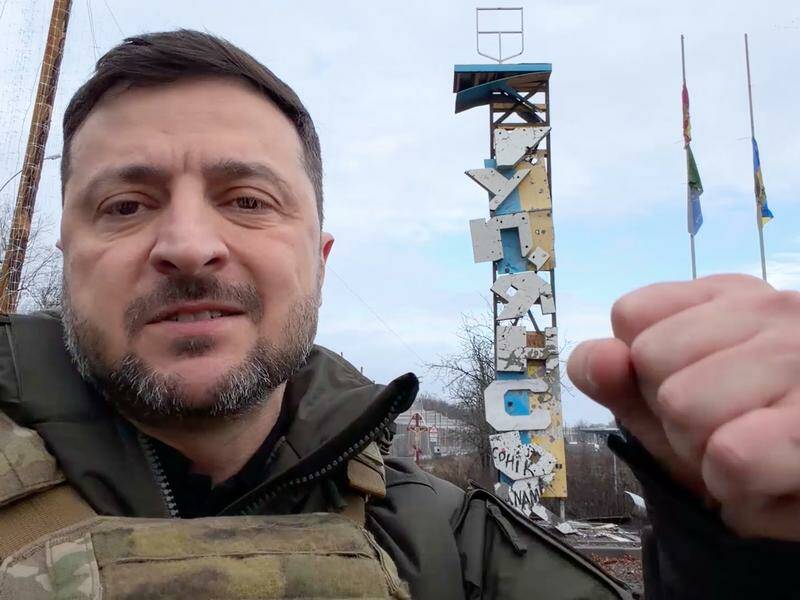
Ukraine has shifted its stance on NATO membership, opting instead for security guarantees from Western allies as part of ongoing peace negotiations with Russia. President Volodymyr Zelenskiy announced this significant change ahead of talks with U.S. representatives in Berlin, indicating a new approach to securing Ukraine’s defense amid the ongoing conflict.
This decision represents a major pivot for Ukraine, which has long sought NATO membership to protect itself from Russian aggression. The aspiration to join the military alliance is enshrined in Ukraine’s constitution, but Zelenskiy now views bilateral security agreements as a viable alternative. He stated, “From the very beginning, Ukraine’s desire was to join NATO. These are real security guarantees. Some partners from the U.S. and Europe did not support this direction.”
Zelenskiy emphasized that the proposed guarantees, which might resemble Article 5 protections from NATO, would involve commitments from the U.S. and European nations, including Canada and Japan. He called the security guarantees a compromise on Ukraine’s part, highlighting the necessity of legally binding agreements to prevent further Russian aggression.
As negotiations advance, Zelenskiy has expressed the need for a “dignified” peace that ensures Russia does not threaten Ukraine again. He has been vocal about the devastation wrought by Russian attacks on Ukrainian cities, power, and water supplies, stating, “Russia is dragging out the war and seeks to inflict as much harm as possible on our people.”
The discussions in Berlin, taking place on March 10-11, 2024, will include key figures from the U.S. administration, including Steve Witkoff and Jared Kushner, who are expected to engage with Ukrainian and European leaders. The agenda reportedly includes a 20-point plan aimed at achieving a ceasefire, although Zelenskiy noted that there are currently no direct negotiations with Russia.
During the talks, Germany’s Chancellor Friedrich Merz will host Zelenskiy and other European leaders, reflecting the continent’s ongoing support for Ukraine. This summit follows a series of discussions among European allies, including Britain, France, and Germany, to refine proposals from the U.S. that may require Ukraine to cede territory and limit its military capabilities.
Zelenskiy has indicated that a ceasefire along the current front lines could be a fair resolution, despite Russian demands for troop withdrawals from contested areas in the eastern Donetsk and Luhansk regions. He asserted, “Ukraine needs peace on dignified terms, and we are ready to work as constructively as possible.”
Despite these diplomatic efforts, the humanitarian situation remains dire. Zelenskiy reported that hundreds of thousands of Ukrainians are without power due to ongoing attacks, with over 1,500 drones and nearly 900 guided bombs launched against Ukraine in just the past week. He shared images of the destruction, underscoring the urgency of achieving a resolution to the ongoing conflict.
As Ukraine navigates this critical juncture, the coming days of diplomacy will be pivotal in determining the path forward for a nation enduring one of Europe’s most devastating conflicts since World War II.
