



































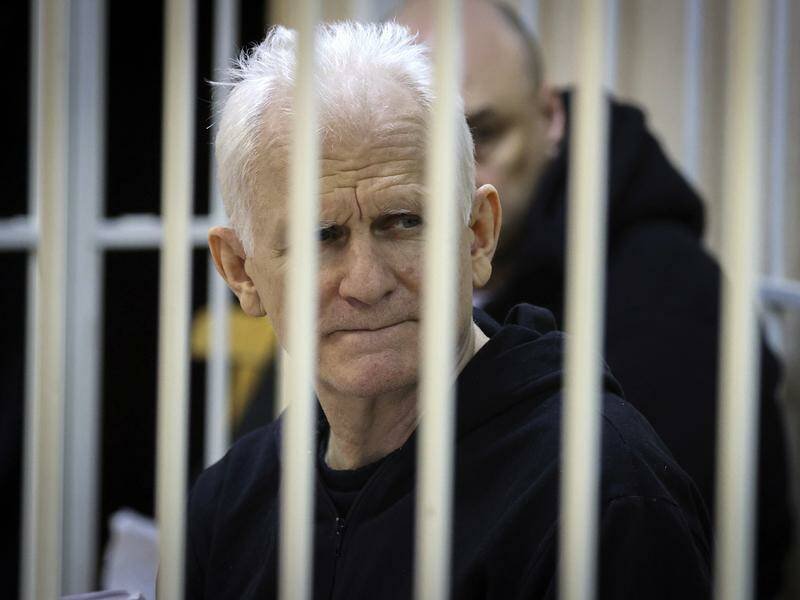
Belarusian President Alexander Lukashenko has released 123 prisoners, a move that includes notable figures such as Nobel Peace Prize laureate Ales Bialiatski and leading opposition member Maria Kalesnikava. This significant decision follows two days of negotiations with an envoy representing former President Donald Trump, as confirmed by a statement from the U.S. government.
In exchange for the prisoner release, the United States has agreed to lift sanctions on Belarusian potash, a crucial ingredient in fertilizers. Belarus is a major global producer of potash, making this agreement particularly impactful for both nations. This release marks the most substantial gesture from Lukashenko since diplomatic discussions commenced with Trump’s administration earlier in the year. The Belarusian leader remains a close ally of Russian President Vladimir Putin, which has led to his isolation from Western governments due to his authoritarian regime and support of Russia’s ongoing war in Ukraine.
Ales Bialiatski, who co-won the Nobel Peace Prize in 2022, has been a long-time advocate for human rights. He has spent over two years in prison since his arrest in July 2021. Alongside him, Kalesnikava, who played a pivotal role in the mass protests against Lukashenko in 2020, and Viktar Babaryka, arrested while preparing to challenge Lukashenko in an election, were also among those freed. As of now, it remains unclear where these individuals will go, although previous releases have seen freed prisoners exit Belarus via Lithuania.
U.S. officials indicated to Reuters that engaging with Lukashenko is part of a broader strategy to reduce his dependency on Putin’s influence, though this approach has been met with skepticism by the Belarusian opposition. Following the disputed 2020 elections, the U.S. and the European Union imposed extensive sanctions on Belarus, particularly after the regime’s violent crackdown on protesters, which saw most of Lukashenko’s opponents either imprisoned or forced into exile.
The exiled Belarusian opposition has expressed gratitude towards the U.S. for its role in securing the prisoner release. They view Lukashenko’s willingness to release prisoners in exchange for concessions on potash as evidence of the efficacy of sanctions. Sviatlana Tsikhanouskaya, a prominent opposition leader, emphasized that while U.S. sanctions focus on individual rights, EU sanctions aim for systemic change, highlighting the necessity of both approaches.
Despite the recent developments, Lukashenko has historically denied the existence of political prisoners in Belarus, referring to them derogatorily as “bandits.” In August, he questioned the rationale behind releasing individuals he perceives as state adversaries, suggesting they could pose future threats.
Trump has characterized Lukashenko as “the highly respected president of Belarus,” a description that starkly contrasts with the sentiments of the opposition, who label him a dictator. He has urged the release of up to 1,400 prisoners whom he has termed “hostages.”
The U.S. Embassy in Lithuania reaffirmed its readiness to engage further with Belarus, emphasizing its commitment to diplomatic efforts aimed at releasing remaining political prisoners. According to the Belarusian human rights group Viasna, which the government has designated as an extremist organization, there were 1,227 political prisoners at the time of the recent releases.
During talks, envoy Coale discussed a range of issues with Lukashenko, including the ongoing war in Ukraine and the situation in Venezuela. Coale noted that Lukashenko’s longstanding relationship with Putin could play a role in efforts to mediate an end to the conflict in Ukraine, stating, “Your president has a long history with President Putin and has the ability to advise him. This is very useful in this situation.”
The release of these prisoners represents a notable shift in Belarus’s political landscape and highlights the complex interplay of international diplomacy in the region.
