



































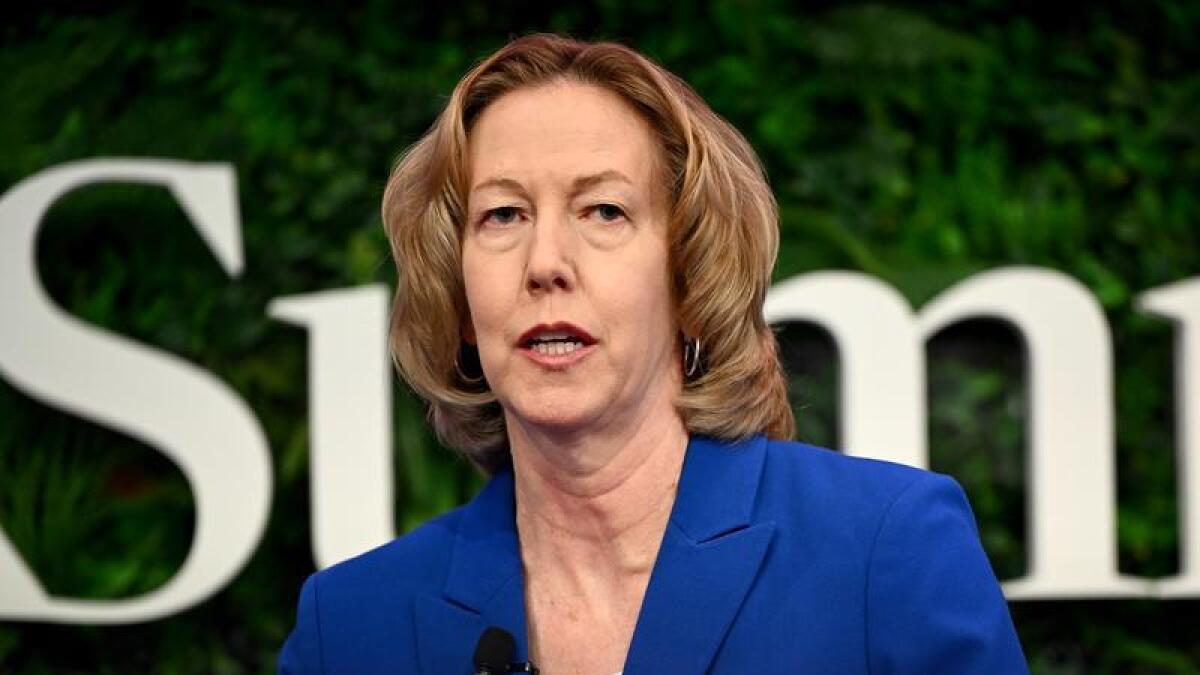
Meg O’Neill has been appointed as the new chief executive of BP, marking a historic milestone as she becomes the company’s first female leader in its 116-year history. O’Neill will officially take over from outgoing CEO Murray Auchincloss on April 1, 2024. This transition comes as BP embarks on a strategic reset aimed at increasing investments in oil and gas while maintaining a disciplined approach to the energy transition.
In the wake of this announcement, Liz Westcott, who currently serves as Woodside’s chief operating officer and executive vice president for Australian operations, will take on the role of interim CEO at Woodside. This leadership change provides an opportunity for Woodside to reassess its direction, particularly in the face of criticism regarding its fossil fuel projects and shareholder returns.
Auchincloss expressed confidence in the transition, stating, “After more than three decades with BP, now is the right time to hand the reins to a new leader. I am confident that BP is now well-positioned for significant growth and I look forward to watching the company’s future progress and success under Meg’s leadership.”
The appointment of O’Neill has raised eyebrows among some analysts, particularly regarding her previous leadership at Woodside. Brynn O’Brien, executive director of the Australasian Centre for Corporate Responsibility, noted that Woodside has pursued high-cost fossil fuel projects under O’Neill’s guidance, resulting in unsatisfactory returns for shareholders. He described her selection as a puzzling choice given BP’s recent focus on capital discipline.
O’Neill’s tenure at Woodside has not been without controversy. She faced significant backlash from climate activists, particularly after a high-profile protest occurred at her home in Perth in 2023. Additionally, Woodside has faced criticism from conservationists and Indigenous groups following the federal government’s approval of a 40-year extension for the North West Shelf project, which is located near ancient rock art at Murujuga.
Matt Roberts, executive director of the Conservation Council of WA, commented on the need for companies like Woodside and BP to commit to renewable energy transitions. He stated, “Future generations would look upon companies like Woodside and BP as moral aberrations unless they truly committed to the renewable transition.”
This leadership shake-up presents a pivotal moment for Woodside, according to Brett Morgan, head of Australian campaigns for Market Forces. He urged major investors to leverage this opportunity to push for an end to the company’s growth plans in oil and gas, advocating for a more sustainable approach that aligns with global climate goals.
O’Neill joined Woodside in 2018 after a lengthy career with ExxonMobil, eventually becoming CEO in 2021. As she prepares for her new role at BP, she expressed mixed emotions about leaving Woodside, acknowledging the support of her team. “I am leaving a talented and dedicated team of people at Woodside, who have provided great support during my almost eight years at the company,” she wrote on LinkedIn.
Following the news of her departure, Woodside’s shares fell by 2.7 percent to $22.80 by 15:00 on Thursday. Analysts from RBC Capital Markets view O’Neill’s exit as a negative development for Woodside but recognize that the company has several well-qualified internal candidates to consider for her replacement. Westcott’s temporary appointment highlights her strong operational focus, which will be crucial for the company’s performance and project execution moving forward.
As BP prepares for its new chapter under O’Neill’s leadership, the global energy landscape remains in a state of flux, with companies under increasing pressure to adapt to changing environmental expectations and shareholder demands.
