



































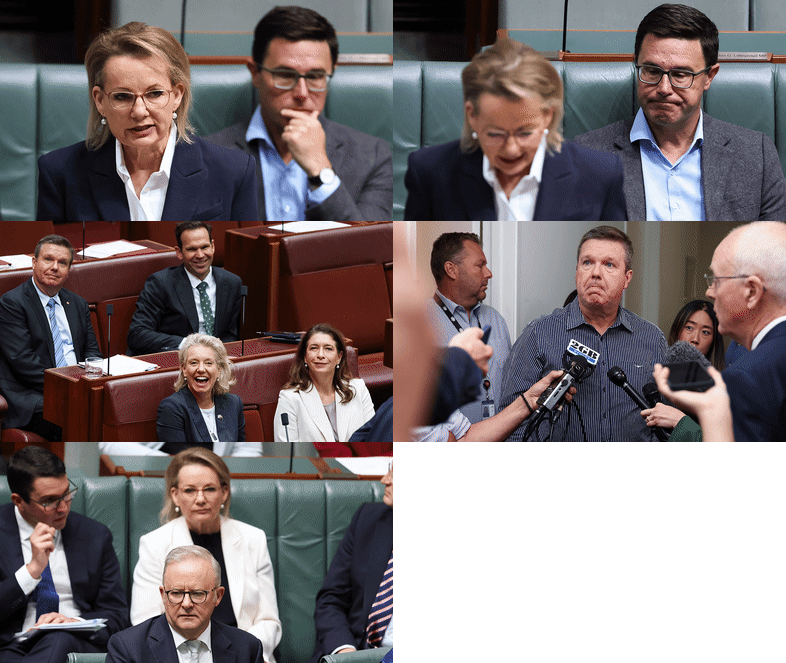
The political landscape in Australia has shifted dramatically following the terrorist attack at Bondi Beach, which left 15 victims dead. Opposition Leader Sussan Ley emphasized the need to focus on grieving Australians in a statement released on Thursday. Her remarks came as tensions escalated within the Coalition, particularly following comments from National Party leader David Littleproud that suggested Ley’s removal was necessary for any reconciliation.
Littleproud’s decision to leave the Coalition after the May election defeat was marked by a series of conflicting statements. His initial exit was soon followed by a quick return, which some described as undignified. This week, however, his actions took a more confrontational turn as he leveraged the resignations of three Nationals MPs—who opposed legislation on hate groups—as a pretext to dissolve the Coalition.
The political drama has drawn unexpected commentary from Barnaby Joyce, a prominent figure in the National Party. Joyce urged for stability, stating, “You don’t blow the whole show up so that Australia as a nation doesn’t have a competent opposition.” His remarks underscore the importance of a functioning opposition amidst pressing challenges, including economic instability and national security concerns.
The Coalition’s internal strife raises questions about its effectiveness at a time when the Labor Party is facing scrutiny over its handling of the terrorist attack and other national issues. Joyce’s comparisons of the Coalition to a marriage hint at the fragile state of their alliance, which has been shaken by external pressures from parties like One Nation and the teal independents.
The Labor government, led by Prime Minister Anthony Albanese, has been navigating a complex political environment since its election victory in May. Analysts have noted that while Labor’s majority appears strong, it is underpinned by a precarious voter base. The urgency for a cohesive opposition is increasingly apparent, particularly as the country grapples with the aftermath of the Bondi tragedy.
In the wake of these developments, the Coalition faces a crisis of leadership. Both Ley and Littleproud have struggled to maintain unity within their parties, with accusations of avoiding critical discussions in favor of parliamentary procedures. As Murray Watt, the Environment Minister, articulated, the National Party appears to be reacting to shifts in voter sentiment, indicating a growing concern over their political future.
Looking ahead, the political ramifications of this week’s events are likely to be profound. The Coalition’s internal divisions will continue to be scrutinized, especially as they prepare for the next parliamentary session in February 2024. Speculation surrounding leadership changes and the potential for a realignment in conservative politics looms large.
As Australia seeks a path forward, the focus remains on the victims of the Bondi attack and the necessary changes to laws and policies that must be addressed. The political discourse surrounding these issues will be crucial in shaping the future of governance in the country. The public’s demand for accountability and thoughtful debate has never been more pressing, and it is essential for politicians to rise to the occasion rather than engaging in counterproductive squabbles.
