



































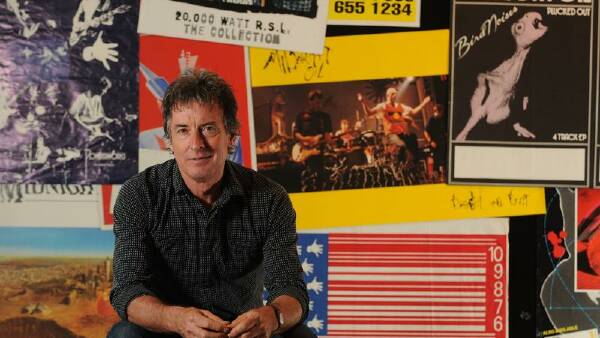
Rob Hirst, the celebrated drummer of the iconic Australian band Midnight Oil, passed away this week at the age of 70. Hirst’s contributions to music and his impactful relationships within the industry have left a lasting legacy that resonates with fans and fellow musicians alike.
Liz Stringer, a singer-songwriter who joined Midnight Oil as a backing vocalist in 2021, described Hirst as a relentless performer. “There was never a show where he phoned it in,” she stated in an interview with the Australian Associated Press (AAP). Stringer recalled feeling as if she were in the “engine room” with him, noting his extraordinary energy even at nearly 70 years old. The experience was especially sentimental for her, having grown up listening to Midnight Oil’s influential album, Blue Sky Mining, released in 1990.
Reflecting on her time with Hirst, Stringer emphasized his genuine interest in others. “He had this indefatigable interest in other people,” she said. This sentiment was echoed widely across social media, where tributes poured in from musicians spanning multiple generations, particularly young First Nations artists who felt a deep connection to Hirst’s work and ethos.
Hirst was known for his explosive drumming style, but his role in Midnight Oil extended far beyond the drum kit. Renowned Australian drummer Graham Bidstrup likened Hirst to legendary drummers such as Charlie Watts of the Rolling Stones and Keith Moon of The Who, highlighting his unique blend of class and energy. Hirst was also a principal songwriter for many of the band’s most famous tracks, including The Dead Heart and Beds Are Burning.
Jon Coghill, drummer for Australian rock band Powderfinger, praised Hirst’s songwriting prowess, specifically referencing his iconic solo in “Power and the Passion.” Coghill described it as a melody-driven piece that required excitement and storytelling, showcasing Hirst’s multifaceted talent.
Hirst’s songwriting not only propelled Midnight Oil to international fame but also sparked critical conversations about Australia’s relationship with its First Nations peoples. Paul Clarke, director of the upcoming documentary The Hardest Line, encapsulated Hirst’s legacy by stating, “his perspective of what Australia could and should be is his prevailing legacy.” Clarke pointed to songs like “Beds Are Burning” as emotionally powerful pieces that resonate deeply with listeners.
In their 2020 album, The Makarrata Project, Midnight Oil continued to explore these themes. Hirst contributed songs such as “First Nation” and “Gadigal Land,” collaborating with various First Nations artists, including rapper and songwriter Tasman Keith. After Hirst’s passing, Keith expressed gratitude for the trust Hirst placed in him as a young songwriter, emphasizing the drummer’s openness to collaboration.
Paul Daley, an author and columnist for the Guardian, noted that Hirst’s lyrics effectively communicated urgent social issues to a mainstream audience. His ability to address topics like sovereignty and dispossession moved countless Australians who might not have previously reflected on those issues.
For Stringer, Hirst’s legacy is deeply personal. “Rob really is proof that music and performing is ultimately about connection,” she said. “You can be a very famous, very successful musician and still be such a good human being.” She highlighted his ability to inspire generations of musicians through kindness, encouraging them to connect, learn, and share.
Hirst’s memory will undoubtedly continue to inspire, reminding many of the powerful role music plays in fostering connection and understanding across diverse communities.
