Western Digital, now rebranded simply as WD, has unveiled an ambitious roadmap targeting the growing demands of artificial intelligence (AI) data storage. During its Innovation Day on February 2, 2026, in New York, the company outlined plans for new hard drives with capacities exceeding 100TB, aiming to meet the increasing data needs of the AI revolution. This initiative is not only about enhancing storage capacity but also about introducing significant performance and power-optimized technologies to compete with the prevalent flash storage in data centers.
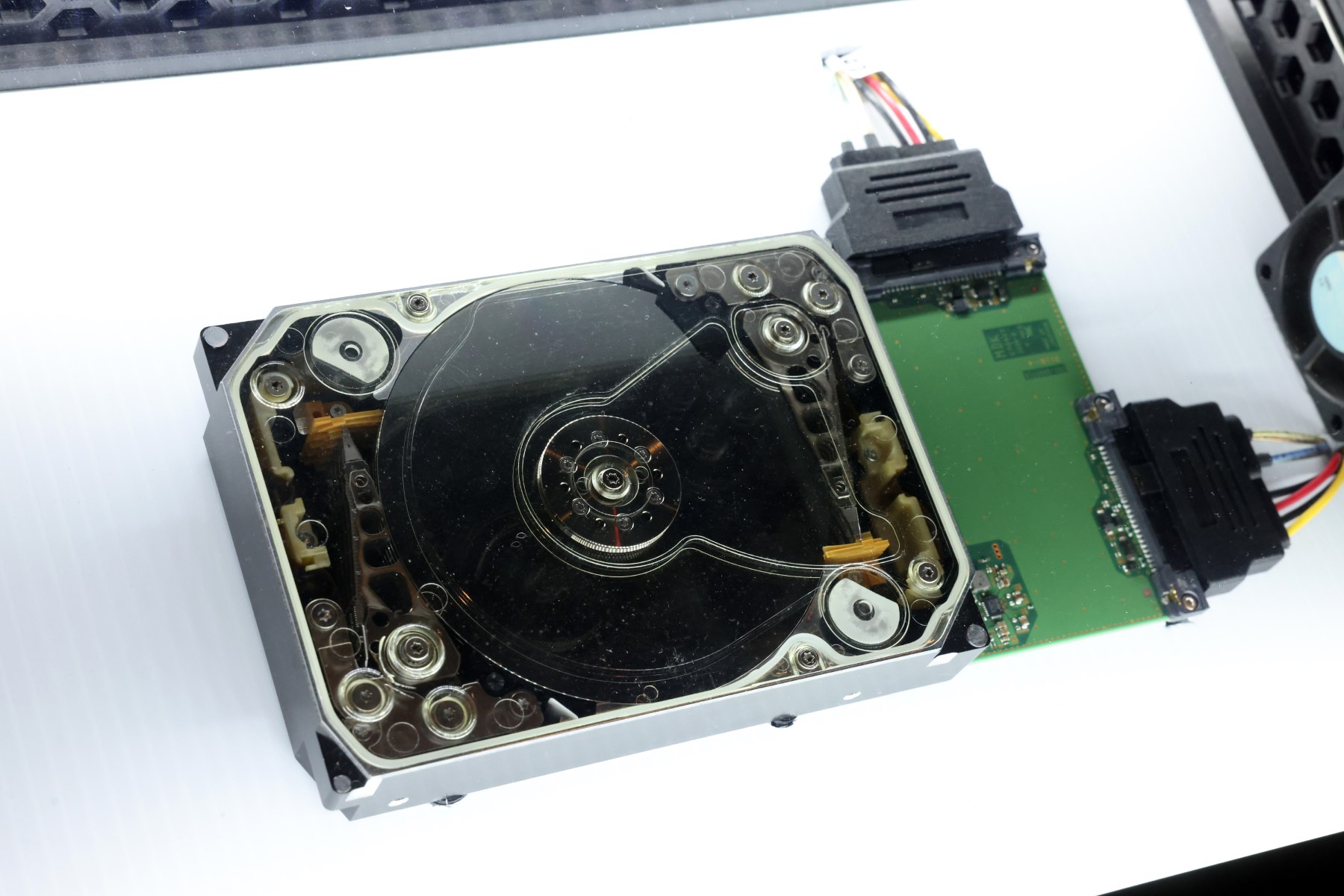
The journey towards 100TB drives is already in motion, with WD confirming that its 40TB UltraSMR ePMR HDD is currently being tested by hyperscale customers. Volume production is expected to commence in the latter half of 2026. WD is adopting a dual-track approach, employing both ePMR (energy-assisted perpendicular magnetic recording) and HAMR (heat-assisted magnetic recording) technologies. By 2027, the company plans to introduce 60TB drives using ePMR and aims for a significant 100TB HAMR drive by 2029. This strategy provides flexibility for customers to select the technology best suited for their existing infrastructure.
Innovative Technologies to Enhance Performance
A primary challenge for AI applications has historically been the slower performance of traditional hard drives compared to solid-state drives. To address this, WD is introducing two groundbreaking technologies: High Bandwidth Drive and Dual Pivot technology. The High Bandwidth Drive allows simultaneous reading and writing from multiple heads, potentially doubling bandwidth and enabling up to 8x gains in the future. Meanwhile, the Dual Pivot design incorporates a second set of actuators, enhancing sequential I/O performance without compromising the drive’s capacity or requiring extensive software adjustments.
These innovations aim to maintain the input/output performance per terabyte even as drive capacities increase to 100TB. Additionally, as AI training generates substantial “cold” data—data that is not frequently accessed—WD’s new power-optimized drives will consume 20% less power than traditional models. This efficiency is particularly beneficial for large data centers and is expected to reach customer qualification by 2027.
Strategic Rebranding and Market Positioning
The new branding as “WD” signifies a strategic shift towards focusing primarily on storage infrastructure. With approximately 90% of its revenue now derived from AI and cloud sectors, WD is positioning itself as an essential partner in the evolving data economy. “For the past year, WD has remained continuously focused on execution and accelerating innovation, which has enabled us to truly reimagine the hard drive to meet the requirements of AI,” stated Irving Tan, Chief Executive Officer of WD.
WD’s recent financial achievements have allowed it to secure a place in the Nasdaq 100, demonstrating the ongoing relevance of the hard disk drive market even as demand for high-capacity storage solutions rises. “WD Innovation Day is where our customer-centric business transformation meets our breakthrough technology for the AI era,” remarked Ahmed Shihab, Chief Product Officer of WD.
The company is not only targeting large tech giants like Google and Microsoft but is also expanding its Platforms business. Planned for launch in 2027, a new intelligent software layer utilizing an open API aims to assist mid-sized companies in managing petabyte-scale data. This initiative seeks to democratize access to high-capacity storage solutions, enabling businesses to efficiently deploy UltraSMR and HAMR technologies.
“The market validation is already evident—customers are deploying these solutions because WD is addressing critical needs for AI infrastructure: reliable capacity at scale, performance that meets demanding workloads, and economic models that support profitability,” said Ed Burns, HDD Research Director at IDC.
While local pricing for the upcoming 40TB drives in Australia has yet to be announced, enterprise-grade units typically range from A$800 to A$1,200 depending on the model and supplier. The 40TB units are expected to carry a premium upon release in local markets next year.
For further details, visit the official WD website at https://www.westerndigital.com.