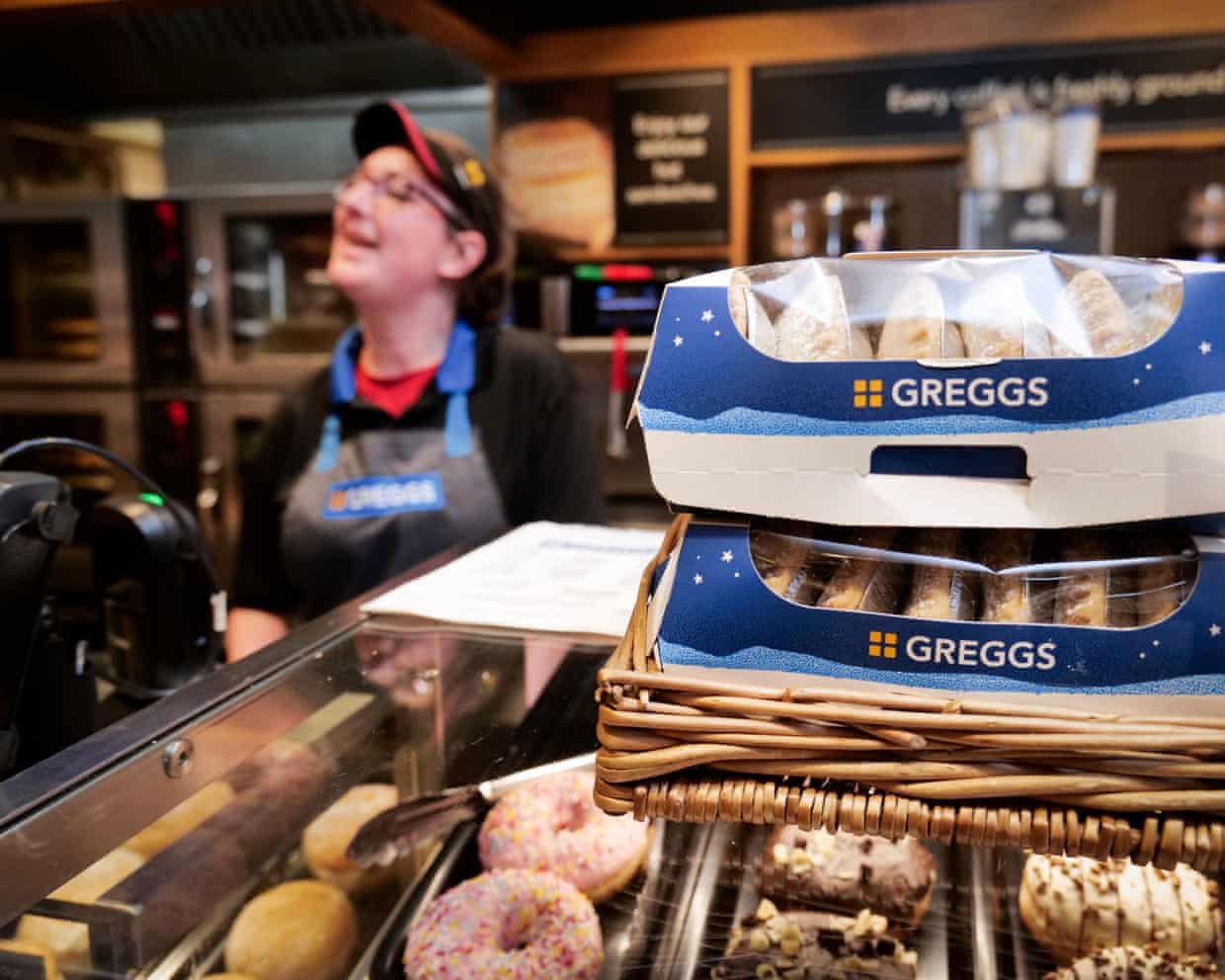
Greggs, the UK’s largest bakery chain, is pushing forward with its expansion plans despite recent challenges in sales. The company has ramped up production at its Newcastle upon Tyne facility, which currently processes 4.5 tonnes of pastry at a time, producing the equivalent of 1 million sausage rolls daily. As consumer demand for baked goods remains strong, the chain is set to invest £300 million in new automated production sites in Derby and Kettering, with a goal of increasing its total number of outlets to 3,500 by 2027.
The expansion comes at a time when Greggs has faced declining like-for-like sales and a significant drop in its share price, which has fallen by about 40% over the past year. This has led to speculation among analysts and investors regarding the sustainability of the chain’s growth. Despite these concerns, Chief Executive Roisin Currie expressed confidence in the brand’s potential, stating in July, “I absolutely don’t believe we have reached peak Greggs.”
The company has a long history, dating back to 1939 when John Gregg began delivering baked goods in Newcastle. Over the decades, it has expanded significantly, evolving from a local bakery to a prominent presence across the UK with 2,675 outlets. The transformation into a food-to-go market in the 2010s under former CEO Roger Whiteside contributed to a surge in popularity, culminating in annual sales reaching £2 billion by 2024.
However, the past year has presented challenges. Analysts from the broker Panmure Liberum noted that Greggs now “sits at a crossroads”. The company reported its worst sales growth since the pandemic, attributing some of the decline to adverse weather conditions that deterred customers. As the chain continues to target 120 new store openings in 2025, questions arise about whether the market can sustain further expansion, especially as the competitive landscape shifts.
Amidst these concerns, Greggs remains well-regarded by its loyal customer base, particularly in its home city. During a recent visit to the Newcastle railway station branch, customers were lined up for breakfast sandwiches and coffee. Fiona Wilson, a regular patron, shared her enthusiasm for the brand, saying, “I love the products and like that it’s a local brand.”
Despite the challenges, Greggs has explored new offerings, including healthier options and smaller shop formats, to attract a wider audience. The introduction of “Bitesize Greggs” locations, designed for high foot traffic areas, represents a novel approach to reaching consumers. Furthermore, the chain’s annual pop-up venue, featuring a “Greggs pub,” has drawn significant interest, showcasing its popular products in a unique setting.
As Greggs prepares to announce sales figures for its festive products on January 8, 2026, the implications of these results could significantly influence the company’s trajectory. Dan Coatsworth, head of markets at broker AJ Bell, highlighted the need for decisive action, stating, “Greggs is at a massive strategic turning point and the bosses need to do something.”
The future of Greggs hinges on its ability to adapt to market conditions while capitalizing on its strong brand heritage. With the bakery chain’s ambitious expansion plans and evolving product offerings, it remains to be seen whether it can maintain its momentum in a challenging retail environment.