




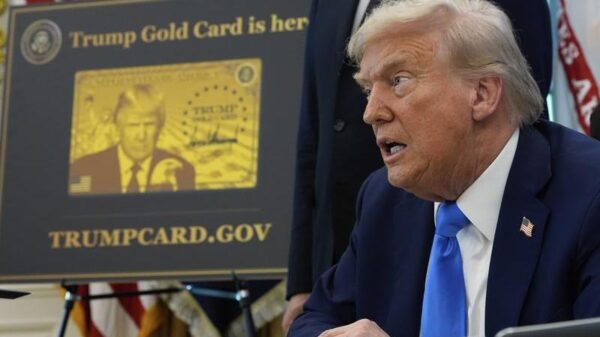





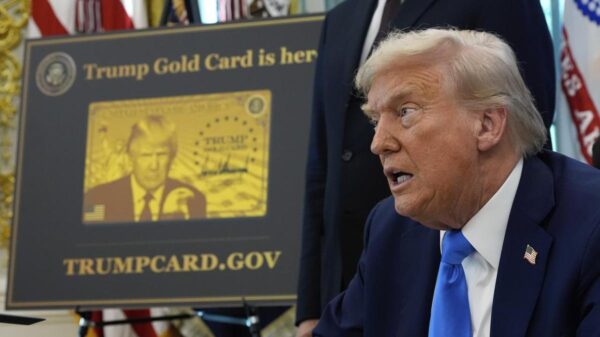






















This week, President Donald Trump authorized the export of Nvidia’s H200 artificial intelligence (AI) chips to China, reversing previous bans. This decision marks a significant shift in U.S. policy, which had prioritized security over trade in recent years. Under this new arrangement, the U.S. government will receive 25% of the sales revenue from these exports, a move that highlights the administration’s evolving approach to international trade and national security.
The H200 chips represent Nvidia’s second most powerful AI processor and are approximately six times more capable than the H20 chips previously accessible to Chinese buyers. These advanced chips are not merely consumer products; they are integral to the functioning of sophisticated AI systems used in various military applications, including autonomous weapons and drone navigation systems.
Impact of AI Technology on Global Trade and Security
The decision to allow the export of these sensitive technologies comes at a time when the U.S. and China are engaged in a contentious trade relationship, which saw tariffs on Chinese goods soar as high as 145% in previous years. This shift in policy raises critical questions regarding the implications for U.S. allies, particularly Australia, which finds itself balancing economic ties with China against its defense commitments to the U.S.
Access to advanced semiconductor chips is essential in the race towards cutting-edge AI capabilities. In October 2022, the Biden administration implemented stringent semiconductor export controls, specifically targeting advanced AI chips and manufacturing equipment destined for China. This strategy, referred to as the “small yard, high fence” approach, aimed to safeguard a limited range of sensitive technologies while maintaining broader trade relations with China.
Since then, U.S. authorities placed 140 Chinese entities on export blacklists and restricted various types of manufacturing equipment. These measures significantly impacted Chinese AI companies, hindering their ability to access necessary computing power and forcing them to rely on older hardware.
Trump’s recent approval of the H200 chips marks a departure from this stringent approach. Earlier this year, his administration permitted Nvidia to export H20 chips to China in exchange for 15% of the revenue, a decision seen as a concession to facilitate negotiations over access to rare earth minerals. The approval of the more powerful H200 chips indicates a further concession and a departure from traditional trade regulations.
Military Implications of AI Chip Exports
The ramifications of AI technology on modern warfare cannot be overstated. AI chips are now used in systems that enhance targeting capabilities, guide munitions, and facilitate rapid decision-making on battlefields. For instance, Ukraine’s military employs AI-equipped drones capable of autonomously navigating to targets, even in environments with heavy electronic jamming. Reports suggest that this technology has improved strike accuracy from 30-50% to around 80%.
“Modern semiconductors are ‘dual-use’ technologies. The same chips training AI chatbots can guide cruise missiles.”
Furthermore, Israel’s AI system, known as “Lavender,” has reportedly identified thousands of potential targets, leading to rapid airstrikes, though it has also been associated with significant civilian casualties. Meanwhile, China’s military is leveraging AI for various applications, including drone swarm coordination and real-time battlefield decision-making.
As the U.S. shifts its export controls to become more transactional, there are critical questions for Australia. The nation has adjusted its export control regime in line with the U.S. under the AUKUS security partnership, but faces a dilemma. With China accounting for approximately 30% of Australia’s total merchandise trade, the need to align with U.S. policies may conflict with economic realities.
Australia’s alignment with AUKUS was predicated on shared views regarding security threats and consistent responses. However, recent U.S. national security strategies have indicated that the migration to Europe poses a greater threat than military actions by Russia, a perspective not universally shared by Australians.
For export controls to be effective, they must remain consistent and clearly linked to national security interests. The current approach, which transforms sensitive technology controls into negotiable commodities, risks undermining their effectiveness. Trump’s authorization of the H200 chips introduces uncertainty, prompting crucial discussions on whether U.S.-aligned export controls genuinely serve Australian interests or if they are merely a reflection of an increasingly arbitrary and transactional U.S. policy landscape.