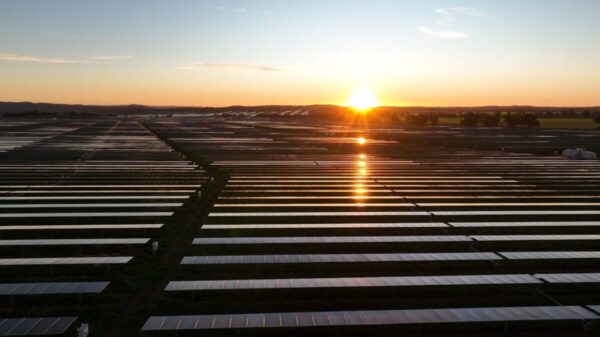




































The Cook Government has announced a significant initiative to bolster the regional economy of Western Australia by supporting the Ngarluma Aboriginal Corporation (NAC) in establishing its first Green Energy Park. This project aims to facilitate the energy transition in the Pilbara region, aligning with the state’s goal to become a leader in renewable energy.
The NAC has proposed to create a fully Traditional Owner-owned and operated Green Energy Park, leveraging land within its native title determination. The project targets an ambitious development of 5 gigawatts (GW) of renewable energy capacity. The Ngarluma country, which encompasses key coastal towns such as Karratha, Roebourne, and Wickham, is already home to significant industrial operations, including those of major corporations like Rio Tinto Iron Ore and Woodside.
To kickstart this initiative, the Cook Government will provide an initial investment of $2.7 million. This funding will support surveys, approvals, and technical activities over the next year, paving the way for the Ngarluma Green Energy Park near Karratha to become operational. The project is expected to generate employment opportunities, training, and sustainable income for the Ngarluma people.
Strategic Infrastructure Development
The plan for the Ngarluma Green Energy Park includes obtaining tenure over the designated area and establishing subleasing arrangements with solar generation and battery storage proponents. This approach could allow for collaborative participation in solar and battery generation projects through joint ventures with solar developers.
Furthermore, the Green Energy Park will complement the development of the Maitland-Karratha-Burrup transmission corridor, identified as one of four priority corridors under the Pilbara Energy Transition (PET) strategy. This strategy aims to facilitate the development of shared electricity transmission infrastructure, accelerating the decarbonisation of heavy industry in the region by connecting it with renewable energy sources.
NAC is committed to negotiating Indigenous Land Use Agreements, which are crucial for the development of the transmission corridor and the Maitland Strategic Industrial Area (SIA). Negotiations are currently ongoing.
The APA Group recently received Priority Project status for delivering electricity transmission in the Burrup (Murujuga) Corridor, further enhancing the infrastructure landscape.
Government Commitment to Renewable Energy
Premier Roger Cook emphasized the importance of diversifying Western Australia’s economy through the Pilbara Energy Transition, stating, “Unlocking the Pilbara’s renewable energy resources will offer opportunities for new industries, bringing jobs and investment, and export potential.” He highlighted that supporting Traditional Owners in developing this Green Energy Park is essential for advancing the region’s energy transition.
In a similar vein, Energy and Decarbonisation Minister Amber-Jade Sanderson remarked on the critical role of Traditional Owners in the success of the Pilbara Energy Transition, asserting, “The Cook Government is determined to ensure they gain genuine economic benefits from our clean energy transition.” She added that the common-use infrastructure approach mitigates the need for multiple transmission lines on Indigenous land while still unlocking the region’s renewable energy potential.
This initiative marks a pivotal step toward a more sustainable and economically vibrant future for the Pilbara region, aligning traditional ownership with modern energy solutions. As the project develops, it holds the promise of transforming the local economy while respecting and empowering the Ngarluma people.