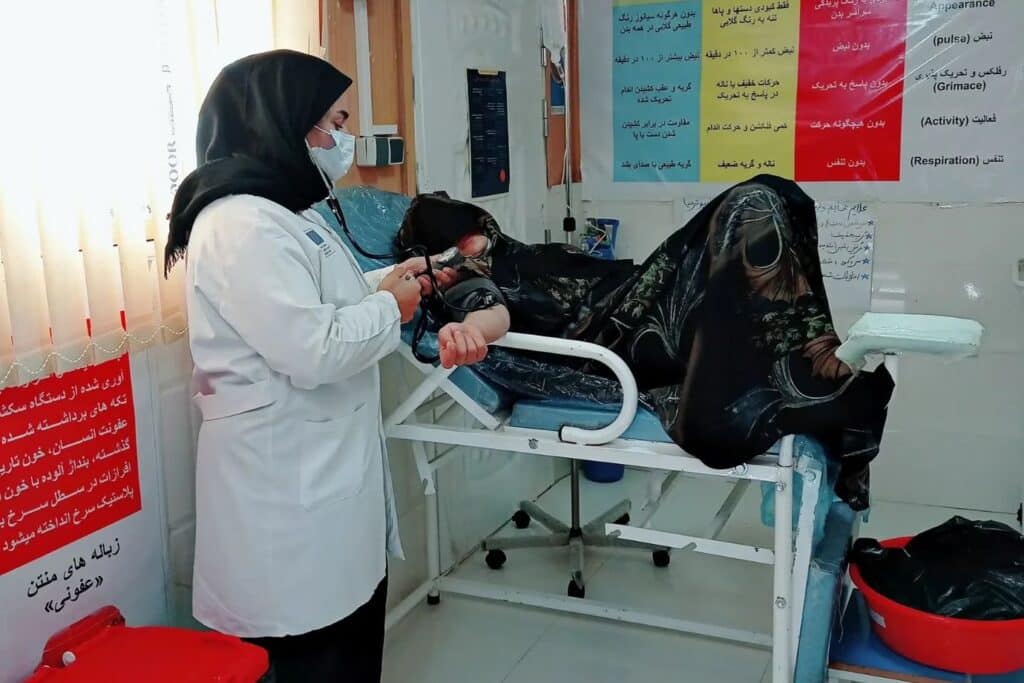
The maternal health crisis in Afghanistan has reached alarming levels, prompting urgent responses from organizations like CARE and its local partner, OCCD. In remote villages, such as Poshta-e-Murad Khan, young mothers face life-threatening complications during pregnancy and childbirth, often without access to critical medical care.
Sita, a 16-year-old girl, married at 12, represents the struggles many young women endure. Living far from hospitals, she faced deadly risks associated with early pregnancy, including potential bleeding, infections, and obstructed labor. In Afghanistan, where 65% of the population lives in poverty and 22 million people require urgent humanitarian assistance, the challenges are overwhelming. The country has one of the highest maternal mortality rates globally, with a woman dying every two hours during childbirth.
Access to Life-Saving Care
Fortunately, Sita’s story took a positive turn when she received care from a nearby clinic supported by CARE and OCCD. Funded by the European Civil Protection and Humanitarian Aid Operations (ECHO), these clinics provide essential services, including antenatal and postnatal care, nutrition support, and safe delivery options in areas where such resources are scarce.
Sita’s first pregnancy ended in a miscarriage. “I received medication and counseling at the clinic,” she shared. The midwife, Maryam, advised her to wait six months before trying to conceive again. This guidance proved vital for Sita’s health.
When Sita became pregnant again, Maryam closely monitored her progress. At 28 weeks into her pregnancy, Sita went into labor unexpectedly. The situation was critical, as there was no time to transport her to a hospital. Maryam acted quickly, ensuring that both mother and baby received the necessary care. Following the birth of her daughter, Forozan, Sita continued to visit the clinic for follow-up support.
Transforming Lives in Remote Areas
The impact of CARE clinics extends beyond Sita. Women like Leilma, who also faced complications during childbirth, have benefited from the skilled care provided by trained midwives. During Leilma’s labor, the midwife, Amina, was able to stabilize her and her newborn when complications arose, illustrating the vital role these clinics play in saving lives.
In many remote areas, clinics run by CARE and OCCD are often the only sources for women to access life-saving nutrition support and pregnancy care. As Kristina Jovanovska, CARE Afghanistan’s deputy country director, emphasized, “These health facilities often provide the only skilled care for pregnancy complications. Continued investment in primary health care ensures women in remote areas aren’t left alone in their most critical moments.”
The ongoing humanitarian crisis in Afghanistan continues to challenge healthcare systems, with many essential health centers facing closure due to funding shortages. As the situation evolves, the dedication of organizations like CARE and their local partners remains crucial in combating the maternal health crisis and supporting young mothers in remote communities.
Without the existence of these clinics, many women would have no access to skilled maternal care. Sita’s gratitude for the lifesaving services underscores the importance of investing in healthcare infrastructure to protect the lives of vulnerable populations. As needs grow, the commitment to sustaining these clinics remains essential for the future of maternal health in Afghanistan.