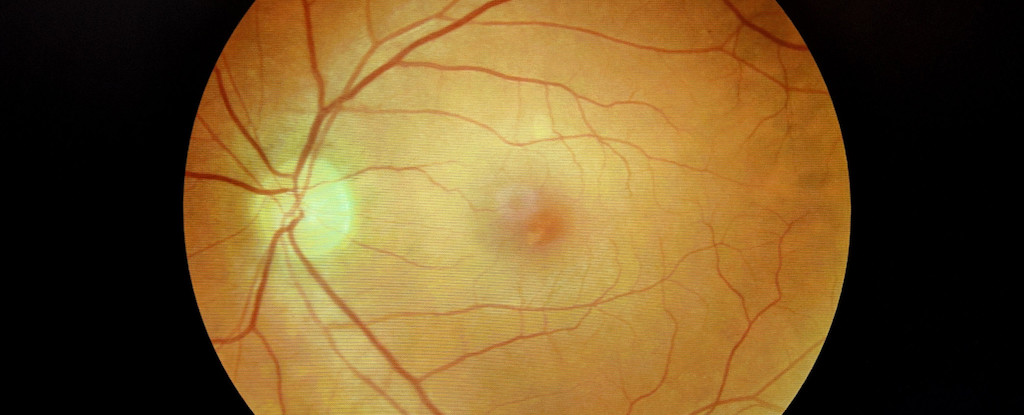
Research from Yale University has revealed that COVID-19 may contribute to the formation of protein plaques resembling those found in Alzheimer’s patients, not only in the brain but also in the eyes. This discovery could provide a clearer understanding of “brain fog,” a symptom frequently reported by individuals recovering from COVID-19, characterized by memory and cognitive difficulties.
The study, led by ophthalmologist Brian Hafler, explores the potential connection between COVID-19 and the accumulation of amyloid beta, a protein commonly associated with Alzheimer’s disease. “There is growing evidence linking COVID-19 and brain fog, a commonly reported symptom following infection,” Hafler stated. He noted that while the mechanisms behind brain fog remain unclear, the presence of amyloid beta in the central nervous system now presents a possible explanation.
Investigating Retinal Tissue and Amyloid Beta
Retinas are integral components of the central nervous system and serve as accessible sites for clinical observation. Previous studies have indicated that amyloid beta builds up in both the retinas and brains of Alzheimer’s patients. This finding suggests that retinal examinations could serve as effective tools for diagnosing and monitoring Alzheimer’s disease on a larger scale.
In their investigation, researchers utilized postmortem human retinal tissue and created retinal organoids—three-dimensional models derived from human stem cells. They focused on two proteins: neuropilin-1 (NRP1) and angiotensin-converting enzyme 2 (ACE2), both identified as potential entry points for the SARS-CoV-2 virus into neurons. The presence of NRP1 was notably higher in neurons and glial cells from the retinal tissue of individuals with a history of COVID-19.
The study revealed that even individuals without a history of dementia exhibited increased amyloid beta accumulation if they had contracted COVID-19. This accumulation often resulted in retinal tissue that resembled that seen in Alzheimer’s patients. Researchers also observed a rise in amyloid beta levels in retinal organoids exposed to the spike protein of SARS-CoV-2, which is crucial for the virus’s ability to invade host cells.
By introducing an NRP1 inhibitor, the researchers were able to mitigate the spike protein-induced increase in amyloid beta, indicating a potential avenue for addressing neurological complications associated with COVID-19.
Implications for Alzheimer’s Disease and Future Research
Hafler emphasized the significance of these findings. “Mechanistically, the involvement of NRP1 in amyloid beta aggregation gives a specific molecular target for future investigation,” he explained. The study points to the possibility that exposure to SARS-CoV-2, especially its spike protein, may lead to amyloid beta aggregation in human retinal tissue and organoids.
The implications extend beyond understanding COVID-19’s effects. Hafler suggests that amyloid beta may act as a protective agent for the brain, previously thought to be solely a contributor to Alzheimer’s disease. This protein could serve as part of the brain’s immune response to combat infections, including viral ones. “It bolsters the amyloid beta antimicrobial hypothesis of Alzheimer’s disease, suggesting that amyloid beta could act as part of the brain’s innate immune response against viral infections,” Hafler noted.
The research team highlights the need for further studies to determine if other viruses could induce similar amyloid beta accumulations. To that end, Hafler and his colleagues are currently conducting clinical trials to explore whether COVID-19 infection raises the long-term risk of Alzheimer’s disease.
“Our ultimate goal is to prevent long-term neurological effects of COVID-19 and explore NRP1 inhibitors and other modulators of virus-host interactions as potential therapeutics for preventing viral-induced amyloid pathology and Alzheimer’s disease,” Hafler stated. The study has been published in the journal Science Advances, contributing valuable insights into the potential long-term impacts of COVID-19 on neurological health.