Understanding how parents respond to their children’s pain can significantly impact a child’s perception of discomfort. Research highlights that the way adults react to pain, whether through comfort or tough love, plays a crucial role in shaping a child’s response to pain and their overall relationship with movement.
Children’s Pain Perception Shaped by Parental Responses
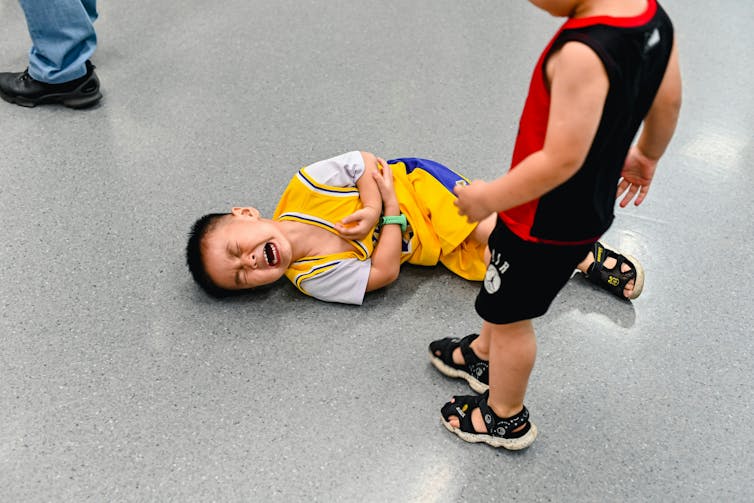
Imagine a typical school drop-off scenario: a six-year-old girl sprints across the playground and trips, falling hard. As she lies on the ground, the playground falls silent. In that instant, she looks up, searching her parent’s face for cues on how to react. This moment is pivotal, as children often gauge their distress based on the reactions of adults around them.
Parents instinctively want to protect their children, leading to a natural urge to rush in and comfort them. However, this response can inadvertently signal to the child that pain is something to be feared. Research indicates that minor injuries like bumps and scrapes occur frequently in young children, particularly in active settings such as daycare, with incidents happening approximately once every three hours. The reactions of adults during these times can either amplify a child’s fear or help them understand that pain is a normal part of life.
Effective Communication and Reactions Matter
Two common phrases that parents often use in response to a child’s pain can be counterproductive: “You are OK” and “Don’t cry.” The former minimizes the child’s experience, suggesting that their feelings are invalid. The latter discourages healthy emotional expression, implying that the child’s pain or fear is not worthy of acknowledgment.
Instead, experts advocate for a balanced approach. Parents are encouraged to conduct a quick mental assessment of the situation. If the child is safe and responsive, it is essential to provide verbal reassurances that they are safe and that their feelings are valid. Simple phrases like “that looked sore” or “I’m here” can provide comfort without diminishing the child’s experience.
Age plays a significant role in how to approach comfort. For toddlers, physical comfort and simple words are key. Primary school-aged children may appreciate being involved in their own care, while teenagers often require a mix of validation and autonomy. Asking them what they need can empower them in their healing process.
As children recover from minor injuries, their relationship with movement is also influenced by how they are treated during their recovery. Traditional advice such as RICER (rest, ice, compression, elevation, referral) has evolved. New guidelines known as PEACE & LOVE suggest a more active approach to recovery. PEACE focuses on immediate responses, while LOVE emphasizes the importance of optimism and gentle movement in the days following an injury.
Research has shown that children can change their perception of pain through narrative. Parents can help by retelling the story of an injury later, emphasizing the child’s strengths and resilience. This reframing can shift the child’s mindset from one of fear to one of empowerment.
In conclusion, parents should approach their children’s pain responses with a combination of calmness and validation. It is essential to recognize that while it is natural to react with concern, how parents manage these moments can foster a child’s understanding of pain and healing. As Joshua Pate notes, acknowledging that “good enough” parenting patterns exist can help children develop a healthy relationship with their bodies and pain management.