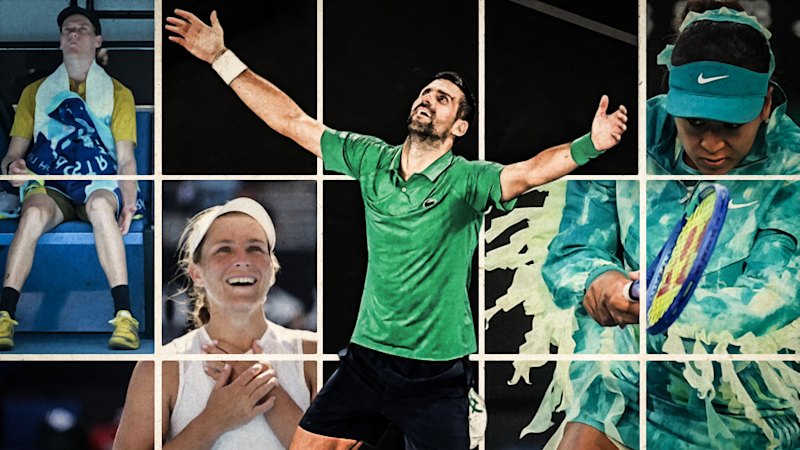
The Australian Open concluded with thrilling matches and unexpected twists, showcasing the resilience and talent of players from around the globe. World No.1 Carlos Alcaraz cemented his status as a rising star by battling through heat and cramps to secure his first Grand Slam title in Melbourne. His victory marked a significant milestone, as he had never previously advanced beyond the quarter-finals in this tournament.
Alcaraz’s journey included a remarkable comeback in the semi-finals, where he overcame a 3-5 deficit in the fifth set against Jannik Sinner. He dominated his initial matches, winning his first 17 sets, and ultimately triumphed in a gripping final against Elena Rybakina, who captured the women’s title after a fierce battle with Aryna Sabalenka. Rybakina’s win, her first Australian Open title, further establishes her position as one of the top players in women’s tennis.
The tournament was not without its controversies. During the third round, Novak Djokovic expressed frustration when the chair umpire requested fans to refrain from distracting players. The crowd’s mixed reactions included loud boos directed at Djokovic, highlighting the intense atmosphere surrounding his matches.
Heat played a significant role in the competition’s dynamics, particularly affecting players like Sinner, who struggled with cramps during his matches. The Australian Open’s five-level heat stress scale was activated, prompting officials to halt play on outside courts during extreme conditions. Notably, the temperature peaked at 42.7 degrees Celsius on one of the hottest days, adding an extra layer of challenge for competitors.
Among the tournament’s standout stories was Maddison Inglis, who emerged as a fairytale contender. Ranked 168th, Inglis advanced from qualifying rounds to the fourth round, where she faced Swiatek after receiving a walkover from Naomi Osaka, who withdrew due to injury. Inglis’s remarkable run earned her a prize of $480,000 and showcased her potential on the international stage.
The tournament also saw the emergence of young talent, with 18-year-old Iva Jovic making her mark by reaching the quarter-finals after an impressive series of performances. Her journey through the tournament highlighted the promising future of tennis, as she continued to impress audiences with her skill and determination.
Despite the excitement, logistical challenges arose, including lengthy queues that plagued the early rounds. Tournament organizers temporarily paused the sale of ground passes to manage the overwhelming crowd, which reached an attendance record of 1,311,112 over the duration of the event. This figure surpassed last year’s record, indicating the growing popularity of the tournament.
As the tournament wrapped up, discussions about the future of Craig Tiley, the tournament director, emerged. Having served in this role since 2006, Tiley has been linked to potential moves within the U.S. Tennis Association, leaving fans and stakeholders speculating about the future leadership of the event.
In summary, the 2024 Australian Open not only provided thrilling matches and memorable performances but also showcased the resilience of players navigating both high-stakes competition and challenging conditions. With records broken and new stars emerging, the tournament once again affirmed its status as a premier event in the tennis calendar.