


































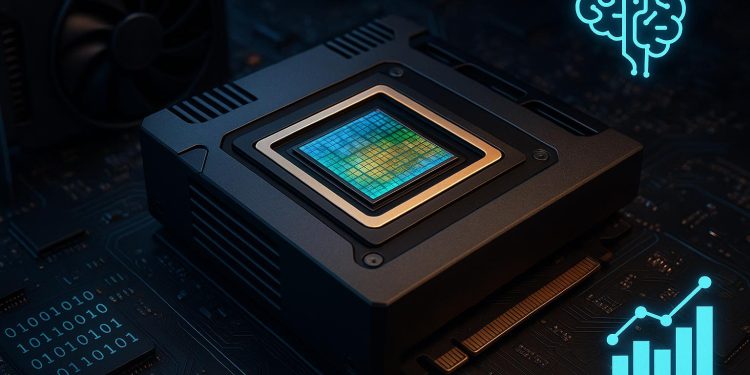
The role of Graphics Processing Units (GPUs) has evolved significantly from their original purpose of enhancing video game graphics. Today, GPUs are integral to various sectors, including science, healthcare, artificial intelligence, and finance, demonstrating their potential to reshape modern technology. This transformation emphasizes GPUs as crucial components in driving advancements across numerous fields.
The Rise of GPU Power
The power of GPUs lies in their unique processing capability. Unlike Central Processing Units (CPUs), which handle tasks sequentially, GPUs execute thousands of small tasks simultaneously through a method known as parallel processing. This ability allows them to tackle complex computations efficiently, making them indispensable in high-demand environments.
Applications in Scientific Research
In the realm of scientific research, GPUs have become invaluable tools. Researchers utilize them to study complex phenomena, such as climate change, weather patterns, and the intricacies of human biology. By enabling the rapid processing of large data sets, GPUs facilitate quick hypothesis testing and pattern recognition. For instance, in climate science, the speed of GPU computations can be crucial for timely decision-making, potentially saving lives during natural disasters.
In healthcare, the impact of GPUs is equally profound. Hospitals employ these units to enhance the analysis of medical imaging, such as X-rays and MRIs. With their ability to process high-resolution images rapidly, GPUs can highlight critical issues, aiding medical professionals in diagnosing conditions more accurately and efficiently. Moreover, machine learning algorithms powered by GPUs learn from historical data, improving diagnostic accuracy and treatment decisions.
Transforming Artificial Intelligence
The field of artificial intelligence (AI) heavily relies on GPUs due to their capacity to manage vast amounts of data and accelerate model training. This efficiency reduces training times from hours to mere minutes, enabling the widespread adoption of AI technologies in various applications. Today, AI can be found in smartphones, vehicles, and even in sectors like entertainment and finance. For example, in online gaming and betting platforms, AI systems analyze user behavior patterns, enhancing user experience and engagement.
Impact on Entertainment and Design
In entertainment, particularly in film and animation, the advancements brought by GPUs are striking. Artists and animators leverage this technology to create visually stunning sequences with intricate details. The rendering time for complex scenes, which once took days, can now be completed in hours, allowing studios to experiment with new ideas while minimizing financial risks.
Similarly, engineers in industries such as automotive and aerospace utilize GPUs for 3D design and modeling. The ability to visualize stress points and structural integrity in real-time not only enhances the design process but also improves safety and reduces production costs.
Financial Innovations
The financial sector has also embraced GPU technology. Banks and investment firms utilize GPUs to analyze market trends, assess risks, and execute trades at lightning speed. By processing millions of transactions per second, these systems help institutions make informed decisions and detect fraudulent activities before they escalate. The capabilities of GPUs enable financial analysts to respond swiftly to market dynamics, ensuring competitive advantage.
Energy and Climate Solutions
In energy management, GPUs play a vital role in forecasting energy demands and optimizing resource allocation. By analyzing data related to weather patterns and energy consumption, organizations can predict power needs more accurately. This foresight can lead to more efficient energy distribution and better preparation for extreme weather events.
Moreover, in the development of self-driving cars, GPUs provide the necessary computational power to process data from cameras, radar, and lidar systems in real-time. This technology enables autonomous vehicles to navigate complex environments safely, significantly reducing the risk of accidents.
Everyday Applications and Future Prospects
For the average consumer, GPUs operate behind the scenes, enhancing everyday applications. Whether editing photos, streaming videos, or participating in virtual meetings, GPUs enhance user experience by optimizing performance and visual quality. As technology continues to advance, the influence of GPUs is expected to expand even further.
Looking ahead, experts anticipate that the growth of GPU technology will catalyze innovations in fields like robotics and immersive learning experiences. As these powerful tools simplify complex tasks, they empower individuals and organizations to create groundbreaking solutions.
In conclusion, GPUs have transcended their initial role in gaming to become pivotal in a wide array of industries. Their ability to process vast amounts of data efficiently has made them a cornerstone of modern technology. As their capabilities continue to evolve, GPUs are set to remain at the forefront of innovation, driving progress and shaping the future across numerous fields.