Members of Perth’s LGBTIQA+ communities and their allies gathered at Northbridge Piazza on December 23, 2023, to protest the Northern Territory government’s recent decision to block access to puberty blockers for individuals under the age of 18. The ruling, announced by the Country Liberal Party (CLP) government, has sparked widespread concern over the implications for transgender rights.
Steve Edgington, the Northern Territory’s Health Minister, stated that the government’s decision reflects a stance against “dangerous ideologically driven practices” within the health system. This announcement follows a broader trend across Australia, with the Queensland government extending its ban on puberty blockers until at least 2031. Similar moves have been seen internationally, including the United Kingdom, which recently implemented a ban after the controversial Cass Review into gender treatments.
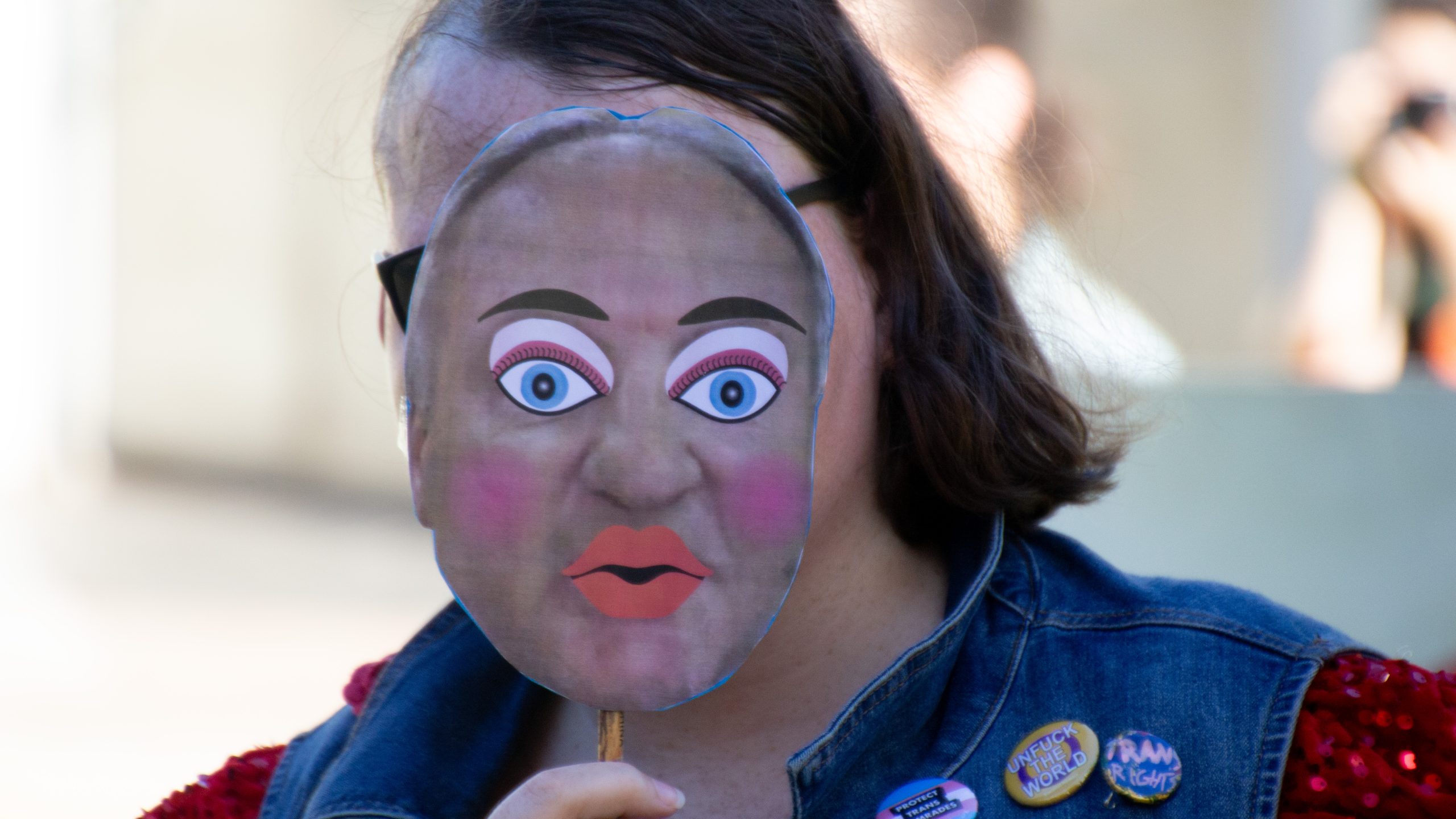
Despite restrictions imposed by local authorities on the protest, approximately 60 attendees marched peacefully through the streets of Perth. Demonstrators held up masks depicting Edgington’s face, drawing parallels to mockery directed at Russian leader Vladimir Putin’s treatment of LGBTIQA+ communities.
The event featured speeches from several activists, followed by an open-mike session where participants were encouraged to share personal stories and express their concerns. A recurring theme emerged: many attendees believe that the erosion of transgender rights could extend to the rights of adults, as well as broader LGBTIQA+ rights and women’s healthcare.
During the rally, Maddie, a patient at WA’s Youth Gender Clinic, shared her positive experiences accessing gender-affirming care. “I just want to celebrate every trans person in this country, and in my life, who continues to live openly and fight for the life that we want to live,” she remarked. Her comments highlighted recent achievements for transgender rights, such as the removal of the WA Gender Recognition Board and reforms in New South Wales that eliminated the requirement for surgery to change legal gender.
The protest also featured reflections from Alex Bainbridge, an activist who has transitioned to Queensland. He recounted his experiences attending rallies and hearing the distressing stories of families affected by government bans on affirmative care. “The heartbreaking stories of young people and their families who have been cut off from affirmative care through the government’s ban are difficult to hear,” he stated.
Advocates emphasized that healthcare bans not only infringe upon human rights but also contradict Australia’s obligations as a signatory to the Universal Declaration of Human Rights. Stacie Mei Laccohee-Duffield, from Queer and Diverse Pathways, expressed the urgency of addressing these rights violations. “These are not just words or abstract principles; they are about real lives, real children, real young people who want to become adults,” she asserted, sharing her own journey of transitioning later in life.
Critics of the bans argue that while puberty blockers are deemed unsafe for treating gender dysphoria, they are simultaneously accepted for treating precocious puberty. This contradiction was noted by Kate Salinger-Hatter from PFLAG WA, who stressed the importance of an intersectional approach to these issues. “The attack on the bodily autonomy of trans youth is a freeway to attacks on bodily autonomy of women and people assigned female at birth,” she stated, warning that political interference in medical decisions could have far-reaching consequences.
As the protest concluded, the atmosphere remained one of resilience and determination. Activists pledged to continue fighting for the rights of transgender individuals and to draw attention to the broader implications these bans have for all marginalized communities. The ongoing discourse surrounding gender-affirming care continues to evolve, with advocates urging policymakers to prioritize the well-being of young people and uphold their rights.