
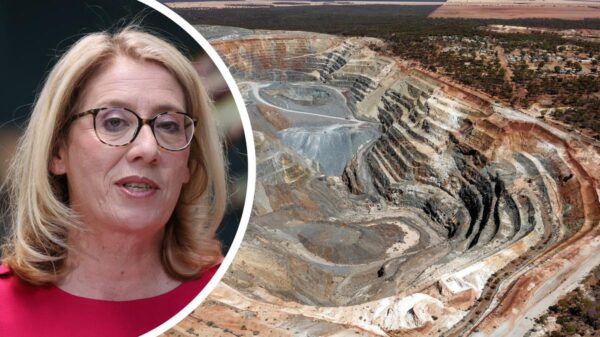






















The financial landscape for Western Australia (WA) has shifted dramatically, with the state poised to report an impressive budget surplus exceeding $2 billion for the current financial year. This positive outlook is bolstered by an additional $2.4 billion in royalties from iron ore and gold, attributed to soaring global prices. The total expected revenue from royalties for this financial year is projected to reach a staggering $9.968 billion, supplemented by an $8 billion Goods and Services Tax (GST) allocation.
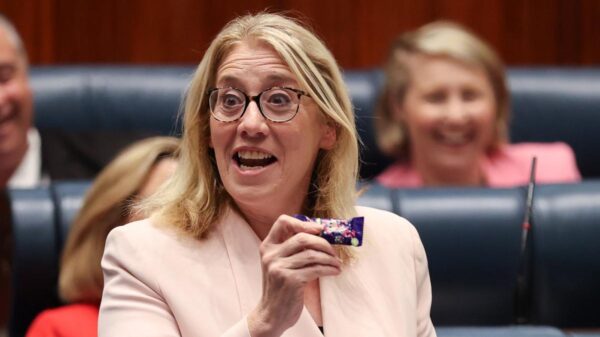
This financial windfall complicates the efforts of Rita Saffioti, WA’s Minister for Transport, and Premier Roger Cook, who have been advocating for a fairer share of GST revenue. Despite the state’s burgeoning fiscal health, they argue that WA’s current GST allocation remains below its per capita share of $10.4 billion, effectively subsidizing other states and territories by $2.4 billion. The juxtaposition of WA’s fiscal surplus against its GST allocation presents a formidable challenge in persuading critics, particularly those on the east coast, who may see the state’s financial needs as less pressing.
Growing Financial Disparities and Political Challenges
As WA’s financial position strengthens, the political landscape becomes increasingly complex. Many eastern states view the surplus and royalties with skepticism, questioning the need for adjustments to the current GST framework. Saffioti and Cook have initiated campaigns aimed at changing perceptions and garnering support from political leaders and commentators in other regions. However, the recent announcement of the $2.4 billion increase in royalties may exacerbate existing tensions, making it difficult to portray WA as a region in need of additional financial support.
The Productivity Commission, which is currently reviewing the GST arrangements made in 2018, will play a crucial role in determining WA’s future financial distribution. The state’s leaders now face the uphill task of convincing the Commission that the current GST deal should remain in place, particularly given the recent windfall that could influence perceptions of WA’s fiscal needs.
Public Sentiment and Economic Decisions
Amid the financial prosperity, many residents of WA are expressing concerns about the government’s fiscal decisions. Questions are arising as to why the state government has opted to reduce its annual power bill rebate despite the substantial increase in revenue. Additionally, there are calls for more significant cost-of-living measures to alleviate the financial pressures faced by citizens.
The divergence between WA’s financial success and the tangible benefits experienced by its residents could lead to growing discontent. With the festive season approaching, many are hopeful for a more equitable distribution of resources, echoing the sentiment that everyone deserves a fair share of the economic “pudding.”
As the political and economic debates unfold, the trajectory of WA’s GST allocation and overall financial strategy remains a pivotal issue. With Prime Minister Anthony Albanese potentially reluctant to make drastic changes for fear of losing electoral support in WA, the coming months will be critical in defining the state’s fiscal future and its relationship with the rest of the nation.