


























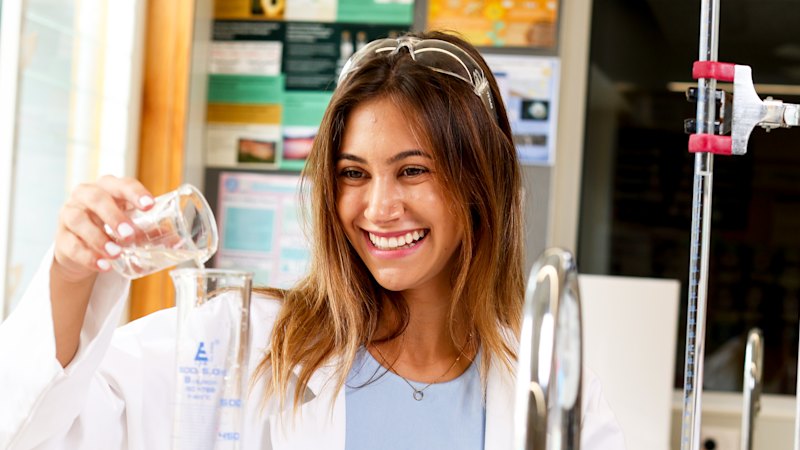
The remarkable achievement of Michaela Loukas, a 17-year-old student from Marist Catholic College in Penshurst, Australia, has made headlines after she developed an artificial intelligence (AI) model capable of detecting cancerous breast tissue with an impressive 98 percent accuracy. This breakthrough not only highlights her scientific talent but also the potential of AI in healthcare.
Transforming Scientific Research into Real-World Solutions
Michaela’s journey began as she embarked on her HSC science extension project. Late one night, just before midnight, she experienced a pivotal moment when her model consistently returned the same results. “It just kept repeating the result … I just couldn’t believe it. I was like, hold up – did I just pick up something pretty significant?” she recalled.
For her project, titled Assessing the Accuracy and Interpretability of a Recurrent Neural Network for Breast Cancer Classification and Molecular Subtyping using Ribonucleic Acid Sequencing Data, Michaela trained her model to classify breast cancer, achieving a remarkable accuracy rate. While her model excelled at distinguishing between malignant and healthy tissue, it also identified the four most common breast cancer subtypes with a 70.6 percent accuracy. Though this is promising, she notes it is not yet ready for clinical application.
Beyond the numbers, Michaela’s model revealed significant findings. She discovered that her AI identified the gene transferrin, which plays a crucial role in iron transport, as potentially influential in breast cancer development. “I found all this secondary research that validated the results yielded by my model,” Michaela stated, reflecting on her excitement when she shared her findings with her mother, waking her up in the process.
Inspiration and Aspiration in STEM
Michaela’s passion for science, technology, engineering, and mathematics (STEM) has been evident from a young age. At just eight years old, she challenged gender biases by moving a boys’ periodic table T-shirt to the girls’ section in a clothing store. Joining a lunchtime coding club in primary school, inspired by a female teacher, solidified her interest in the field.
Her determination to merge software skills with scientific inquiry was partly influenced by her father’s battle with multiple cancers. “I was just confused because we’ve got all this science and theory behind cancers … but why are we so stagnant with our treatment options?” she asked. Although her father is now doing well, he playfully comments on her focus on breast cancer, saying, “Of course you choose the one I don’t have.”
Michaela’s project also stems from a desire to improve the timeliness of cancer diagnoses. She witnessed a friend’s mother struggle for months to determine her breast cancer type and appropriate treatment. “By the time you actually receive the information … the cancer’s already progressed, and it’s so costly,” she explained. Her vision extends beyond personal experience; she emphasizes the need for equitable access to treatment globally.
Looking ahead, Michaela awaits her HSC results, set to be announced next week. She aspires to pursue a bachelor’s degree in engineering with a focus on bioinformatics at the University of New South Wales. Her journey underscores the impact of young scientists on healthcare innovation and the promise of AI in transforming medical diagnostics.