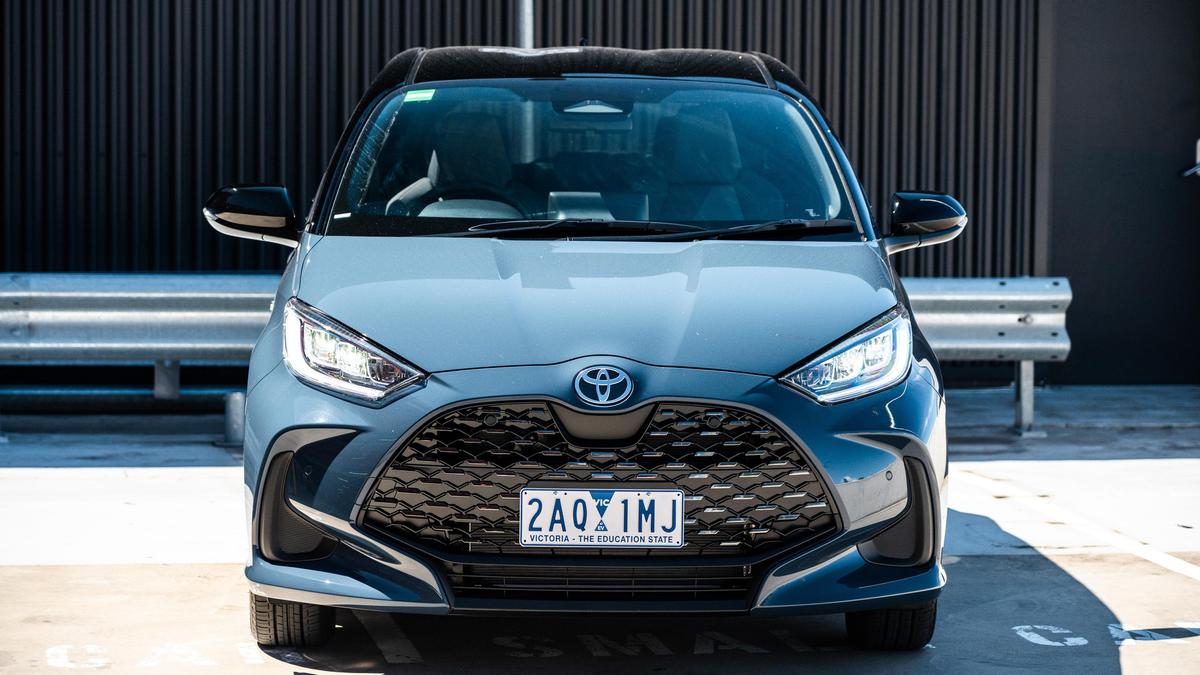
The upcoming generation of the Toyota Yaris will introduce a fully electric drivetrain alongside its existing hybrid options. This announcement was made by Andrea Carlucci, Toyota Europe’s strategy and marketing chief, during an interview with AutoExpress. Carlucci emphasized the importance of electrification, stating, “If electrification is the direction, I think we cannot avoid having a fully electrified version. When, I cannot comment, but it looks to be quite obvious.”
Carlucci further elaborated on Toyota’s vision for the Yaris, explaining that the company aims to provide a platform offering multiple energy options. This strategy would allow customers to choose between internal combustion, hybrid, and fully electric drivetrains. He expressed confidence that this approach would enable Toyota to deliver “different powertrains that are the right solution for every customer.”
The next-generation Yaris is anticipated to launch in 2027 or 2028, aligning with similar plans for the larger Corolla. The new Corolla is expected to debut in the second half of 2026, featuring a design inspired by a groundbreaking concept revealed at the previous year’s Tokyo motor show. It will also offer a range of petrol, hybrid, and electric drivetrains.
Carlucci’s comments specifically pertain to the Yaris models sold in developed markets, including Europe, Japan, and Australia. In contrast, a value-engineered version of the Yaris is available in regions such as Asia, Africa, the Middle East, and Latin America. This variant relies heavily on Toyota’s older B platform and does not offer a hybrid option. The timeline for its transition to a more modern architecture remains uncertain.
In May 2025, Toyota laid out a strategic plan to consolidate its combustion and electric model lines. This initiative aims to streamline operations and reduce potential customer confusion, particularly concerning models like the all-electric bZ4X alongside hybrid and plug-in hybrid variants of the RAV4. The first vehicle to benefit from this strategy was the eighth-generation Lexus ES, which launched in April 2025, offering both hybrid and pure electric options in markets such as Australia.
Toyota’s decision to adopt a multi-energy strategy reflects a broader trend in the automotive industry. Stellantis has similarly embraced this approach, making many of its European models available with both combustion engines and electric options. In contrast, manufacturers like Renault continue to develop distinct combustion and electric models, as seen with their Clio and 5 E-Tech vehicles.
As the Yaris EV prepares to enter a competitive market, it remains to be seen how it will perform against European rivals. The Renault 5 E-Tech, for instance, boasts a 52 kWh battery that provides a WLTP range of 410 km, while the updated Peugeot e-208 offers a range of 431 km from its 51 kWh battery.
With the automotive landscape shifting towards electrification, the introduction of an electric Yaris is a significant step for Toyota as it seeks to meet the evolving demands of consumers globally.