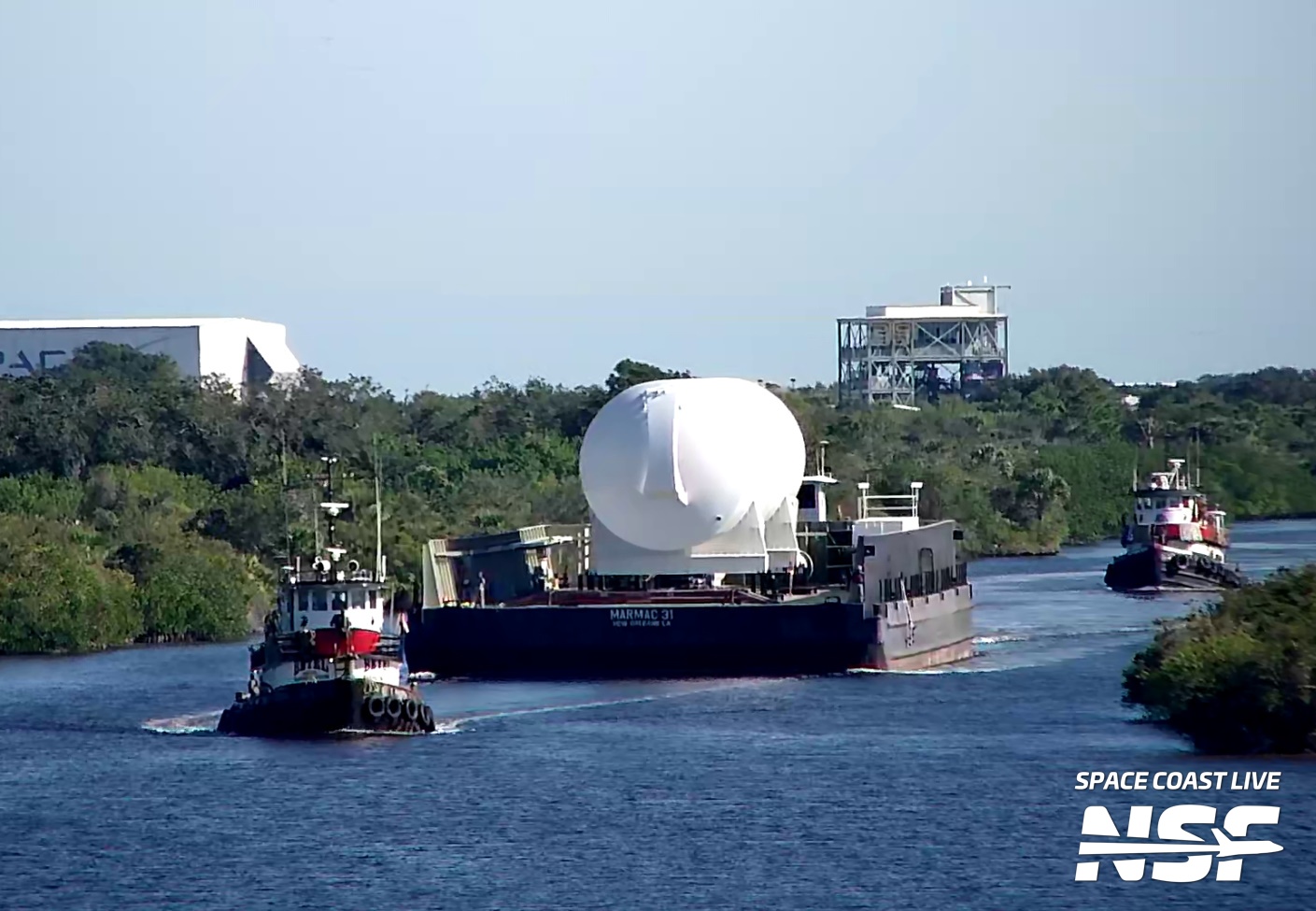
SpaceX has confirmed the successful trial run of a specialized transport barge, the Marmac 31, designed to move its large Starship vehicles from the Starbase facility in Texas to launch sites on Florida’s Space Coast. This development marks a significant step in the company’s ambitious Starship program, facilitating the transport of the towering 237-foot rocket boosters and upper stages by sea.
The identification of the Marmac 31 by NSF’s Julia Bergeron led to confirmation from SpaceX’s Vice President of Launch, Kiko Dontchev. This announcement comes after months of speculation regarding SpaceX’s transportation strategy, which Dontchev first detailed in September 2022. At that time, the company faced initial doubts about its ability to transport such large vehicles horizontally, a method deemed necessary for safe shipping.
In a tweet from September 21, 2022, Elon Musk indicated that the first transports could occur in Q2 2026, stating, “vehicles initially transferred by boat from Port of Brownsville to the Cape.” The company plans to transport both the Super Heavy booster and the Starship upper stage in a tilted, horizontal position to ensure stability during maritime transit.
The successful trial run on December 30, 2025, saw the Marmac 31 delivering hardware to the turn basin near Starbase, confirming its capability for future operations. The barge, measuring 260 feet by 72 feet, has been modified to include reinforcements or “skirts” that will cradle the cylindrical tanks and fuselage sections securely throughout the journey.
SpaceX has previously used barges to deliver various components related to the Starship program, but this trial marks the first dedicated test for full vehicle transport. Historically, maritime transport of rocket stages has been a staple in the space industry, dating back to the Apollo era. The practice continued with the Shuttle External Tank and has been utilized by competitors like United Launch Alliance (ULA) for transporting rocket stages to the East Coast.
As SpaceX prepares for upcoming launches from both Starbase and the historic Launch Complex 39A at Cape Canaveral, establishing a reliable supply chain between Texas and Florida is crucial. The company is expanding its facilities, including the construction of the East Coast’s Starfactory, which will enable vehicle assembly closer to the launch sites.
The Marmac 31 is expected to receive a name that aligns with SpaceX’s maritime fleet, with suggestions including “You’ll Thank Me Later,” referencing Dontchev’s previous statement. As preparations continue, there are questions about which vehicles will be the first to undertake this maritime journey, with potential candidates being future boosters like Booster 21 or 22, or possibly a recovered Booster 12.
As SpaceX aims for increasingly complex flight tests and plans to conduct orbital refueling demonstrations in 2026, the logistics demonstrated by the successful trial of the transport barge will play a vital role in sustaining the operational tempo necessary for the Starship program. This initiative is a critical, albeit less glamorous, milestone in making Starship a truly reusable and efficient transport system for space exploration.