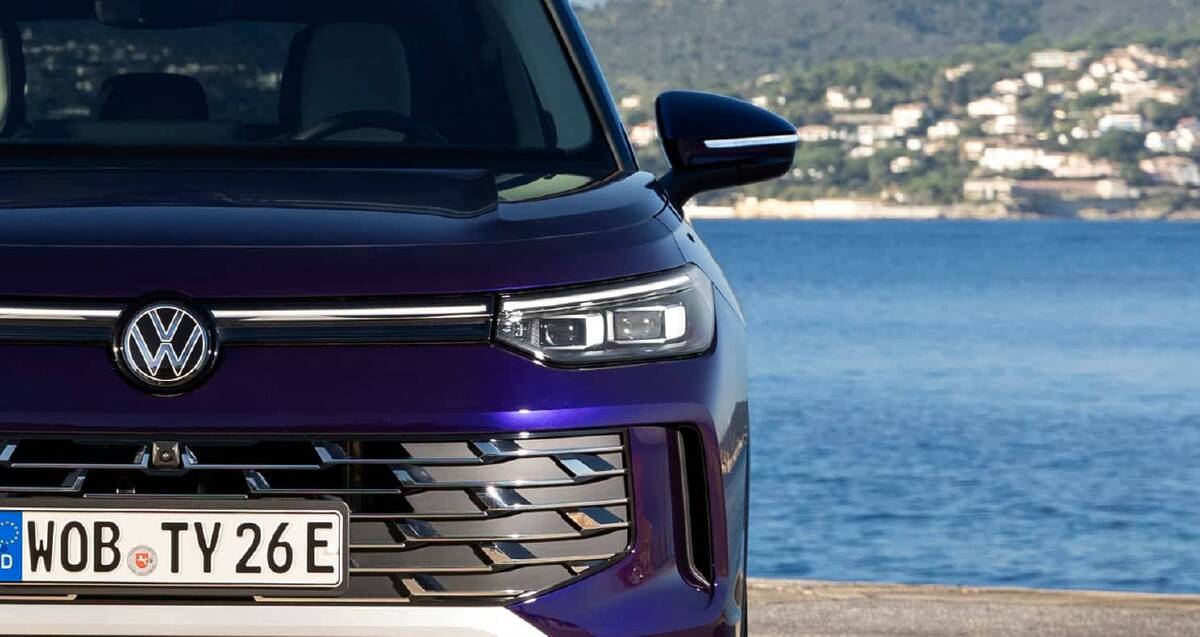
Volkswagen has officially introduced pricing for the eagerly awaited plug-in hybrid versions of its popular Tiguan and Tayron SUVs. The new eHybrid variants mark a significant move towards electrification for the German automaker, offering consumers a choice between two power levels in both the mid-grade Elegance and top-spec R-Line configurations.
The eHybrid system combines a 1.5-litre, four-cylinder turbo-petrol engine with an electric motor, delivering a total output of 150 kW for the Elegance grade and 200 kW for the R-Line. Each vehicle is equipped with a 19.7 kWh battery pack, providing a fully electric driving range between 113 km and 117 km, based on the widely recognized WLTP measuring standard.
Pricing and Features of the New eHybrid Models
The pricing for the Tiguan eHybrid starts at $64,590 prior to on-road costs, presenting a $3,000 increase over the standard 150 TSI 2.0-litre turbo-petrol AWD version and a substantial $13,500 increase compared to the base 110 TSI Elegance 1.4-litre FWD variant. The Tayron eHybrid is similarly positioned within the market, with its pricing reflecting a competitive edge against traditional rivals.
Both SUVs maintain a robust list of optional equipment comparable to their combustion-engine counterparts. Notably, the Tiguan eHybrid offers a boot capacity of 490 litres, which is a significant decrease from the combustion model’s 652 litres. The Tayron’s boot space also sees a reduction, dropping from 885 litres to 705 litres.
Market Competition and Challenges for Volkswagen
As Volkswagen rolls out these new models, it faces stiff competition from emerging brands such as BYD and Chery. For instance, the BYD Sealion 5 is available from just $33,990, and the Chery Tiggo 7 Super Hybrid starts at $39,990. The landscape is further complicated by established players like Mitsubishi and Kia, with their respective plug-in hybrid models priced at $57,290 for the outgoing Outlander PHEV and $71,130 for the Sorento PHEV.
Looking ahead, the market for mid-size plug-in hybrids is set to become even more competitive with the anticipated arrival of the plug-in hybrid Toyota RAV4 in 2026, priced from $58,840 before on-road costs.
Volkswagen has faced challenges locally, experiencing a 20.6 percent decline in sales during 2025 compared to the previous year. The company contends with heightened competition not only from traditional rivals but also from rising Chinese semi-premium and premium brands. Additionally, Volkswagen is in the process of updating many of its models, as demand for older versions wanes.
As the automotive industry shifts towards hybrid and electric vehicles, the success of the Tiguan and Tayron eHybrid models will likely influence Volkswagen’s position in a rapidly evolving market.