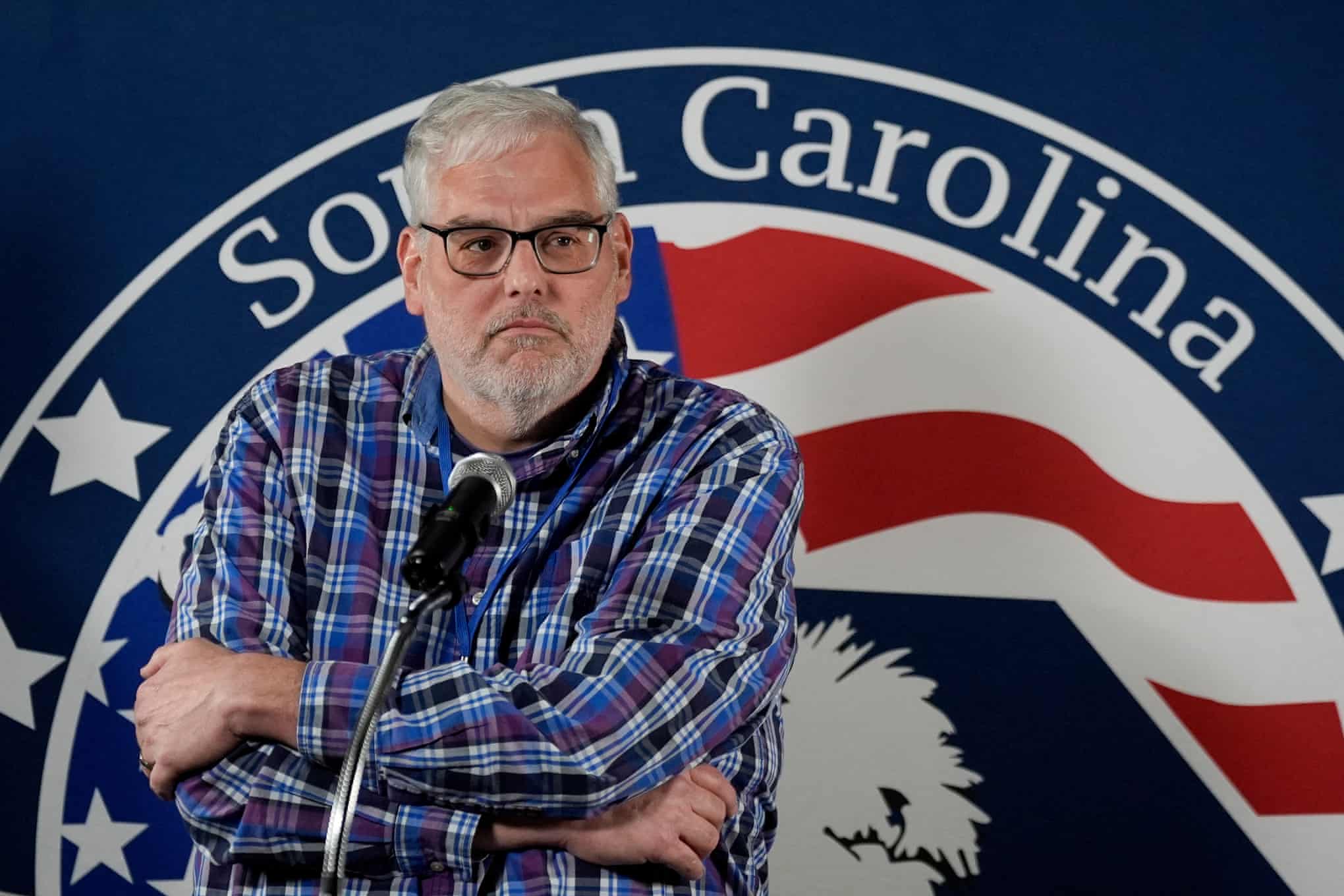
UPDATE: Veteran journalist Jeffrey Collins has witnessed the executions of 14 men over his 25-year career with the Associated Press, and he is calling for greater transparency in South Carolina’s capital punishment process. With seven executions in just 14 months, Collins highlights the urgent need for the public to understand the realities of state-sponsored killings.
South Carolina revived the death penalty in September 2022 after a 13-year hiatus due to pharmaceutical companies halting sales of lethal injection drugs. The state has recently acquired pentobarbital, a sedative, under a law protecting the identities of drug suppliers, raising ethical concerns about the execution process.
Collins, who serves as the sole AP reporter covering South Carolina, emphasized the importance of his role as an observer, stating, “People need to know what it looks like.” His accounts are often the only impartial records of executions, cited by lawyers and courts due to the lack of video documentation.
On his first execution on May 3, 2002, Collins witnessed the death of Richard Charles Johnson, convicted of killing a state trooper. Since then, he has observed 10 lethal injections, three firing squads, and one electric chair. Collins noted, “I can compare what happens, which is important for continuity.”
The recent increase in executions has put Collins in the spotlight, as he reflects on the emotional weight of his work. He described the somber atmosphere of the execution chamber, stating, “You realize you’re getting ready to go see someone die.” The witnessing process, he explains, is crucial not just for documentation but to maintain a human connection to the events.
In his observations, Collins has seen reactions from victims’ families and noted the emotional toll on both sides. He recalls a particularly poignant moment when he witnessed the execution of Jerry McWee, whose mother, an anti-death penalty advocate, was in the room. “A tear formed in McWee’s eyes, rolling down his cheek as he looked at his mom,” Collins shared.
As he prepares for each execution, Collins emphasizes thorough research on the cases, arriving at the prison hours in advance. His meticulous approach ensures that he captures every detail, knowing that his notes are the only official record of these state-sponsored deaths.
The secrecy surrounding South Carolina’s execution process poses challenges for Collins. “I’m all for sunshine,” he stated. “I don’t think executions should be publicly broadcast, but I think they need to be videotaped.” This transparency, he argues, is essential for accountability and understanding the methods used.
The recent execution of Mikal Mahdi, who was shot by a firing squad, drew scrutiny after his lawyers alleged a botched execution. Collins reported that Mahdi exhibited signs of discomfort during the process, raising questions about the handling of the execution.
As South Carolina continues to carry out executions, Collins remains committed to documenting the process. “This information gets out because it’s important,” he asserts. “The people of South Carolina have decided through their elected representatives to have the death penalty.”
With the ongoing debate over the ethics of capital punishment and the transparency of execution methods, Collins’ urgent call for accountability and clarity resonates now more than ever. As he reflects on his experiences, he urges society to confront the realities of the death penalty, stating, “People need to know what it looks like.”
As public interest in capital punishment grows, Collins’ insights and firsthand accounts are crucial in shaping the national conversation about the future of the death penalty in the United States.