
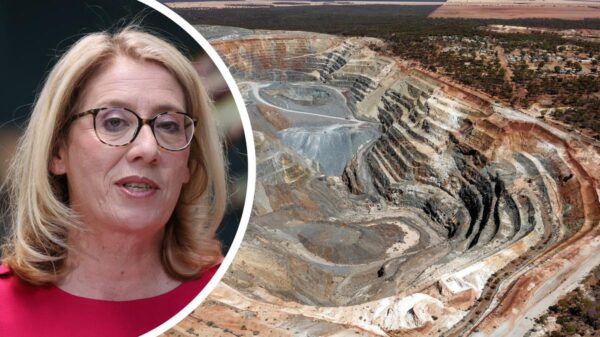


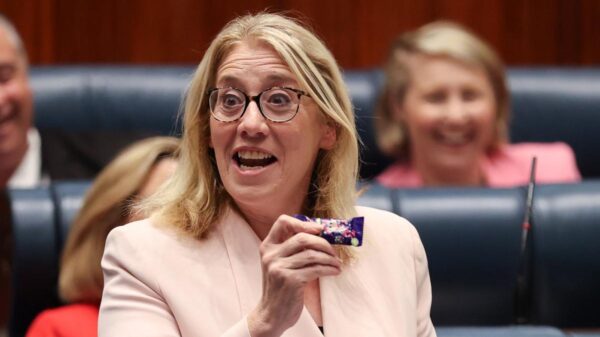
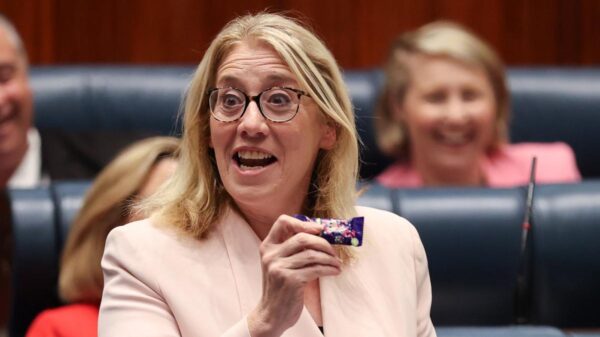



















BREAKING: Western Australia’s Treasurer, Rita Saffioti, has just confirmed a substantial $2.4 billion boost to the state budget, primarily driven by soaring iron ore and gold royalties. However, Saffioti insists that a lucrative GST deal is crucial for maintaining the state’s financial health.
The upcoming mid-year budget review is set to reveal a surplus exceeding $2 billion for the current financial year, with projections indicating multi-billion-dollar surpluses well into the future. This starkly contrasts with the $30 billion deficit projected in the federal budget and the red ink seen in many other states and territories.
While the financial forecast appears promising for WA, residents struggling with rising living costs may not feel the relief immediately. In an exclusive interview with The Sunday Times, Saffioti expressed disappointment over the Reserve Bank of Australia’s failure to implement further interest rate cuts this year, a concern for many West Australians facing financial strain.
“Despite our enviable economic position, it’s vital we don’t give up our fight to hold onto WA’s fair share of the GST,” said Saffioti. “Any changes to the deal would risk ripping $6 billion out of the WA economy.”
Currently, WA is expected to receive $8 billion in GST funds this financial year. Saffioti recently met with the Productivity Commission to advocate for a GST floor of no less than 75 cents, emphasizing the importance of these funds in meeting the state’s growing infrastructure demands.
Royalties from iron ore are projected to increase by $1.6 billion, while gold revenue is expected to rise by $799 million. Saffioti stated, “We will be investing this additional revenue straight back into our health system and measures to boost housing supply.”
Despite these positive forecasts, many West Australians are feeling the financial crunch. Recent data from Synergy shows that over 32,000 residential customers have entered payment plans due to unpaid bills, with the total amount owed reaching $127.7 million. This figure is $9 million higher than last year, indicating a growing crisis among households.
Saffioti has ruled out reinstating power bill rebates, despite widespread calls for assistance. Instead, she highlighted that public transport fares will be capped starting next month, saving commuters an estimated $625 per year.
In her remarks, Saffioti urged for more decisive action from the Reserve Bank of Australia regarding interest rates, noting that inflation has proven more persistent than anticipated. “Like everyone, of course we want the RBA to reduce interest rates and mortgage repayments for WA households,” she stated.
The mid-year budget review, scheduled for later this week, is expected to confirm no major changes to the original economic forecasts, maintaining a surplus of $2.4 billion and a net debt projected to rise from $38 billion to $42 billion over the next three years.
“Compared to every other state, our debt levels are far more sustainable,” Saffioti defended. “Our government’s strong financial management means we are able to continue to invest in what matters most to Western Australians.”
This latest update from the Treasurer highlights both the opportunities and challenges facing Western Australia as it navigates economic growth while ensuring support for its residents.
Stay tuned for further updates as the budget review unfolds, revealing critical insights into WA’s financial future.