






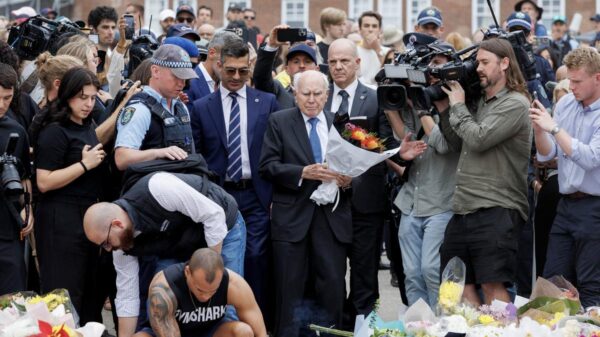






















Australian authorities are investigating the recent trip of Sajid Akram, 50, and his son, Naveed Akram, 24, to the Philippines, particularly focusing on their activities in the southern region of Mindanao. The father and son duo arrived in the Philippines on November 1 and left on November 28, just weeks before a tragic attack on the Jewish community in Bondi, which resulted in the deaths of 15 individuals during Hanukkah.
The city of Davao, known for its connections to extremist groups, was their final destination before they traveled back to Sydney via Manila. The Australian Federal Police have disclosed that homemade Islamic State flags and explosive devices were discovered in their vehicle at Bondi Beach, suggesting a potential link to terrorist activities.
History of Radicalism in Mindanao
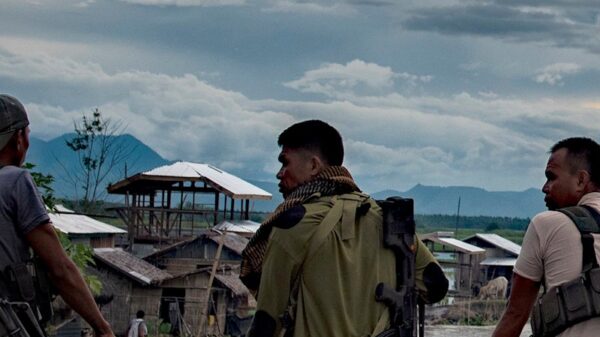
For decades, Mindanao has been recognized as a breeding ground for radical Islam, home to various militant groups and foreign fighters. The Philippine government has battled insurgencies, notably recapturing the city of Marawi from Islamic State fighters in a protracted conflict in 2017. This ongoing struggle has left a legacy of violence, with the region still facing threats from extremist factions.
According to Professor Greg Barton, a terrorism expert at Deakin University, the area has long been associated with grassroots insurgency activities that evolved into jihadi extremism. He noted that while the Philippine government has been effective in dismantling major training camps, smaller groups may still operate discreetly in the region.
Authorities have not yet disclosed the specific movements of the Akrams while in Mindanao. Australian Federal Police Commissioner Krissy Barrett stated that the investigation is focused on whether the Akrams were trained by terrorist networks before their return to Australia.
Concerns Over Extremist Ties
The investigation is delving into Naveed Akram’s connections to extremist circles in western Sydney, where he had previously gained attention from Australia’s counter-terrorism authorities in 2019. Although these connections did not trigger significant monitoring at the time, they are now under scrutiny as officials seek to understand the radicalization process of the Akrams.
Dr. Levi West, a terrorism expert at The Australian National University, emphasized that establishing relationships with local insurgent groups is crucial for accessing training facilities in the southern Philippines. He stated, “You can’t just show up at a training camp in the southern Philippines. If you just show up, you’ll be shot.”
The ongoing threat posed by the Islamic State East Asia (ISEA) remains significant. The Australian government recognized the group as a terrorist organization in 2017, and while its operational capabilities have been diminished, it continues to pose a risk, as evidenced by recent attacks in the region.
The Australian government has issued advisories warning against travel to central and western Mindanao due to the high risk of terrorism and kidnapping. As the investigation continues, authorities are working to piece together the Akrams’ potential connections to extremist networks and the implications of their visit to the Philippines.
Understanding the dynamics of radicalization in this context is essential for both Australian and Philippine authorities as they confront the ongoing challenges of domestic and international terrorism.