




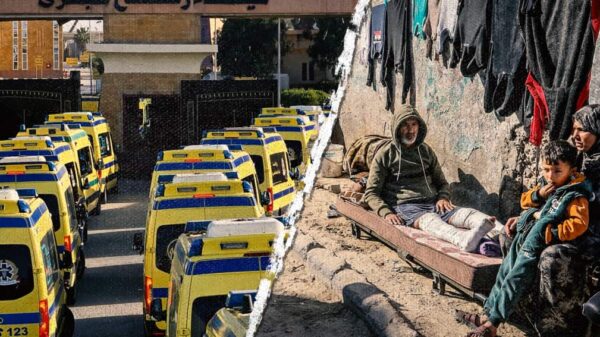



























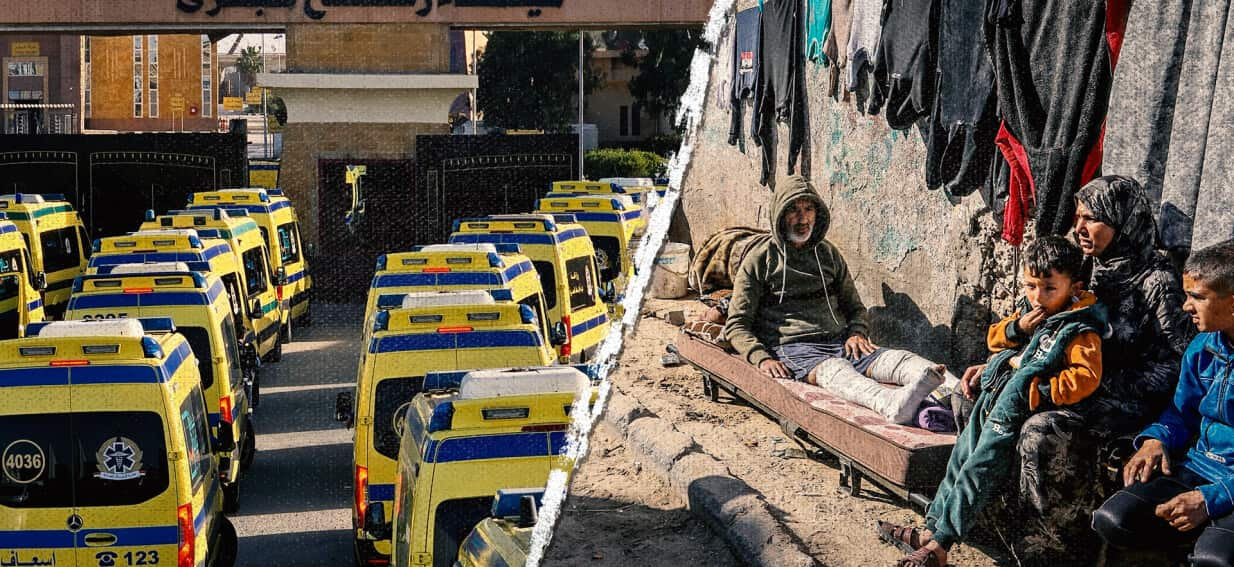
The Rafah crossing, a vital transit route between Gaza and Egypt, has officially reopened after nearly two years of closure. This development allows for the movement of people and goods, which many view as a potential lifeline for the region, especially in light of ongoing humanitarian needs. The reopening took place on October 1, 2023, and is expected to facilitate the entry of crucial humanitarian aid into Gaza.
This crossing represents the only gateway for residents of Gaza to access Egypt without going through Israel. According to the United Nations, the closure of the Rafah crossing significantly restricted the flow of essential supplies, exacerbating the humanitarian crisis in the area. With the crossing now operational, the Palestinian Authority has expressed optimism regarding the potential for improved conditions within Gaza.
The significance of this reopening cannot be understated. For nearly two years, the Rafah crossing remained largely closed due to political tensions and security concerns. The blockade had profound implications for the approximately 2.2 million residents of Gaza, many of whom faced severe shortages of food, medicine, and other essential resources. Humanitarian organizations have reported that the reopening could lead to a more stable flow of aid, which is critical for the well-being of the population.
Potential Benefits and Challenges Ahead
While many celebrate the reopening of the Rafah crossing as a step towards better humanitarian access, challenges remain. The Egyptian government has stated that it will closely monitor the movement of people and goods to ensure security. This raises questions about how effectively aid can be delivered and whether restrictions will limit the benefits of this reopening.
International organizations, including the United Nations and various NGOs, are preparing to increase their operations in Gaza. They aim to provide much-needed assistance, including medical supplies and food. However, the effectiveness of these efforts will depend on the ongoing political climate and the cooperation between Egypt, Israel, and the Palestinian Authority.
The reopening also brings up concerns regarding the future of Gaza. Some observers describe it as a “poisoned chalice,” suggesting that while access may improve temporarily, underlying issues remain unresolved. Continued blockade and restrictions could hinder long-term recovery efforts.
As the situation evolves, both humanitarian agencies and local authorities will need to work collaboratively to maximize the benefits of the Rafah crossing’s reopening. The hope is that this development can lead to a more sustainable solution for the people of Gaza, who have faced considerable hardships in recent years.
In conclusion, the reopening of the Rafah crossing marks a significant moment for Gaza, providing an opportunity for humanitarian aid and movement. However, the path forward is fraught with challenges that require careful navigation to ensure that the benefits are realized and sustained.