Thai Prime Minister Anutin Charnvirakul is set to update US President Donald Trump on the escalating conflict with Cambodia, which has entered its fifth day of violent border clashes. The situation has resulted in at least 20 fatalities and over 260 wounded, intensifying concerns regarding stability along the 800 km disputed frontier.
Conflict Details and International Involvement
Since the clashes erupted, both Thailand and Cambodia have exchanged artillery and rocket fire, marking some of the most severe fighting since a five-day conflict in July 2023. During that earlier crisis, Trump successfully intervened, urging both leaders to cease hostilities. Ahead of the scheduled call with Trump, Anutin stated he would provide “just an update” on the current situation.
Trump, who has expressed a strong desire to mediate once again, aims to salvage the ceasefire agreement he previously facilitated. In October, during a meeting in Malaysia with Anutin and Cambodian Prime Minister Hun Manet, the three leaders signed an expanded ceasefire agreement. Trump has stated, “I think we are going to have to make a couple of phone calls on Thailand and Cambodia, but we’ll get that one back on track.”
As fighting continues, accusations from both sides have intensified. Cambodia’s defense ministry claimed on Friday that Thailand had targeted civilian areas, describing the attacks as “brutal.” The ministry asserted that Thai forces shelled multiple sites, including ancient temples, and deployed armored vehicles into areas it described as its territory. “The heroic Cambodian forces will continue to stand strong, brave, and steadfast in their ongoing fight against the aggressors,” the ministry said in a statement.
Conversely, Thailand’s military contended that it is acting in self-defense against Cambodian encroachments. They stated their objective is to protect lives and sovereignty while asserting that operations have been planned by their armed forces. Anutin has reportedly expressed full support for military initiatives aimed at weakening Cambodia’s military capability.
Dialogue and Political Uncertainty
Despite the ongoing violence, a senior adviser to Hun Manet indicated that Cambodia is “ready at any time” for dialogue. However, Thailand has dismissed mediation efforts, insisting that Cambodia must demonstrate sincerity before bilateral negotiations can commence. In a recent conversation with US Secretary of State Marco Rubio, Thailand’s top diplomat Sihasak Phuangketkeow reiterated Bangkok’s commitment to peace but expressed concerns over Cambodia’s “repeated and escalating patterns of attacks.”
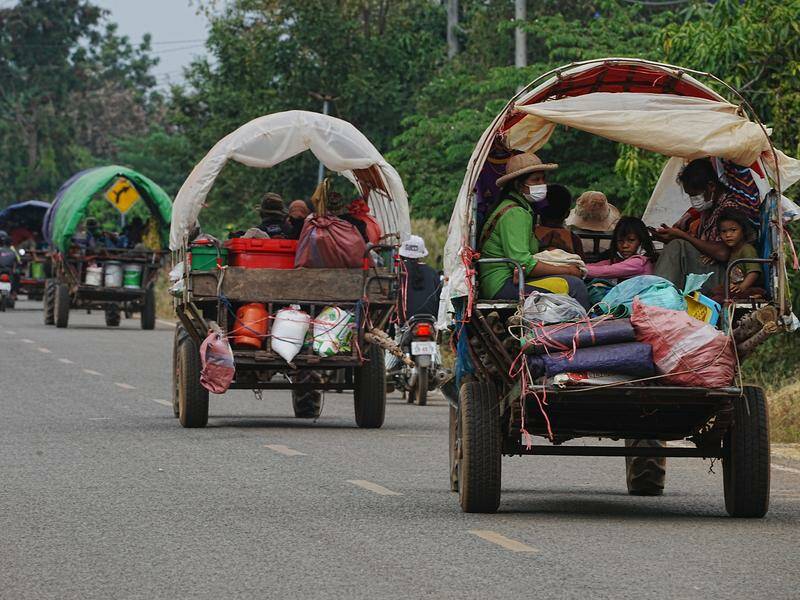
In Cambodia, government spokesperson Pen Bona stated he was unaware of any scheduled call between Hun Manet and Trump, but noted that the Prime Minister is always open to dialogue. Both nations are grappling with the humanitarian impacts of the conflict, as hundreds of thousands of people have been displaced by the ongoing fighting.
Adding to the complexity of the situation, Anutin faces a possible no-confidence motion amid political unrest over efforts to amend the constitution. He dissolved the Thai parliament on Friday, with elections anticipated in February 2024, further complicating the nation’s political landscape during this period of conflict.
As the situation unfolds, it remains uncertain whether Trump’s intervention will lead to an immediate cessation of hostilities. The international community is watching closely, aware that the implications of this conflict extend beyond the borders of Thailand and Cambodia.