



































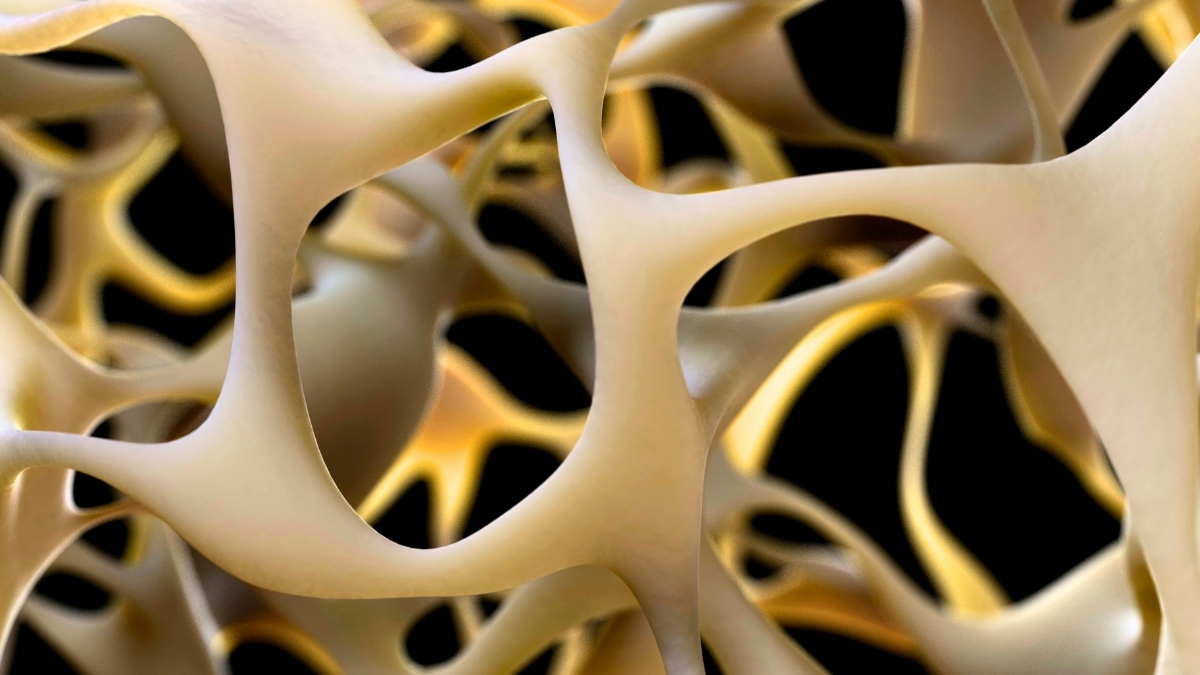
Research led by the University of Leipzig in Germany and Shandong University in China has revealed a potential breakthrough in treating osteoporosis, a disease affecting millions worldwide. This study identifies a critical bone-strengthening mechanism involving the cell receptor GPR133, also known as ADGRD1, which plays a vital role in maintaining bone density through the action of bone-building cells called osteoblasts.
The research team focused on the genetic variations of the GPR133 gene, which had previously been linked to bone density. They conducted experiments on mice that either lacked this gene or had it activated using a chemical agent called AP503. The results were striking: mice without the GPR133 gene developed weak bones, similar to the symptoms of osteoporosis. In contrast, when the receptor was activated by AP503, researchers observed significant improvements in bone production and strength.
Ines Liebscher, a biochemist at the University of Leipzig, noted, “Using the substance AP503, which was only recently identified via a computer-assisted screen as a stimulator of GPR133, we were able to significantly increase bone strength in both healthy and osteoporotic mice.” This discovery positions AP503 as a biological switch that enhances osteoblastic activity. Furthermore, the study indicated that the effects of AP503 could be amplified when combined with exercise, suggesting a multi-faceted approach to bone health.
The implications of this research extend beyond animal models. While the findings are based on mouse studies, the underlying biological processes are likely similar in humans. Liebscher stated, “If this receptor is impaired by genetic changes, mice show signs of loss of bone density at an early age – similar to osteoporosis in humans.” Current treatments for osteoporosis primarily aim to slow the disease’s progression but do not offer a cure, often accompanied by adverse side effects or diminishing effectiveness over time.
In 2024, a separate research initiative introduced a blood-based implant designed to enhance the body’s natural healing processes for bone repair. This “biocooperative regenerative” material, developed by an international team, employs synthetic peptides to improve the structure and functionality of blood clots, which are critical in the healing process after injuries. Initial tests on rats demonstrated its effectiveness in repairing bone damage, indicating promising prospects for human applications.
Cosimo Ligorio, a biomedical engineer from the University of Nottingham, expressed enthusiasm about this advancement, stating, “The possibility to easily and safely turn people’s blood into highly regenerative implants is really exciting.” This method suggests that using readily available blood could lead to innovative treatments that amplify the body’s innate repair capabilities.
Another significant development in bone research was the discovery of the maternal brain hormone (MBH), which was shown to promote the growth of strong and dense bones in female mice. A study published last year by researchers from the University of California, San Francisco found that MBH significantly enhances bone density, mass, and strength. According to Thomas Ambrosi, a stem cell biologist at the University of California, Davis, “When we tested these bones, they turned out to be much stronger than usual.”
While many of these advancements are still in preliminary stages and have yet to be tested in humans, they underscore a future filled with potential for effective bone-strengthening medications. The authors of the 2025 study emphasized that future therapies could not only fortify healthy bones but also restore strength to bones weakened by conditions like osteoporosis, particularly in post-menopausal women.
The research findings have been published in the journal Signal Transduction and Targeted Therapy, marking a significant step forward in the quest to combat osteoporosis and improve bone health for aging populations. The ongoing exploration of GPR133 and related mechanisms illustrates the promising horizon in bone medicine, potentially offering new hope for millions suffering from this debilitating condition.
