



































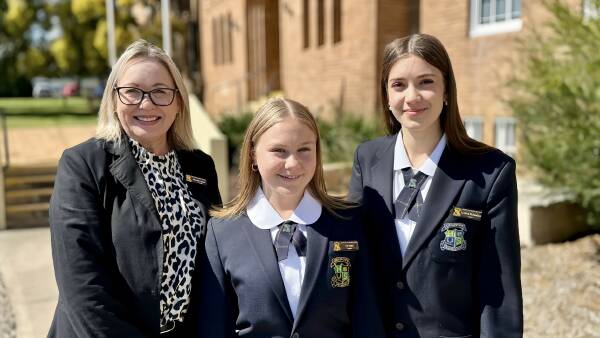
Cessnock High School has demonstrated a remarkable academic turnaround, achieving outstanding results in the 2024 Higher School Certificate (HSC). The school, located in New South Wales, has experienced a five-year trend of improvement, transforming its performance from well below state averages to exceeding key benchmarks. This significant achievement was highlighted in results released in March 2024.
Principal Belinda Cooper noted that the school’s culture has undergone a transformation unprecedented in her decades of experience. In 2019, Cessnock High was ranked among the lowest in the state for basic skills and HSC results, falling into the bottom three bands. Standardised testing results from NAPLAN indicated that students were struggling with essential skills necessary for academic success.
To address these challenges, the school collaborated with the University of Newcastle’s Quality Teaching Academy, bringing in researcher Drew Miller for guidance. Dr. Miller, who serves as the deputy director of the university’s Teachers and Teaching Research Centre, pointed to over two decades of research indicating that a deeply analytical approach to improving learning outcomes could lead to success. However, he acknowledged that strong leadership and commitment from schools were crucial to implementing effective changes.
The data collected from NAPLAN assessments revealed a pressing need for Cessnock High School to provide added value to their educational offerings. Ms. Cooper explained that “value-added metrics” capture the essential quality of effective teaching, which includes the ability of educators to connect with students and support their learning journeys.
In 2020, the school embarked on a four-year longitudinal study with the university, allowing faculty to scrutinise their teaching methods. This process involved adopting explicit teaching practices that clarified learning outcomes and their importance, alongside setting clear expectations for student performance. Teachers engaged in peer observations, coding lessons, and debriefing to identify effective strategies and adapt their approaches.
“There are no secrets about what we want to learn and how we want to learn it,” Ms. Cooper stated. “Once we have done the explicit teaching, we can get those kids into high potential and gifted activities.”
The national curriculum authority, Acara, which oversees NAPLAN testing and reports on educational performance in Australia, has consistently argued against simplistic league tables that rank schools solely based on performance scores. Acara maintains that comparing schools with similar starting points offers a more accurate reflection of improvement over time.
By 2023, Cessnock High School had surged to 35th in the state for improving outcomes among students in years 7 to 9. The following year, they improved further, reaching 11th place. The recent NAPLAN results revealed that Cessnock High School ranked seventh in the state for enhancing student achievement, a development that left Ms. Cooper feeling overwhelmed with pride.
According to a statement from the New South Wales Education Department, Cessnock High School was among 20 schools identified as making a significant difference in student outcomes across grade cohorts. The department highlighted key factors contributing to the school’s success: a focus on explicit teaching, collaboration, high expectations, effective feedback, and consistency.
Ms. Cooper emphasised the dedication of her faculty and students in achieving these results, stating, “100 percent of these results belong to every single one of them. Our staff are so proud—just so proud.”
Dr. Miller reiterated the importance of coherence within the school, noting that effective leadership was critical in aligning all teachers towards a common goal. He acknowledged that schools facing socio-economic disadvantages often confront additional challenges that require comprehensive support systems, including behavioural and lunch programs.
“This is where credit really needs to be given to Cessnock,” Dr. Miller remarked. “In those climates, it is just harder. There are a million things going on… That is where leadership is needed, and that is the real combination of things here.”
The forthcoming 2025 NAPLAN results will provide the first opportunity to extract long-term trends since the testing metrics underwent a significant overhaul in 2023. According to Acara, the latest results show that student attendance is improving, while the relative performance of Indigenous and non-Indigenous students has remained stable across all year cohorts.
Cessnock High School has now positioned itself as a model for educational improvement, demonstrating that with commitment, collaboration, and effective teaching practices, significant progress can be achieved. Students at Cessnock High are now performing above the state average in reading, writing, spelling, grammar, and numeracy, reflecting the successful implementation of the school’s initiatives.
