



































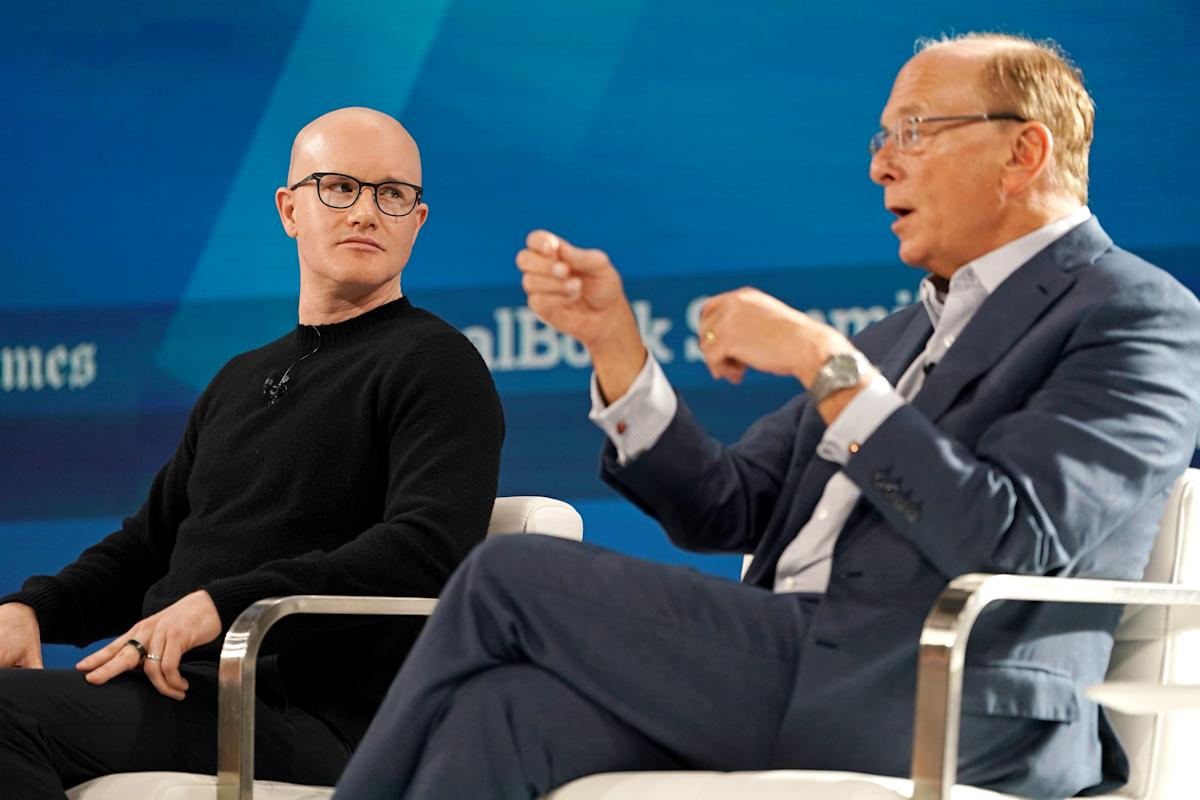
Larry Fink, chairman and CEO of BlackRock, has notably changed his perspective on cryptocurrencies, acknowledging that his previous skepticism may have been misplaced. At the New York Times DealBook conference held on November 1, 2023, Fink stated, “my thought process has evolved,” reflecting a significant shift in attitude as BlackRock solidifies its position in the crypto investment landscape.
The firm’s iShares Bitcoin Trust ETF, which launched in early 2024, has rapidly become the largest bitcoin exchange-traded fund (ETF) listed in the United States. As of November 1, 2023, the ETF has attracted over $70 billion in assets, making it the fastest-growing ETF globally. This impressive growth underscores BlackRock’s emerging influence in the cryptocurrency sector and positions the ETF as one of the firm’s most profitable offerings.
Fink’s remarks came in response to a question from Andrew Ross Sorkin, who pointed out Fink’s earlier characterization of cryptocurrencies as “an index for money laundering” and “thieves.” While acknowledging his past statements, Fink highlighted that the volatility of bitcoin remains a significant concern. He noted, “Bitcoin is still heavily influenced by leveraged players,” suggesting this dynamic contributes to ongoing fluctuations in the market.
Despite the inherent risks associated with cryptocurrencies, Fink sees potential in the broader application of blockchain technology. He emphasized that tokenization could transform traditional finance, potentially allowing various assets, including stocks, bonds, and real estate, to be represented on blockchains. In a column published earlier this week in The Economist, Fink and BlackRock’s Chief Operating Officer, Rob Goldstein, elaborated on how this innovation could reduce transaction costs and streamline investment processes.
Fink stated, “The whole idea … is to just reduce huge friction costs, making investing easier, simpler … it’s going to allow for a free-flowing process in investing.” This vision aligns with the growing interest among traditional financial institutions in leveraging blockchain technology to enhance operational efficiency.
As BlackRock aims to expand its footprint in the cryptocurrency space, the firm awaits legislative clarity regarding the regulation of digital assets. The Senate is expected to vote on the Clarity Act, which seeks to establish a regulatory framework for tokenized assets. This legislation is intended to provide a clearer path for firms like BlackRock to deepen their engagement in the crypto market while addressing risks associated with high-leverage trading practices.
Coinbase CEO Brian Armstrong, who also participated in the DealBook conference, expressed optimism about the potential for a Senate vote on the Clarity Act within a few months. He stated, “And then I think we’ll have the foundation to really have solutions to this issue be built in the US, and we’ll see a little bit less of this kind of leverage or high-risk activity happening.”
As the cryptocurrency landscape evolves, Fink’s changing stance reflects a broader trend among financial leaders who are increasingly recognizing the potential of digital currencies and blockchain technology. The developments at BlackRock, particularly with the iShares Bitcoin Trust ETF, signal a significant shift in the mainstream acceptance of cryptocurrencies as viable investment vehicles.
