



































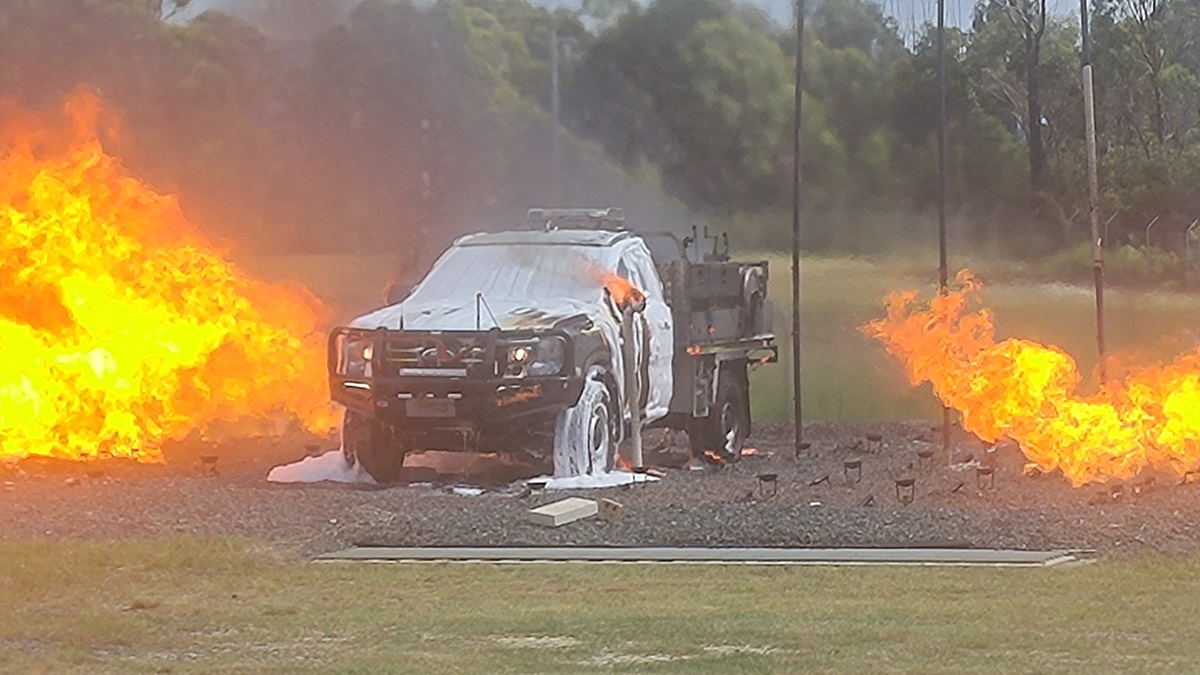
Victoria has reached a significant milestone in enhancing safety for firefighting crews during bushfire outbreaks. The Country Fire Authority (CFA) has now fitted its ultra-light tankers with a foam-based crew protection system, ensuring that most active firefighting vehicles across the state are equipped for better safety. This initiative has been a central focus for Justin Leonard, the CSIRO Bushfire Adaptation Research Leader, who has collaborated with the CFA for over 24 years.
The foam system is particularly well-suited for the CFA’s smaller ultra-light tankers, which are the last to receive this critical upgrade. Unlike larger tankers that utilize water spray nozzles for protection, the foam system is designed to work with the vehicle’s onboard water supply, adding only approximately 60 kg to the weight of each vehicle. This makes it operationally feasible without compromising effectiveness.
Testing and Implementation of the Foam System
Leonard previously demonstrated the burnover protection system using a large fire tanker during a visit from King Charles to the National Bushfire Behaviour Research Laboratory in Canberra last year. The protection systems have proven their worth, especially during the devastating Black Saturday fires in 2009, when eight fire trucks were affected by fire but all crew members emerged safely. Subsequent fires, including the 2019–2020 bushfires, also highlighted the effectiveness of these systems.
The development of the foam bushfire protection system has spanned a decade, with CSIRO conducting six separate test burns at the New South Wales Rural Fire Service site in Mogo. These tests simulated bushfire conditions to assess the system’s ability to protect lives in extreme situations. Leonard emphasized the importance of these systems, stating, “Protecting lives and the environment as we deal with more severe and frequent bushfires is an important process for us to get right under climate change.”
The successful rollout of burnover protection systems for larger tankers has been implemented across nearly every Australian state and territory. The CFA is also sharing its findings and technology with firefighting agencies in countries such as France and the United States.
Upcoming Bushfire Risks and Seasonal Outlook
As the summer approaches, the AFAC has released its Seasonal Bushfire Outlook for Summer 2025-26. The report indicates an increased risk of fires in regions of Victoria, as well as in parts of western and southern Western Australia, and central northern New South Wales. Long-term rainfall deficiencies in southern Australia are contributing to the heightened fire risk, particularly in Victoria, where current green grass growth is expected to return to a highly flammable state by January.
The Seasonal Bushfire Outlook combines expert analysis of bushfire fuels, past rainfall, temperature, and climate forecasts prepared by the Bureau of Meteorology. While there is an anticipated increase in high fire danger days, bushfires still require specific weather conditions and ignition sources to occur.
For over 70 years, CSIRO has been committed to delivering science and technology aimed at reducing the impact of fires on Australia’s population, environment, infrastructure, and economy. It is important to note that CSIRO is not an operational fire agency. Residents are advised to refer to their relevant state fire agency for emergency advice during bushfire outbreaks, including evacuation procedures and updates on bushfire status.
The advancements in firefighter safety reflect ongoing efforts to adapt to the challenges posed by climate change and the increasing frequency of severe bushfire events in Australia.
