



































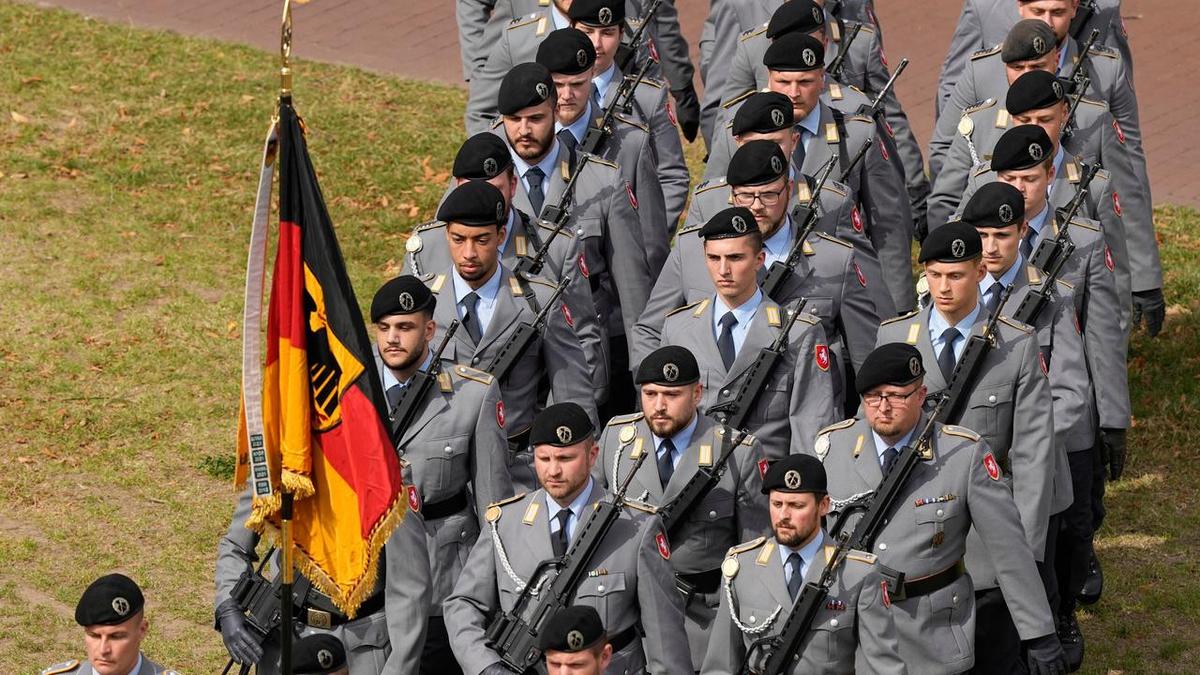
UPDATE: German MPs have just approved a critical plan to bolster military recruitment amid escalating concerns over threats from Russia. The Bundestag voted on Friday with 323 votes in favor and 272 against, marking a significant shift in Germany’s defense strategy.
The urgent recruitment plan introduces mandatory medical checks for young men and enhances pay and conditions for short-term service. While it stops short of reinstating conscription, it allows for the possibility of compulsory service if the military’s personnel situation deteriorates. Defence Minister Boris Pistorius emphasized that “our allies are looking at Germany,” positioning the nation as a “pacesetter for defence in Europe.”
With the military struggling to attract volunteers, Germany aims to increase its personnel from just above 180,000 to 260,000 over the next decade. This figure has declined from 300,000 in 2001, when conscription accounted for over a third of service members. The government’s commitment to reinvigorating its military comes after years of neglect and a pledge of billions to improve equipment.
The new plan, introduced by Chancellor Friedrich Merz‘s cabinet in August, seeks to make military service more appealing. It offers better training and flexible service periods starting from a minimum of six months. This approach aims to attract enough recruits without fully reviving compulsory service, which remains unpopular among coalition partners.
In a broader context, Germany is not alone in its efforts. Other European nations, such as France, are also ramping up military training programs for youth. France recently announced a plan to train thousands of volunteers aged 18 and 19 beginning in 2026, while Belgium and Poland are also seeking to enhance their military ranks.
As Europe grapples with increased security challenges, Germany’s new legislation marks a decisive step in reinforcing its defense capabilities. The decision to potentially allow for random selection for compulsory service highlights the increasing urgency for Germany to adapt to a changing geopolitical landscape.
The approved plan signals a pivotal moment for Germany’s military as it seeks to recover from the limitations imposed by the suspension of conscription in 2011. With growing threats in Eastern Europe, the government’s actions will be closely watched both domestically and internationally.
As the situation develops, all eyes will be on how effectively Germany can meet its ambitious recruitment targets and strengthen its defense posture in an uncertain world.
