



































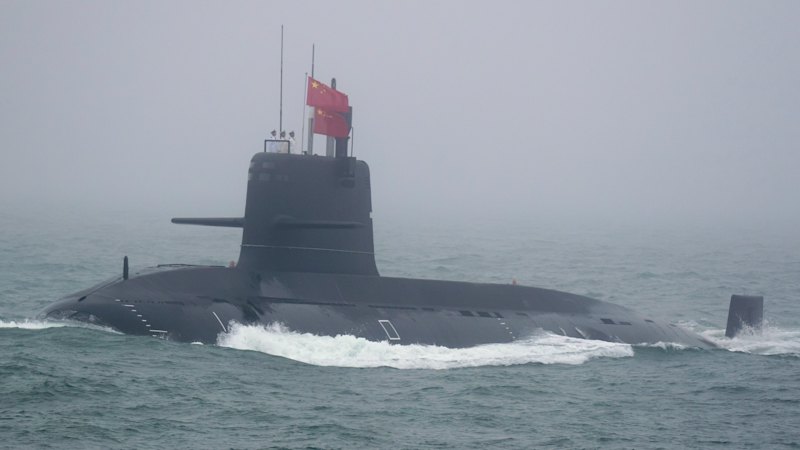
China has deployed over 100 naval and coast guard vessels across East Asian waters, marking a significant increase in military presence in the region. This unprecedented buildup stretches from the southern Yellow Sea to the East China Sea, extending into the contested South China Sea and parts of the Pacific. According to reports from Reuters, this deployment represents the largest maritime show of force by China to date, as confirmed by multiple regional security officials.
The concentration of vessels, detailed in intelligence reports, coincides with one of the busiest periods of the People’s Liberation Army’s (PLA) annual training calendar. Although the PLA has not announced major military drills, this deployment surpasses last December’s operations that prompted Taiwan to raise its alert level.
Military Expansion and Strategic Implications
Defence experts suggest that this significant mobilization reflects a broader trend of China expanding its naval capabilities. Jennifer Parker, an adjunct fellow in naval studies at the University of New South Wales, emphasized that China is increasingly confident in deploying larger, more complex task groups far beyond its coastal waters. She stated, “Is this particular deployment significant? No. Is it part of a general trend of China expanding and becoming more confident with its navy? Yes.”
Parker noted that China’s military presence now spans from Alaska to the Red Sea, often testing the responses of US allies. “This kind of increase is about applying economic and military coercion to allies of the US and see what response they receive,” she added.
This military escalation comes ahead of Australian Defence Minister Richard Marles‘ visit to Tokyo, where he is scheduled to meet with his Japanese counterpart to strengthen defence ties. In a statement prior to the trip, Marles highlighted that the relationship with Japan is growing stronger, marked by mutual ambition and strategic alignment.
Escalating Tensions with Japan
The deployment also coincides with rising tensions between Beijing and Tokyo, particularly following comments from Japanese Prime Minister Sanae Takaichi. Takaichi suggested that a hypothetical Chinese attack on Taiwan could prompt a military response from Japan, a statement that has drawn strong condemnation from Beijing. In response, China halted seafood imports from Japan and warned its citizens against traveling to the country, further straining diplomatic relations.
Compounding these tensions, a recent standoff occurred between Chinese and Japanese coast guard vessels near the disputed Diaoyu/Senkaku Islands. Reports indicate conflicting accounts of an encounter, with China stating that it took necessary control measures against a Japanese fishing boat, while Japan claimed it was Chinese vessels that were ordered off course.
The Diaoyu/Senkaku Islands have long been a flashpoint in Sino-Japanese relations, with Chinese vessels conducting record-length patrols—over 216 consecutive days this year—and routine confrontations with Japanese ships.
In response to the latest developments, Japan’s Defence Minister Shinjiro Koizumi acknowledged the reports of Chinese military activity in the East China Sea, stating that Japan is closely monitoring the situation while refraining from commenting on specific deployments.
As regional dynamics continue to shift, the implications of China’s military maneuvers are likely to reverberate through international relations and security strategies across East Asia.
