



































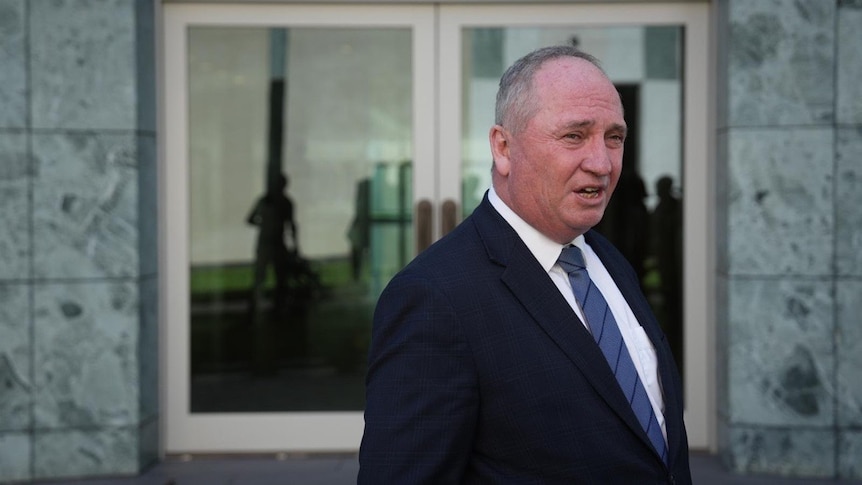
The political landscape in Australia is currently charged with scrutiny as two prominent figures, Barnaby Joyce and Anika Wells, find themselves at the centre of a public discourse regarding their accountability. The concept of the “pub test” has emerged as a metric for assessing the public’s perception of these politicians, particularly in light of recent events that have sparked widespread frustration among constituents.
This informal gauge, often invoked when traditional channels of accountability appear inadequate, serves as a barometer for political sentiment. It reflects a growing dissatisfaction with the actions and statements made by public figures. In this case, the “pub test” has become a significant reference point for judging whether Joyce and Wells are meeting the expectations of their constituents.
Joyce’s Controversies Draw Attention
Barnaby Joyce, the Deputy Prime Minister and leader of the National Party, has faced a series of controversies that have raised questions about his suitability for office. Recent decisions related to agricultural policies and environmental management have drawn criticism from both opposition parties and members of the public. As he navigates through these challenges, the effectiveness of his leadership is being scrutinized by constituents who feel their voices are not being heard.
The “pub test” in this context suggests that many Australians are frustrated with Joyce’s perceived disconnect from the issues that matter most to them. As discussions unfold in social settings, it becomes evident that public sentiment is shifting, and his political future may hinge on whether he can effectively communicate and align with the concerns of everyday citizens.
Anika Wells Faces Her Own Challenges
On the other side of the political spectrum, Anika Wells, a member of the Australian Labor Party, is also under the spotlight. As the Minister for Aged Care, her handling of recent reforms and funding allocations has drawn scrutiny. Critics argue that she has not adequately addressed the pressing needs of an aging population, a sentiment echoed in conversations that reflect the community’s growing frustration.
Wells’ position is further complicated by the expectations of her constituents, who are increasingly vocal about their dissatisfaction. The concept of the “pub test” is equally relevant for her, as it serves to highlight the gap between political promises and the lived realities of those she represents.
Both politicians are now faced with the challenge of restoring public trust and demonstrating their commitment to addressing the concerns of their constituents. The ongoing dialogue around the “pub test” underscores the importance of political accountability in fostering a more engaged and informed electorate.
As Australia moves forward, the effectiveness of Joyce and Wells will be measured not only by their policy decisions but also by their ability to resonate with the public. The evolving narrative surrounding these two figures illustrates the critical relationship between politicians and the communities they serve, reminding us that political accountability remains a cornerstone of democratic governance.
