



































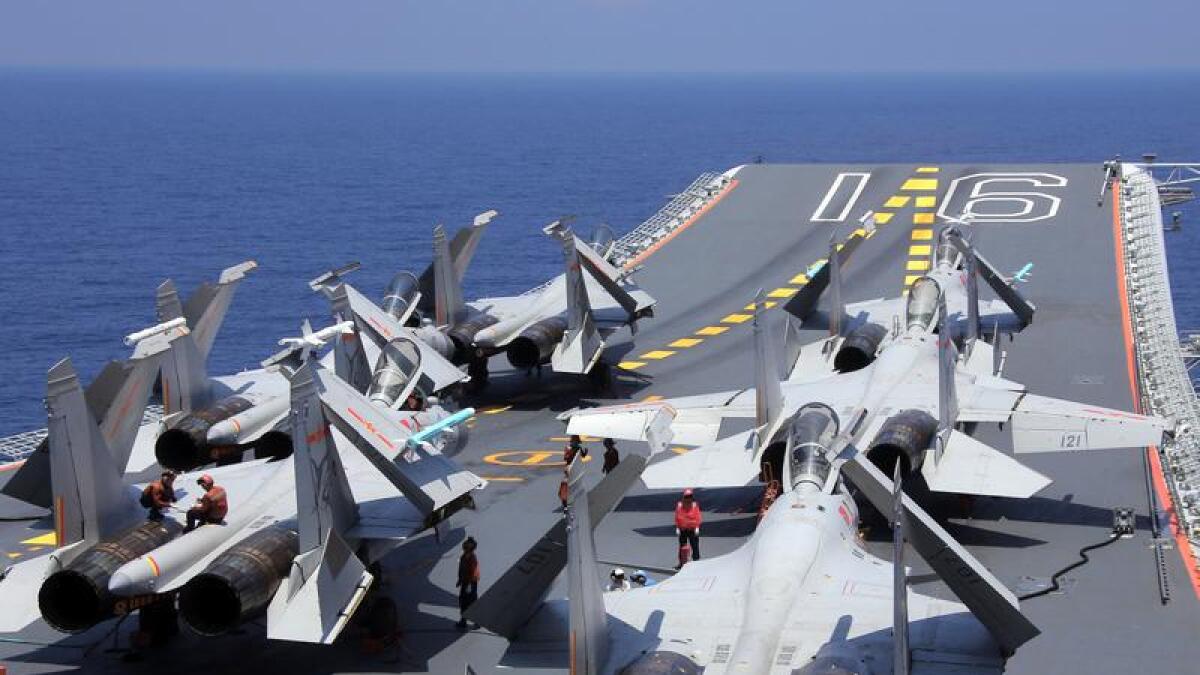
Tensions escalated in East Asia as the United States publicly supported Japan in its confrontation with China over a recent radar incident involving Chinese fighter jets. The incident, which is being characterized as the most serious military encounter between the two nations in years, underscores the fragile security landscape surrounding Taiwan, a territory claimed by China.
The radar confrontation occurred on Saturday when Chinese fighter jets aimed their radar systems at Japanese planes. This act is seen as a provocative display of force, indicating a potential threat to Japan. In response, a spokesperson from the U.S. State Department stated, “China’s actions are not conducive to regional peace and stability.” The official reaffirmed that the U.S.-Japan Alliance remains “stronger and more united than ever,” with unwavering commitment to Japan amid rising tensions.
Japan’s Response and Regional Implications
Japanese Chief Cabinet Secretary Minoru Kihara welcomed the U.S. statements, emphasizing their significance in demonstrating the robust alliance between the two nations. He noted that the comments reflect a unified stance against aggressive actions in the region. On the ground, Japan’s Self-Defense Forces scrambled jets to monitor joint patrols conducted by Russian and Chinese air forces near its territory.
On the following day, Japan’s coast guard reported spotting four Chinese coast guard vessels near the disputed Senkaku Islands in the East China Sea. The Chinese coast guard claimed their actions were part of a “legal” operation to protect China’s rights and interests in the area. The ongoing military activities in proximity to Japan have heightened fears of miscalculation and conflict.
Chinese foreign ministry spokesman Guo Jiakun addressed the situation, avoiding direct criticism of the U.S. remarks while insisting that China’s military training exercises adhered to international law and were conducted safely. He urged the international community to recognize the narrative presented by China, cautioning against manipulation by Japan and its allies.
The Broader Context of Regional Tensions
Tensions between China and Japan have intensified, particularly since November 2023, when Japanese Minister Takaichi warned that a Chinese attack on Taiwan could lead to a “survival-threatening situation” for Japan. This remark prompted Beijing to demand a retraction, alleging that Tokyo was threatening China militarily. In light of these developments, Beijing has advised its citizens to avoid travel to Japan.
Tensions surrounding Taiwan remain a focal point, as the island lies approximately 100 kilometers from Japan and is critical to maritime routes vital for Japan’s economy. In a statement from Taipei, Taiwanese President Lai Ching-te condemned China’s military drills as “very inappropriate behaviour.” He emphasized that peace is invaluable and should be cultivated by all parties involved, including China, which holds a significant responsibility.
The recent military encounters and diplomatic exchanges highlight the fragile balance of power in East Asia. As Japan fortifies its defense posture, the implications for regional security and international relations are profound. The situation continues to evolve, with both Japan and the United States remaining vigilant in the face of China’s assertive military activities.
