



































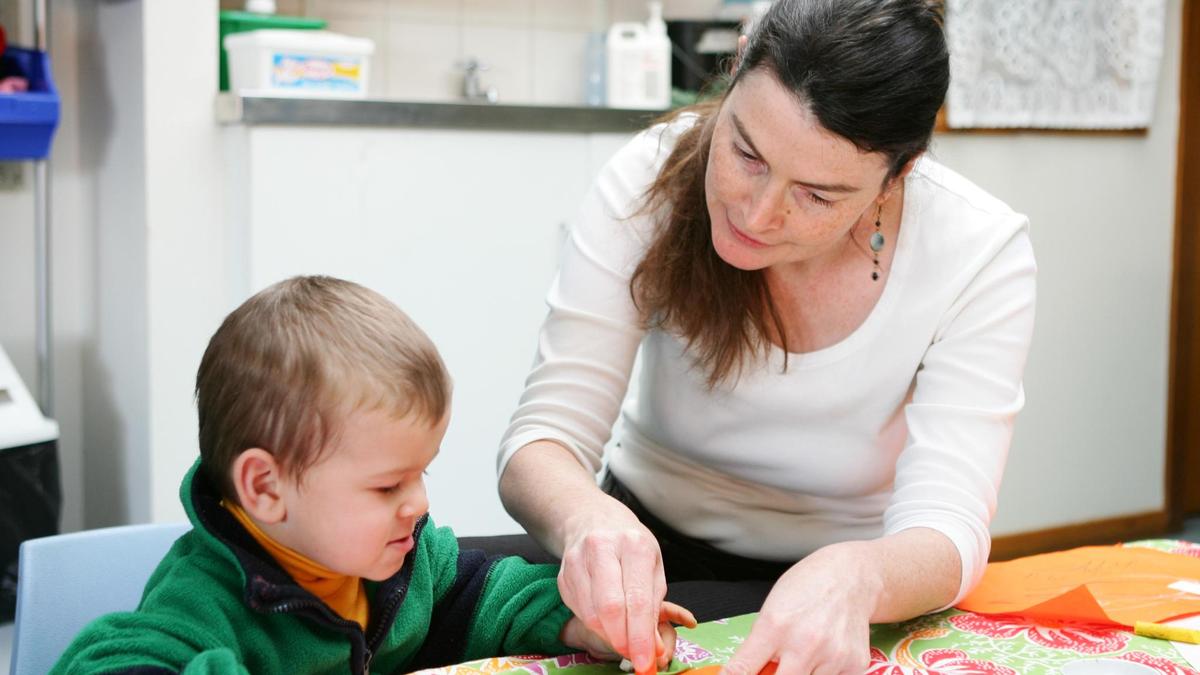
UPDATE: The Albanese government has reached a significant milestone in its efforts to support children with mild autism and developmental needs, but an urgent deadline is fast approaching. The Thriving Kids Advisory Group has just recommended that children under nine with low to moderate needs should receive services outside of the NDIS (National Disability Insurance Scheme).
This program aims to relieve mounting pressure on the NDIS, which has faced substantial criticism and operational challenges. However, resistance from state and territory governments has surfaced, citing a lack of consultation before the program’s announcement.
In a crucial development, the Albanese government has pledged $2 billion—half the total cost of the Thriving Kids initiative—as it negotiates funding contributions from states and territories. Following an impasse regarding hospital funding, the Commonwealth, state, and territory governments have now agreed on a funding split that includes at least $1.4 billion from the federal government directly to the states.
Health Minister Mark Butler confirmed that all states and territories signed an agreement on foundational supports for the Thriving Kids program. This agreement sets an urgent timeline, with a critical deadline for finalizing bilateral agreements before South Australia enters caretaker mode in late February.
“We must conclude these agreements with every state and territory government by February 20, 2024, to ensure funds start flowing,” Butler stated. He emphasized the importance of this program for parents and community groups supporting children with developmental issues, providing them confidence that effective resources will soon be available.
Meanwhile, South Australians are preparing for state elections in March, heightening the urgency for a public hospital funding deal at the national cabinet level.
Butler highlighted the necessity of reforming the existing system, pointing out that the NDIS is growing at an alarming rate of 22 percent annually, placing an unsustainable burden on the national budget. He noted troubling statistics regarding the enrollment of young children in the NDIS, a program designed primarily for individuals with significant and permanent disabilities.
The Thriving Kids program aims to restructure this approach by focusing on identification and support in everyday settings. “This initiative will help reduce the NDIS growth rate and ensure long-term sustainability,” Butler explained.
Professor Frank Oberklaid AM, co-chair of the advisory group, described the current treatment framework under the NDIS as a “broken system.” He expressed concerns about how it has distorted clinical practices, advocating for a shift towards recognizing individual differences among children. “Many children need just a bit of support for six to twelve months to thrive, and their parents require support too,” he added.
As the February deadline approaches, stakeholders must act swiftly to finalize agreements that will impact thousands of families across the country. The push for the Thriving Kids program is not just a bureaucratic process; it represents a critical opportunity for many parents and children who need immediate and effective support.
Stay tuned for updates on this developing story as negotiations progress and the deadline looms.
