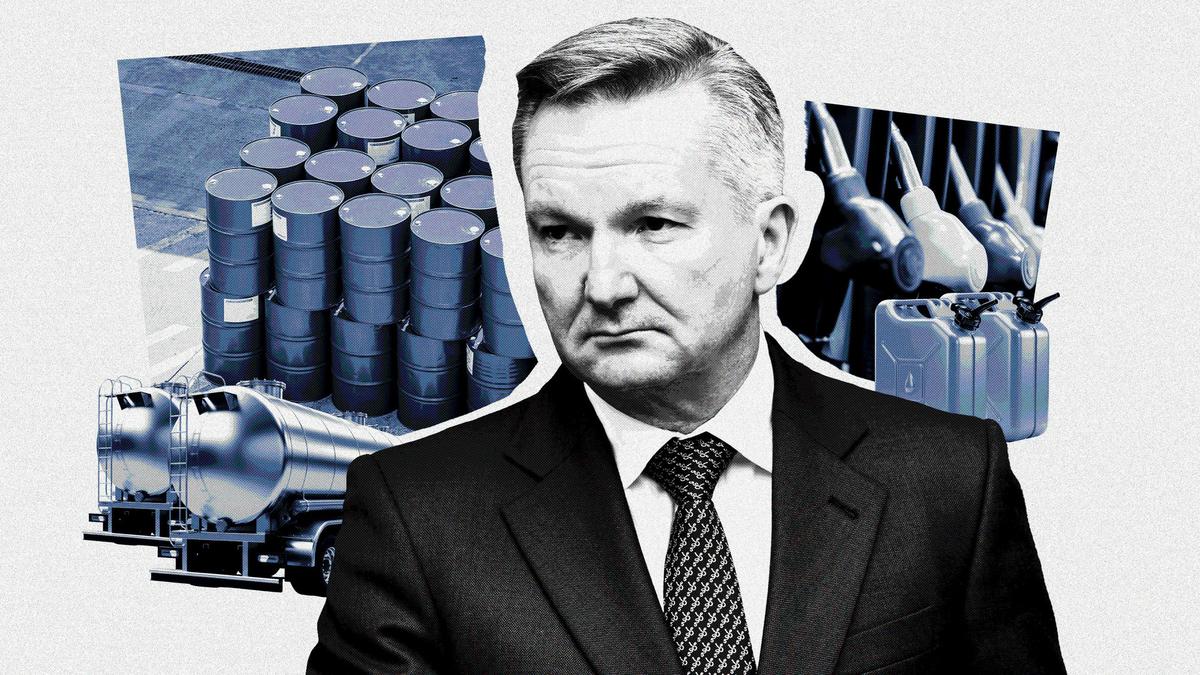
Australia’s Energy Minister, Chris Bowen, has indicated that the government may consider relaxing its total ban on importing Russian oil and petrol. This possibility arises as reports suggest that China might halt its exports to Australia, exacerbating the current fuel crisis. Speaking to reporters in Sydney on March 30, 2024, Bowen stated, “We don’t like Russian oil any more than anyone else. But we do have a complicated supply chain where oil from different countries gets mixed into broader supplies.”
Bowen emphasized that while Australia maintains its opposition to Vladimir Putin and his actions, the government faces an immediate domestic issue that requires attention. The potential policy shift follows the United States easing its sanctions on Russian oil shipments to stabilize global supply. According to Scott Bessent, the US Treasury Secretary, this short-term measure aims to assist the market without significantly benefiting the Russian government, as most of its energy revenue comes from taxes at the extraction point.
The shift in US policy has drawn criticism from global allies, particularly within the European Union and Canada. The ongoing conflict in the Middle East continues to create uncertainty in the fuel market, impacting diesel and jet fuel supplies. Bowen acknowledged the challenges faced, noting “real and unacceptable shortages in rural and regional areas.”
In response to rising demand, which has reportedly surged by 100 percent at every terminal across Australia, the Federal Government announced plans to release fuel from its emergency stockpile. Notably, there has been no release of jet fuel, with Bowen assuring that the country is not facing any immediate shortages in that sector. He stated, “Qantas and Virgin have fuel on hand for the immediate and foreseeable future, but we will carefully monitor any impacts from global supply.”
Both major airlines, Qantas and Virgin Australia, are actively monitoring the fuel supply situation. A spokesman for Qantas mentioned, “We’ve been in regular contact with the Government and major fuel suppliers who are providing us with a level of confidence about current jet fuel supplies in Australia.” Virgin Australia has also received assurances from fuel suppliers regarding its near-term requirements, as it assesses the implications of rising fuel prices.
There are concerns about Australia’s contingency plans should China halt exports long-term. Bowen confirmed that he and Foreign Minister Penny Wong are in regular contact with their counterparts about fuel supply, emphasizing the importance of South Korea as a source of refined fuel. “We continue to engage very carefully with them,” Bowen noted, highlighting the ongoing efforts to navigate the complexities of global fuel supply chains.
As the situation develops, the Australian government faces the dual challenge of managing domestic fuel needs while navigating international relations and supply chain complexities. The outcome of these discussions could significantly impact Australia’s energy landscape in the coming months.