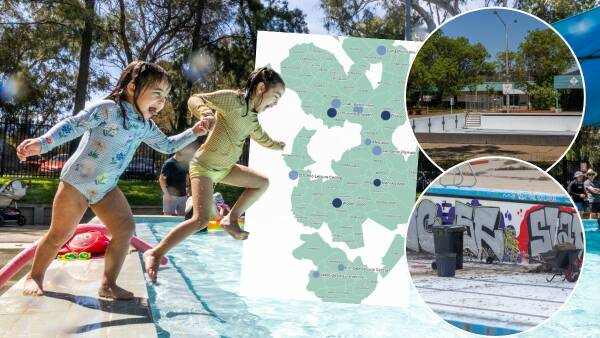
As Canberra’s population is projected to reach approximately 800,000 by 2065, concerns are escalating over the future of the city’s outdoor public swimming pools. Local advocates are urging the ACT Government to take control of these facilities instead of allowing private developers to dictate their fate.
Current trends indicate that if development plans continue unchecked, Canberra could be left with only a handful of outdoor pools to serve a rapidly growing population. Projections suggest that by 2065, the northside will accommodate around 430,000 residents, while the southside will host 370,000. As it stands, the southside may only retain the historic Manuka Pool, which is not sufficient for such a large number of people.
The future of outdoor swimming facilities hangs in the balance, with the much-loved Phillip Pool currently operational but threatened by redevelopment plans. Geocon, a property development firm, intends to replace the existing 50-metre outdoor pool with a smaller 25-metre indoor pool along with additional amenities for toddlers. The existing pool will remain open only until the new facility is constructed.
On the northside, the situation is similarly precarious. The Dickson Aquatic Centre is expected to be the only remaining outdoor pool option, raising questions about whether it is adequate for the expected influx of residents.
Further complicating the issue, the Big Splash Water Park in Macquarie has been left in disrepair and is under threat of redevelopment for commercial housing. Plans may also lead to the demolition of the Civic indoor and outdoor pools, paving the way for a new entertainment precinct in the city centre.
The ACT Government has announced plans for a $138 million aquatic centre at Commonwealth Park, which is expected to feature a 50-metre lap pool. However, there are concerns that this facility may not offer the same community-friendly atmosphere as existing outdoor pools, which provide shaded areas and recreational features like diving boards.
Community members have voiced their frustrations at public meetings, emphasizing the need for a long-term aquatic strategy that prioritizes public access. Sarah Ransom, a representative from the Save Phillip Pool Community, highlighted the issue succinctly: “The old way of sprinkling private and public facilities around Canberra and hoping for the best just isn’t going to cut it anymore.”
The growing influence of developers poses a threat to public aquatic facilities, with many being repurposed for private gains rather than community use. This shift raises concerns about maintaining accessible recreational spaces for all residents, particularly as the city expands.
As temperatures rise, residents are left with limited options for cooling off, prompting calls for more proactive measures from the ACT Government. Advocates argue that outdoor pools should be managed publicly to ensure they meet the needs of Canberra’s increasing population rather than being relegated to private entities focused on profit.
The situation demands immediate attention from local authorities to prevent further loss of public recreational facilities, ensuring that Canberra remains a livable city for all its residents.