





























St George Mining has set a remarkable benchmark by achieving its thickest high-grade intercept to date at the Araxá rare earths and niobium project in Minas Gerais, Brazil. A vertical diamond drill hole returned a substantial intercept of 139.45 meters with an assay of 4.05 percent total rare earth oxides (TREO) and 0.55 percent niobium pentoxide from the surface. This finding surpasses the company’s previous record of 115.65 meters, which was reported earlier this month.
The latest results are promising, with assays from an additional nine drill holes confirming consistent thick, high-grade mineralisation from surface level. One of these holes recorded an impressive 80.15 meters at 5.11 percent TREO and 0.76 percent niobium pentoxide from the surface, which included a segment of 43.9 meters at 6.18 percent TREO and 1.05 percent niobium pentoxide starting at 36.2 meters depth.
Another hole yielded 82.55 meters at 3.9 percent TREO and 0.59 percent niobium pentoxide, with 56.55 meters at 4.97 percent TREO and 0.72 percent niobium pentoxide from 26 meters depth. A third hole demonstrated strong potential with an 81.45 meters run grading 4.52 percent TREO and 0.56 percent niobium pentoxide, including a standout section of 4.55 meters at 8.87 percent TREO and 0.78 percent niobium pentoxide from 21.45 meters.
Significant Resource Growth Potential
These results highlight extensive high-grade zones both within and beyond the existing mineral resource estimate. They underscore the potential for substantial resource growth at what is already identified as South America’s largest and highest-grade carbonatite-hosted rare earths resource. The mineralisation at Araxá is particularly rich in magnet rare earths, featuring a neodymium-praseodymium to TREO ratio of around 20 percent, which has been consistently observed in previous results and across the current resource.
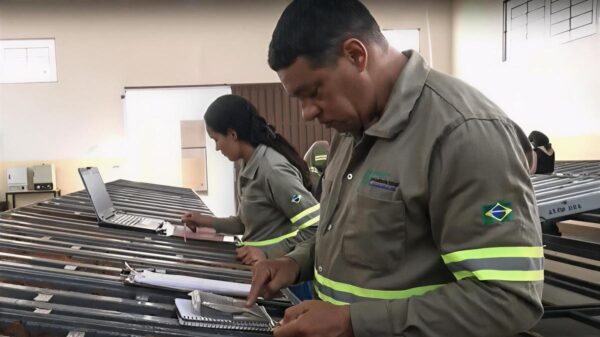
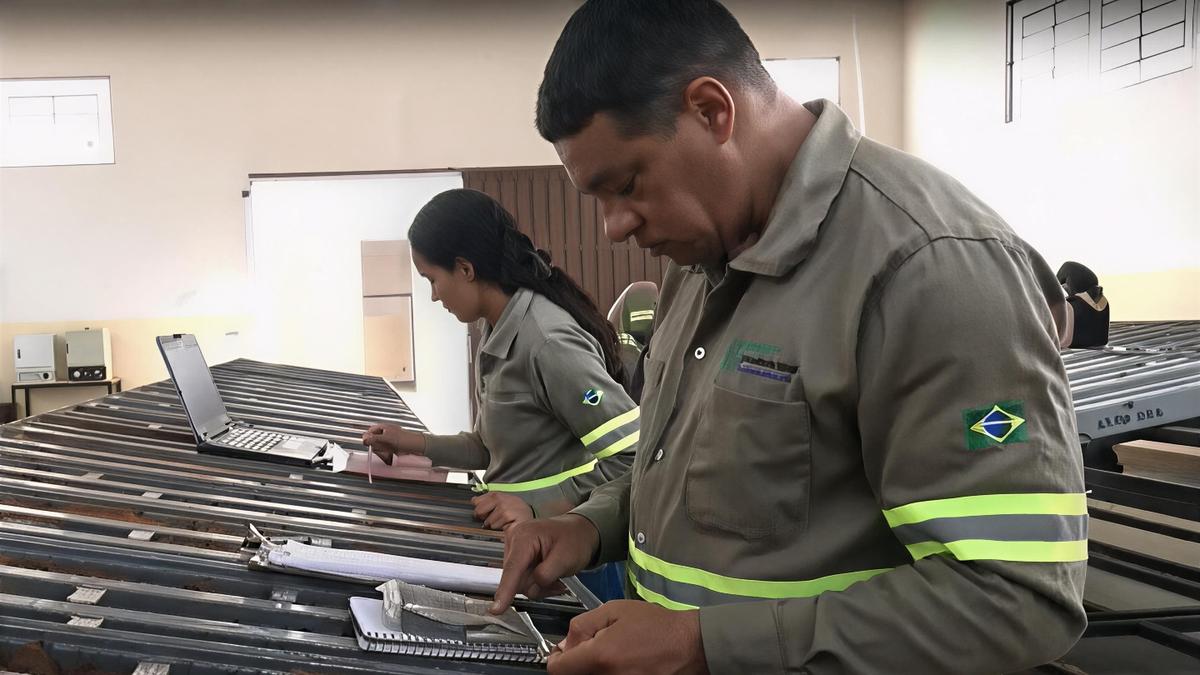
Notably, the mineralisation system remains open laterally in all directions and at depth. St George Mining is ramping up drilling efforts, operating on a 24/7 basis, with plans now extended into 2026. A significant mineralogical discovery has revealed primary pyrochlore, the host mineral for niobium, preserved within fresh carbonatite diamond core. Pyrochlore, a complex niobium oxide, is commonly found in carbonatites and often associated with columbite, a niobium-tantalum mineral.
The presence of pyrochlore indicates a robust primary source beneath the supergene-enriched zones at Araxá. This discovery suggests a strong likelihood of grade continuity and the potential for further high-grade findings throughout the carbonatite complex.
St George Mining continues to generate enthusiasm among its investors and stakeholders. Each new drilling result appears to elevate the project’s status as a developing world-class rare earths and niobium asset. With thick, high-grade intercepts redefining resource potential and continuous drilling underway, the company’s followers are eagerly anticipating forthcoming results that could lead to a significant resource upgrade.