The University of Wollongong (UoW) is set to open a new international campus in Riyadh, Saudi Arabia, as part of the country’s Vision 2030 initiative. This marks a significant expansion for UoW, which will become the first foreign university to obtain a Saudi Investment Licence. Despite the ambitious plans, the move has raised concerns over human rights issues in Saudi Arabia, where arbitrary detention, unfair trials, and gender discrimination are prevalent.
The university plans to launch English courses in 2024, followed by undergraduate programs starting in 2027. Tuition fees will align with local expectations, offering courses at a fraction of the cost compared to degrees completed in Australia. In a departure from traditional practices in Saudi educational institutions, UoW has announced that its classes will not be segregated by gender.
Dr. Susan Engel, president of the National Tertiary Education Union (NTEU) branch at UoW, expressed concerns about the implications of operating in a country with a troubled human rights record. She highlighted issues regarding academic freedom and the safety of female staff members. “Human rights issues in Saudi Arabia are such that this decision needs to be called into question,” she stated.
Gavin Moodie, a former Australian university administrator and honorary research fellow at Oxford, noted that while UoW is in a position to promote important values, the restrictive environment in Saudi Arabia could limit these efforts. “Many universities committed to academic freedom have established campuses in countries with weaker commitments to liberal values,” he said.
Reflecting on the university’s strategy, a spokesperson emphasized that UoW will uphold its academic standards and governance. “We will not compromise on the core values that underpin our teaching and research,” the spokesperson added.
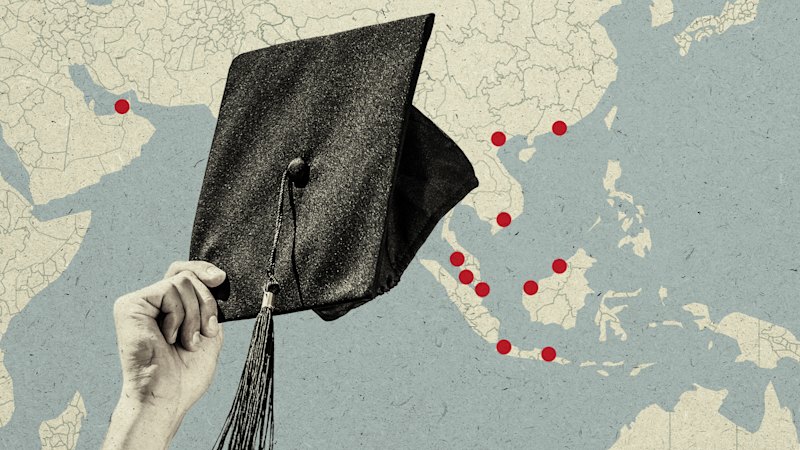
Australian universities have a complex history with offshore campuses. For instance, RMIT University has operated in Vietnam for over two decades, while UoW has had a presence in Dubai since 1993. Additionally, four Australian universities currently have campuses in Singapore, and many partner with local institutions to deliver degrees.
Phil Honeywood, chief executive of the International Education Association of Australia, supports the expansion of Australian education overseas, viewing it as a means of enhancing Australia’s global standing through soft power diplomacy. “If we don’t do it, other countries will,” he remarked.
Despite some successful ventures, other offshore initiatives have faced challenges. Charles Sturt University closed its campus in Canada in 2015, and Monash University sold its South African campus to a local partner in 2019. Honeywood noted that Australian universities have adapted their approaches, learning to partner with the right institutions and align with host countries’ regulatory environments.
As the University of Wollongong prepares for its ambitious expansion into Saudi Arabia, the balance between educational opportunity and ethical considerations remains a focal point for stakeholders within the higher education sector.