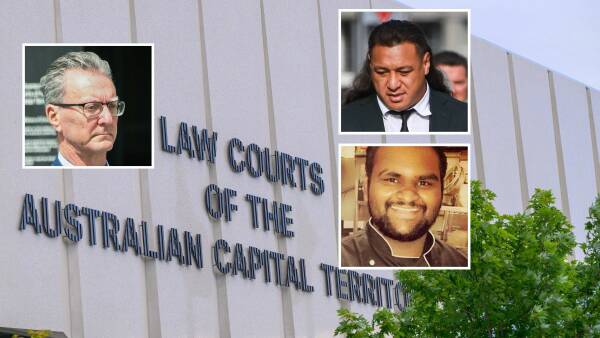
The legal landscape in the Australian Capital Territory (ACT) has been marked by significant and often shocking cases in 2025. From high-stakes burglaries to severe allegations of terrorism and murder, the courtroom drama has captivated public attention and highlighted critical issues affecting the community.
Police Pursuits and High-Stakes Burglary
In a striking incident that captured the community’s attention, a police chase involving an alleged dangerous driver, identified as John Warren Westaway, unfolded through the streets of Canberra. Footage revealed Westaway driving erratically with a trailer in tow, navigating pedestrian and bike paths before ultimately jumping into Lake Burley Griffin. Fortunately, no one was injured, but the event raised serious concerns about the risks associated with police pursuits.
Adding to the intrigue, four French nationals were accused of an audacious burglary in Canberra, attempting to steal luxury goods valued at $10 million. The case, reminiscent of a heist film, involved high-end handbags, watches, and jewelry. Confusion surrounded suppression orders regarding the accused individuals, delaying the release of significant details about the case and the identity of the victims, who have yet to be publicly named.
Terrorism Charges and Espionage Allegations
The ACT Children’s Court witnessed harrowing cases involving two teenage boys accused of terrorism-related crimes. One 17-year-old was allegedly found with detailed plans for violent attacks, including bombings and shootings linked to far-right ideology. His parents appeared in court, visibly distraught, expressing disbelief over their son’s radicalization. In a separate case, a 16-year-old was sentenced for possessing extremist material associated with the Islamic State, highlighting a disturbing trend in youth radicalization.
In a case that attracted national media attention, a woman was charged with acting as a Chinese spy in Canberra. Allegations claim she gathered information on a local religious organization for the Chinese government. The case’s public interest necessitated a larger courtroom to accommodate the influx of reporters seeking details on suppression orders affecting the identities of those involved.
High-Profile Individuals and Serious Charges
The ACT courts also saw cases involving well-known figures. Former Attorney-General Gordon Ramsay faced serious allegations of grooming a teenager, leading to his suspension as CEO of the Cultural Facilities Corporation. Ramsay has pleaded not guilty, and details about the charges remain limited as the case progresses.
Another notable case involved Jude Luckshan Wijesinghe, who was sentenced to 30 years for the murder of Tshewang Choden, a chef at the National Zoo and Aquarium. The court heard emotional victim impact statements from Choden’s family, who described the profound loss and trauma inflicted by Wijesinghe’s actions.
Additionally, Alex Leonard Ophel was sentenced for multiple violent attacks at the Australian National University, where he attempted to murder students with a baseball bat and later stabbed others. His history of mental health issues contributed to the court’s decision to find him not guilty by reason of mental impairment, although he received a life sentence.
The year also witnessed a tragic hit-and-run incident involving two boys from St Edmund’s College, who were struck by a stolen car. The driver, Tayler Christian Hazell, claimed he wanted to “sleep” when he first appeared in court, reflecting his nonchalant attitude toward the serious injuries caused.
In a particularly impactful case, Shakira Adams received a maximum penalty for causing the death of 20-year-old Matthew McLuckie in a drug-driving incident. Adams was sentenced to 14 years, with a minimum non-parole period of nine years, as the courtroom witnessed the family’s grief and determination to seek justice.
As 2025 comes to a close, these cases provide a vivid snapshot of the complexities and challenges facing the ACT court system. The mix of high-profile individuals, alarming criminal behavior, and the broader implications of these legal battles continues to resonate throughout the community.