

















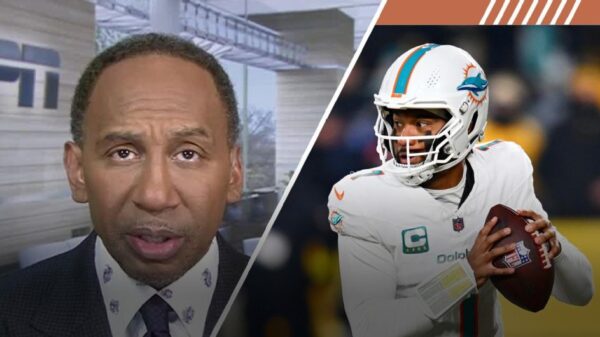










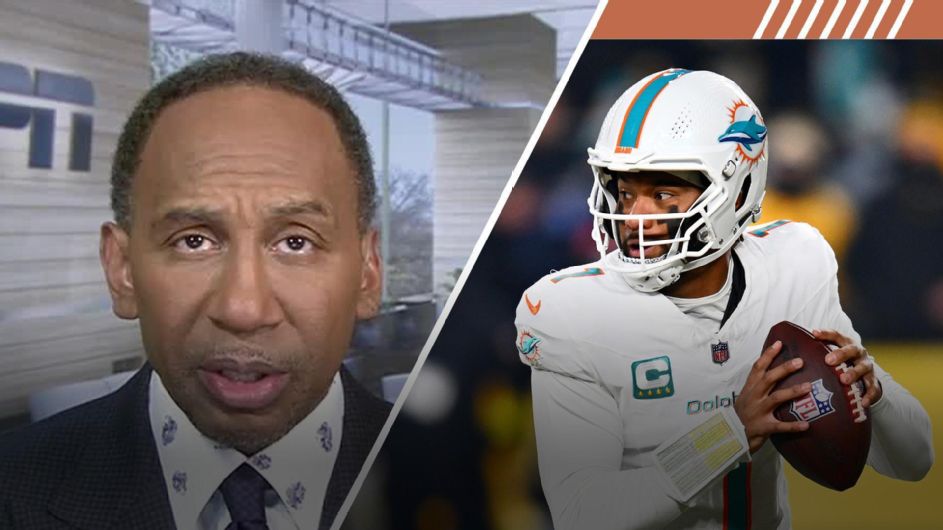
The Miami Dolphins have decided to bench quarterback Tua Tagovailoa in favor of rookie Quinn Ewers, marking a significant shift in the team’s strategy as they conclude a challenging season. This decision comes amidst the Dolphins’ mathematical elimination from playoff contention, and it opens the door for Ewers, a seventh-round draft pick, to showcase his abilities over the final three games of the season.
The benching of Tagovailoa raises questions about his future with the Dolphins. After signing a lucrative $212.1 million contract in 2024, the prospect of trading him now appears complicated. Teams around the league view Tagovailoa’s guaranteed $54 million for 2026 as a significant financial barrier. Reports suggest that unless the Dolphins absorb a considerable portion of his contract, facilitating a trade could be difficult.
Tagovailoa’s performance has been a focal point of concern. Over the past month and a half, he has struggled, ranking 30th in Quarterback Rating (QBR) and 24th in passing yards since Week 10. His recent outing against the Pittsburgh Steelers, where he completed only 6 of 10 passes for 65 yards and threw an interception, prompted head coach Mike McDaniel to make the change. McDaniel acknowledged the defensive strategy employed by the Steelers, which exploited Tagovailoa’s misreading of plays.
Future Implications for Tagovailoa and the Dolphins
The decision to bench Tagovailoa suggests he may be viewed as a bridge quarterback moving forward. Should Ewers perform well, he could solidify his position as a potential starter, allowing Miami to explore other options for Tagovailoa. The Dolphins find themselves in a precarious situation if they choose to release or trade Tagovailoa. Doing so before March 13, 2026, could result in a hefty $99.2 million dead salary cap charge. However, if they manage to trade him before that date, the dead-money charge could decrease to $45.2 million.
The Dolphins’ front office is aware that retaining a high-priced, underperforming quarterback is not a viable strategy. As the team contemplates its future direction, they may consider selecting a quarterback in the upcoming draft or acquiring a veteran through trade. The situation mirrors the recent experience of the Denver Broncos, who took significant dead-money charges when releasing Russell Wilson but still managed to navigate the playoffs successfully.
Opportunity for Ewers and Coach McDaniel
For Ewers, this is a critical opportunity that could pave the way for his future within the organization. Having thrown 68 touchdown passes during his collegiate career at Texas, Ewers possesses the potential to lead the Dolphins’ offense. His ability to perform well from a clean pocket aligns with Miami’s offensive strategy, which emphasizes quick, accurate throws to receivers.
McDaniel, who was not involved in drafting Tagovailoa but advocated for his extension, now faces the challenge of developing Ewers. His previous attempts to maximize quarterback potential, including working with players like Teddy Bridgewater and Skylar Thompson, have yielded mixed results. The next three weeks will be crucial for both the rookie quarterback and the head coach as they look to build a foundation for the future.
The reaction within the Dolphins’ locker room could also influence the team’s dynamics. Players are often aware when a change is necessary. While Tagovailoa has served as a team captain, his recent comments about teammates’ attendance at player-led meetings drew criticism and could affect team morale. If Ewers can bring a renewed energy to the offense, it may shift perceptions within the locker room.
As the Dolphins navigate this transitional phase, the focus will be on Ewers and how he can shape the future of the franchise. With significant decisions looming on the horizon, the coming weeks could define not only the rookie quarterback’s career but also the trajectory of the entire organization.