



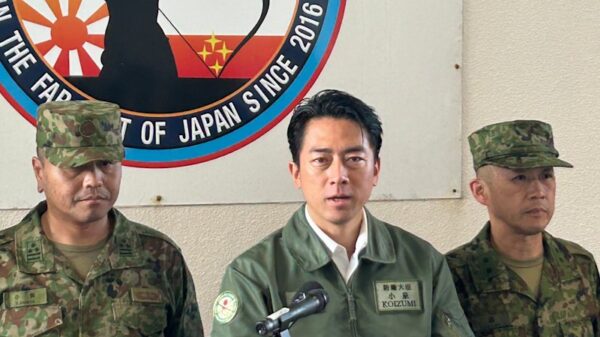



























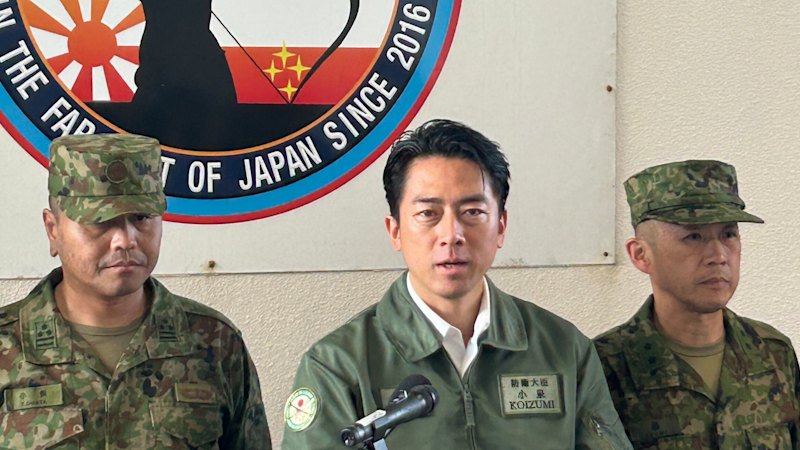
Japan has scrambled fighter jets in response to a rare joint military operation conducted by China and Russia near its southern islands. This show of combined air power has raised significant concerns in Tokyo regarding the actions of its two nuclear-armed neighbors. On Wednesday, Japanese Defence Minister Shinjiro Koizumi stated that the operations were “clearly intended as a show of force against our nation,” emphasizing the gravity of the situation for Japan’s national security.
The Japanese Air Self-Defence Force implemented strict identification and interception procedures as part of their response. On Tuesday, two Russian Tu-95 strategic bombers flew from the Sea of Japan towards the East China Sea, where they met up with two Chinese H-6 bombers. This group proceeded to conduct a joint flight across the western Pacific, as reported by Japan’s Defence Ministry. The operation escalated when four Chinese J-16 fighter jets joined the formation, which maneuvered between the Okinawa and Miyako Islands. This area is a strategic choke point located in international waters but is closely monitored by Japan.
In a separate incident, Japan detected concurrent Russian military activities in the Sea of Japan, which included an A-50 early-warning aircraft and two Su-30 fighters. According to Russian state media, the joint patrol lasted approximately eight hours. In addition, South Korea reported that seven Russian and two Chinese aircraft entered its air defence identification zone (KADIZ) on the same day. The South Korean Joint Chiefs of Staff confirmed that these aircraft entered and exited KADIZ without breaching South Korean territorial airspace, stating, “Our military detected the Chinese and Russian aircraft before they entered KADIZ and deployed Air Force fighter jets to take tactical measures in preparation for any contingencies.”
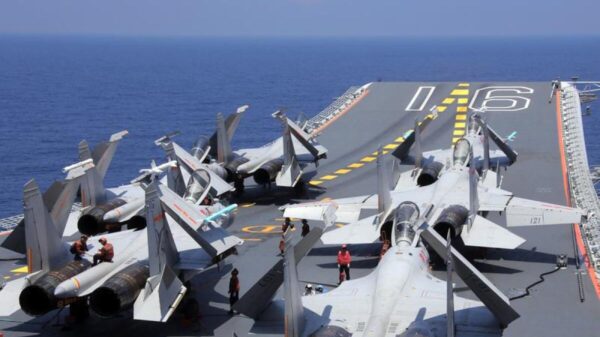
These latest military maneuvers coincide with a rise in Chinese military activity near Japan. Over the weekend, Japan accused Chinese carrier-borne fighter jets of targeting radar at its military aircraft, a claim Beijing has denied. Tensions have further escalated following remarks made by Japanese Prime Minister Sanae Takaichi last month, where she asserted that Japan would not remain passive if Chinese military actions against Taiwan posed a threat to Japanese security. This statement has elicited strong warnings from Beijing.
The alliance between China and Russia has grown stronger in recent years, with both nations conducting joint military operations, including missile-defense training on Russian territory and live-fire naval drills in the South China Sea. This development reflects a deepening strategic alignment that is reshaping the security dynamics in the Indo-Pacific region.
As tensions continue to rise, the international community watches closely, given the implications these military activities could have on regional stability and global geopolitical relations.