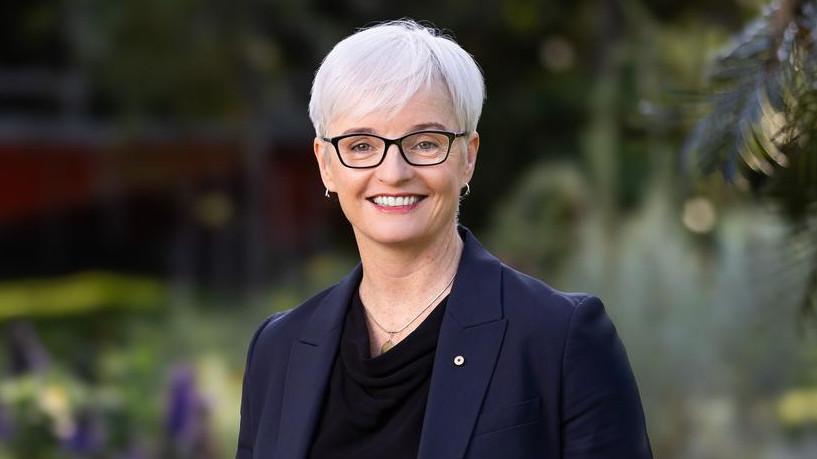
UPDATE: Emma Johnston, the pioneering Vice Chancellor of the University of Melbourne, has died at the age of 52 due to complications from cancer, the university confirmed on Monday. This heartbreaking news marks a significant loss for the academic community and the nation.
Johnston, who took office in February 2025, was the first woman to lead the prestigious 172-year-old institution. She was a trailblazer in marine ecology, having completed her undergraduate and postgraduate studies at the same university, as well as earning her doctorate.
Her research focused on the ecological impacts of human activities on marine ecosystems, and she served as a chief author for Australia’s latest State of the Environment report. Johnston published 185 peer-reviewed articles and supervised over 35 students, leaving an indelible mark on the field.
Her family expressed deep sorrow, stating, “We know she touched so many lives and her legacy will continue through the work of her many students, colleagues, and mentees.” The outpouring of love and respect for Johnston highlights her profound impact on those around her.
“Emma brought a tone of optimism and energy to our university,” said Chancellor Jane Hansen. “She had an unwavering commitment to our students.”
Hansen emphasized that Johnston’s contributions extended beyond the university, stating that her death represents a loss for the higher education sector and the scientific community. Johnston also held vital positions as a director of the CSIRO and the Great Barrier Reef Marine Park Authority, and served as a governor of the Ian Potter Foundation.
In recognition of her service to marine ecology and higher education, Johnston was made an Officer of the Order of Australia in 2018 and was elected a Fellow of the Australian Academy of Science in 2022.
Science and Technology Australia President Jas Chambers remarked, “Emma’s influence and impact will be felt for years to come. She leaves a great legacy.” Chambers praised Johnston for her ability to convey complex information engagingly.
Education Minister Jason Clare expressed his shock at Johnston’s passing, calling her “a real reformer” and underscoring her contributions to education and science.
The University of Melbourne plans to commemorate Johnston’s legacy at a future date. In the interim, Michael Wesley will serve as acting vice chancellor.
This tragic news is not only a loss to the university but to the broader community that benefitted from Johnston’s dedication and vision. Her legacy will undoubtedly inspire future generations of scientists and students.