




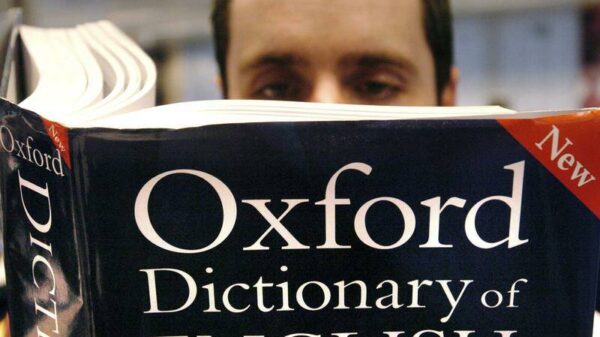































Oxford University Press has officially named “rage bait” as its word of the year for 2025, reflecting the prevailing trends in online discourse. The term describes content intentionally crafted to provoke anger or outrage, often frustrating or offensive, with the primary goal of increasing engagement on social media platforms. This insight was shared in a statement from the publisher, which is renowned for its authoritative contributions to the English language.
The lexicographer Susie Dent elaborated on the implications of the term during an interview with the BBC. Dent noted that creators of rage bait often revel in the extensive interactions their content generates, sometimes reaching millions of comments, shares, and likes. She explained that social media algorithms favor such provocative content, as users tend to engage more with material that elicits strong emotional reactions, even if it diverges from more benign topics, such as “fluffy cats.”
Rage Bait Surpasses Other Contenders
“Rage bait” emerged victorious from a shortlist that included two other notable terms: “aura farming” and “biohack.” The term “aura farming” refers to the practice of curating one’s public image to subtly project confidence, coolness, or mystique. In contrast, “biohack” describes efforts to enhance or optimize physical or mental performance, health, or longevity.
The selection process for the word of the year involves a thorough analysis by lexicographers at Oxford University Press, who examine new and emerging words, alongside shifts in language usage. Their goal is to identify terms of cultural significance, which resonate with contemporary societal trends.
History of the Word of the Year
Since its inception in 2004, Oxford University Press has recognized a word of the year to highlight the evolving nature of language. Previous winners include “podcast” in 2005 and “emoji” in 2015. In 2022, “goblin mode” was chosen to describe individuals who resisted the return to pre-pandemic norms.
The designation of “rage bait” underscores not only the changing landscape of communication but also the impact of social media on public discourse. As society continues to grapple with the effects of online interactions, the recognition of this term serves as a reminder of the power and consequences of language in the digital age.